°C
°C
 3
Min
3
Min
TOKYO (AP) – No food says Japan more than sushi. But few people make it themselves, even Japanese. The art of making sushi traditionally meant decades-long training to become a master. But times are changing. Now, just about anyone can enjoy it. “There is no sushi that tastes better than the ones you make yourself,” said Tsuneo Suzuki, a chef and 45-year veteran.
Once the preserve of elite chefs, sushi-making can be fun

TOKYO (AP) - No food says Japan more than sushi. But few people make it themselves, even Japanese.
The art of making sushi traditionally meant decades-long training to become a master. But times are changing. Now, just about anyone can enjoy it.
"There is no sushi that tastes better than the ones you make yourself," said Tsuneo Suzuki, a chef and 45-year veteran.
He gives sushi-making demonstrations and courses at special events, and teaches at the Tokyo Sushi School in the city's downtown. The school's classes attract people from around the world, some of whom go on to open their own sushi restaurants.
Making sushi is not easy, but surprisingly not as hopeless as it might seem for students who followed Suzuki's step-by-step instructions in one recent class in Tokyo. Their resulting seafood sushi did not crumble to the touch. It looked quite professional, really, and tasted great.
One eager learner was Daniel Nevins, a heavy equipment mechanic from Erlanger, Kentucky, who was turning out pretty perfect sushi, although he had never done it before.
"Very informative," he said, with a plate of several sushi he had just made. "It went very well."
His wife, Brittany, a cook, had dreamed of visiting Japan since she was 13. "Learning a different culture's food is really exciting," she said.
Asked what kind of sushi is most challenging to make, Suzuki answered thoughtfully, "Tuna. Tuna is deep."
Here are some general instructions for making seafood sushi yourself:
Cooked white rice, flavored with a bit of vinegar to give it a slight tang
A dash of sugar and salt
Sliced raw seafood, like tuna, squid, salmon, mackerel, yellowtail
Wasabi mustard
Soy sauce for dipping
Note: Although strictly speaking there is a special way to slice fish for sushi, it's OK to use the pieces cut for sashimi, available in some Japanese-style groceries. Or if you are brave, cut the fish into thumb-size, sushi-like slices yourself.
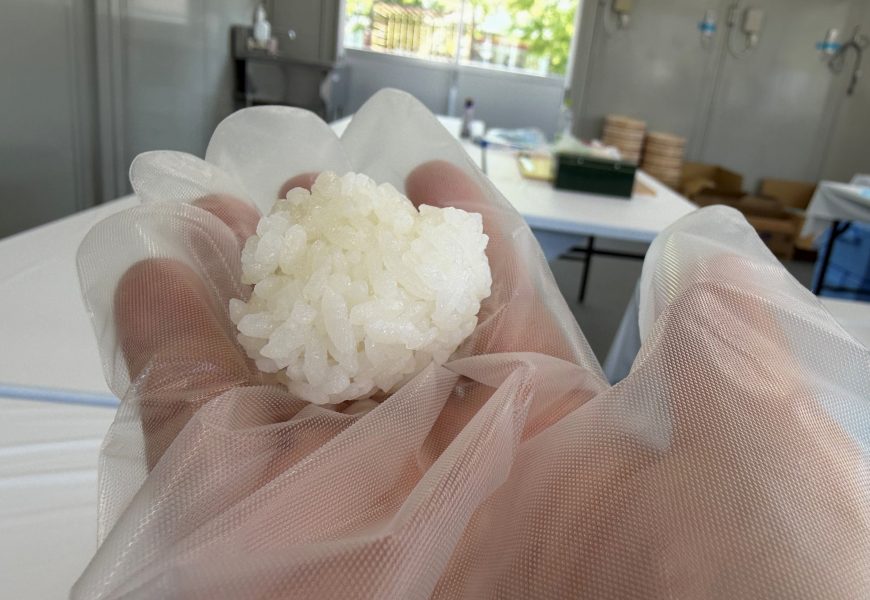
- Take a bit of the cooked rice, flavored with a bit of vinegar, sugar and salt, in your hand, being careful to keep the rice fluffy. Shape it gently into a piece about the size of a golf ball, keeping it in one hand. Do not roll the rice with both hands, like playing with clay. This will get you instantly fired at a traditional sushi outlet.
- Keeping the rice cuddled gently in your right hand, put a bit of seafood - a piece of shrimp or raw tuna or salmon - flat vertically on your left palm.
- With a finger, put a dab of wasabi mustard at the center of the seafood slice while still keeping the rice in your palm. Place the ball of rice on the seafood slice, and squish the rice slightly, but not too hard, using your fingers to keep the rice in shape so it sits nicely on the seafood.
- Then, turn the sushi gently so the seafood is on top and the rice on the bottom. You're allowed to use your fingers, cupping the concoction in your palm. Then, take your forefinger and softly tap the sushi a couple of times on top. That helps shape it.
- Turn the sushi clockwise on your palm. Place it on a plate, leaving room to line up more sushi pieces.
- Serve with a separate small plate of soy sauce for dipping.
More Top Stories