°C
°C
 4
Min
4
Min
U.S. Republican lawmakers sparred Monday over a new bipartisan proposal that would tighten migration controls at the U.S.-Mexico border while also providing billions of dollars in new financial aid to Ukraine and Israel.
US Republicans Spar Over Border Security Bill Linked to Ukraine, Israel Aid
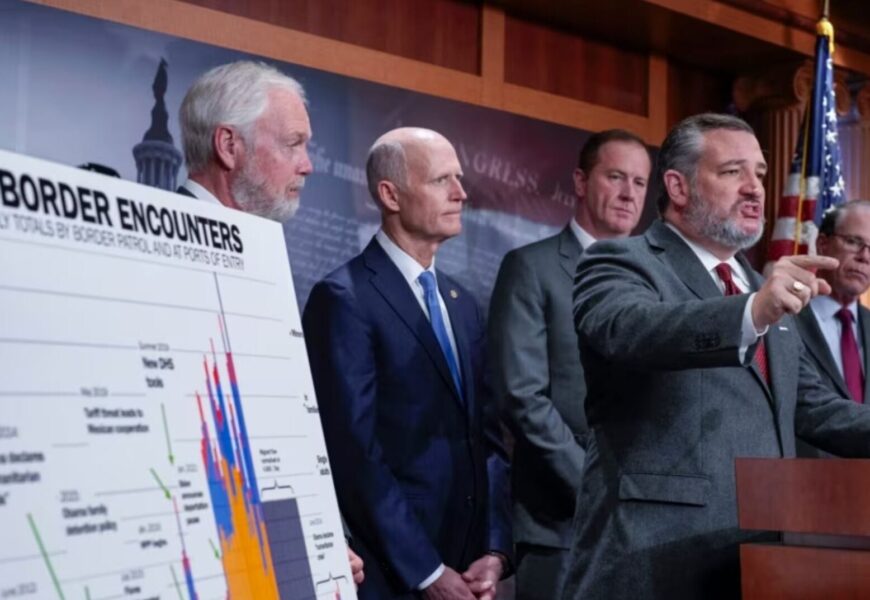
U.S. Republican lawmakers sparred Monday over a new bipartisan proposal that would tighten migration controls at the U.S.-Mexico border while also providing billions of dollars in new financial aid to Ukraine and Israel.
The measure was negotiated by Democratic and Republican senators during months of talks and is supported by Democratic President Joe Biden.
But House Speaker Mike Johnson, the leader of the narrow Republican majority in the lower chamber, immediately declared the legislation "dead on arrival," in the House, saying it is not tough enough on border restraints.
Senate Majority Leader Chuck Schumer set an initial vote on the measure for Wednesday, saying the bill's priorities "are too important to ignore and too vital to allow politics to get in the way."
He called the legislation "a monumental step towards strengthening America's national security abroad and along our borders."
Former President Donald Trump, the leading 2024 Republican presidential candidate, is attacking the measure and urging Republican lawmakers to vote against it, possibly further imperiling its passage.
But former United Nations Ambassador Nikki Haley, his lone remaining challenger for the party's presidential nomination, says she supports passage of the legislation.
Democrats supporting Biden's reelection say Trump is lobbying against the legislation so that he can complain on the campaign trail that Biden has been lax on keeping out thousands of migrants fleeing their homelands.
But soon after the bill was released late Sunday, House Speaker Mike Johnson said if it passed the Democrat-majority Senate and came to the Republic-majority House, "it will be dead on arrival."
The bill has $60 billion in new aid to Ukraine to continue its nearly two-year fight against Russia's invasion, while Israel would get $14 billion in security assistance and $10 billion would go toward humanitarian aid for civilians in such conflict zones as Ukraine, the Gaza Strip and the Israeli-occupied West Bank.
Another $2.4 billion would fund U.S. military efforts to counter attacks in the Red Sea, while $4.8 billion would support partners facing Chinese aggression in the Indo-Pacific.
Senate negotiators worked to bring together several priorities advocated by President Joe Biden, including funding that would restart U.S. shipments of ammunition and missiles to Ukraine.
Republicans insisted the package also include steps to address the thousands of people illegally crossing the southern border.
"This bill is even worse than we expected and won't come close to ending the border catastrophe the president has created," Johnson said on X.
Amy Fischer, Amnesty International USA's director of refugee and migrant rights, called for a rejection of the legislation for a different reason.
"This cruel deal trades the human rights of immigrants and asylum-seekers for foreign military funding," she said.
"The immigration measures in this deal are the most extreme anti-immigrant proposals this country has seen in 100 years," she said.
"From ending the legal right to asylum, to creating unworkable standards that will fail to protect the most vulnerable, to funding to detain 50,000 people and build a border wall, these policies are draconian and antithetical to human rights."
Biden praised the Senate bill, saying it "includes the toughest and fairest set of border reforms in decades."
"Now, House Republicans have to decide. Do they want to solve the problem? Or do they want to keep playing politics with the border?" Biden said in a statement.
"I've made my decision. I'm ready to solve the problem. I'm ready to secure the border."
Senator James Lankford, the lead Senate Republican negotiator on the deal, also defended it, saying, "The key aspect of this again is, are we as Republicans going to have press conferences and complain the border is bad and then intentionally leave it open?"
The measure includes a tougher and faster process for asylum-seekers to have their claims adjudicated, with those passing initial screening made eligible for work permits.
Asylum interviews would happen with days of arrival, with final decisions made within months. Currently, the entire process can take years.
In addition, on days when the five-day average of illegal border crossings surpasses 5,000 per day, the president would have the authority to automatically expel those who cross illegally without giving them an opportunity to make an asylum claim.
Migrants would still be allowed to go to ports of entry to try to seek asylum.
Senate Minority Leader Mitch McConnell expressed his support for the legislation, saying the Senate must "prepare to act."
"America's sovereignty is being tested here at home, and our credibility is being tested by emboldened adversaries around the world," McConnell said in a statement.
"The challenges we face will not resolve themselves, nor will our adversaries wait for America to muster the resolve to meet them."
More Top Stories