°C
°C
 3
Min
3
Min
Evergrande, the beleaguered Chinese property giant grappling with massive debts, has been directed by a Hong Kong court to undergo liquidation.
China Property Giant Evergrande Ordered into Liquidation
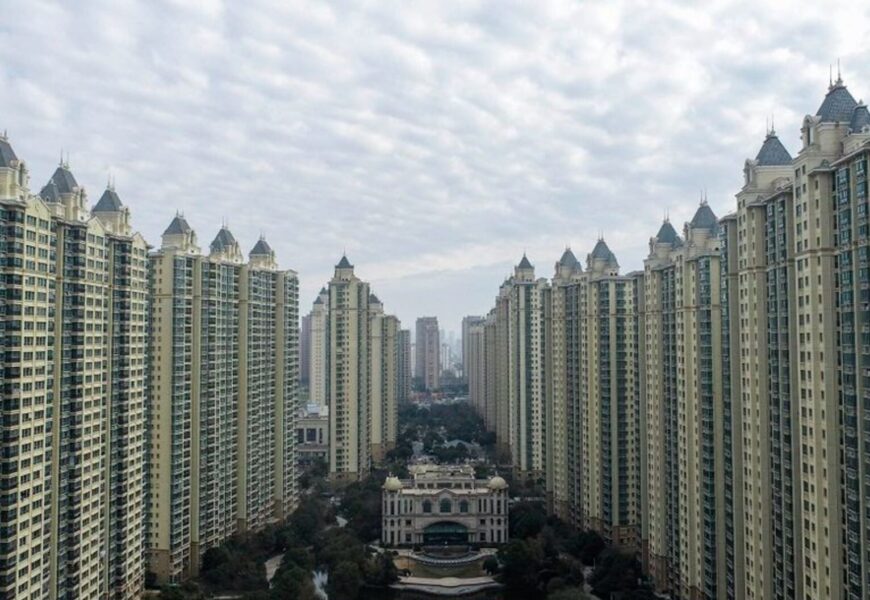
Evergrande, the beleaguered Chinese property giant grappling with massive debts, has been directed by a Hong Kong court to undergo liquidation.
The decision, delivered by Judge Linda Chan, reflects frustration over Evergrande's repeated failure to devise a viable plan for debt restructuring.
With liabilities exceeding $325 billion (£256 billion), Evergrande has been a focal point of China's real estate crisis, causing global financial markets to react when it defaulted two years ago.
The liquidation order, a legal process involving the seizure and sale of a company's assets to settle outstanding debts, was met with a substantial impact on Evergrande's stocks.
After the announcement, shares plummeted by over 20% in Hong Kong, prompting a suspension of trading.
This development is poised to send additional shockwaves through China's financial markets, coinciding with efforts by authorities to curb a stock market sell-off.
China's property sector, constituting roughly a quarter of the world's second-largest economy, plays a crucial role.
The repercussions of Evergrande's liquidation extend beyond its financial struggles, impacting a myriad of stakeholders.
Notably, the majority of Evergrande's debt is owed to mainland Chinese lenders, presenting challenges in their pursuit of repayment due to limited legal avenues.
The case leading to the liquidation order was initiated in June 2022 by one of Evergrande's investors, Top Shine Global, based in Hong Kong.
Despite this legal action, the amount owed to this investor is a fraction of Evergrande's overall debts.
The potential collapse of Evergrande raises concerns about the fate of homebuyers who purchased properties before the commencement of construction.
While the liquidation order marks a significant development, it does not imply an immediate halt to Evergrande's construction activities.
The appointed provisional liquidator, expected to be designated by the court, will assume control after meetings with creditors.
However, navigating jurisdictional issues between mainland China and Hong Kong complicates the enforcement of liquidation orders.
Derek Lai, the global insolvency leader at Deloitte, emphasizes that even with mutual recognition, the liquidator must adhere to mainland China's laws during the liquidation process.
The Chinese government's interest in sustaining developers to safeguard homebuyers further complicates the situation, suggesting that the Hong Kong court order may be disregarded.
Foreign creditors face challenges in recovering their funds, with mainland creditors likely to be prioritized.
Despite potential non-compliance with the Hong Kong court order in China, the decision sends a strong signal, foreshadowing the difficulties that other developers and creditors may encounter.
Judge Linda Chan, presiding over Evergrande and other defaulted developers, holds the power to influence the fate of companies like Sunac China, Jiayuan, and Kaisa.
The liquidation order comes amidst Evergrande's attempts to formulate a new repayment plan and its filing for bankruptcy in the US in August of the previous year to protect its American assets.
The subsequent placement of Evergrande's chairman, Hui Ka Yan, under police surveillance adds a layer of complexity to the unfolding financial saga.
More Top Stories