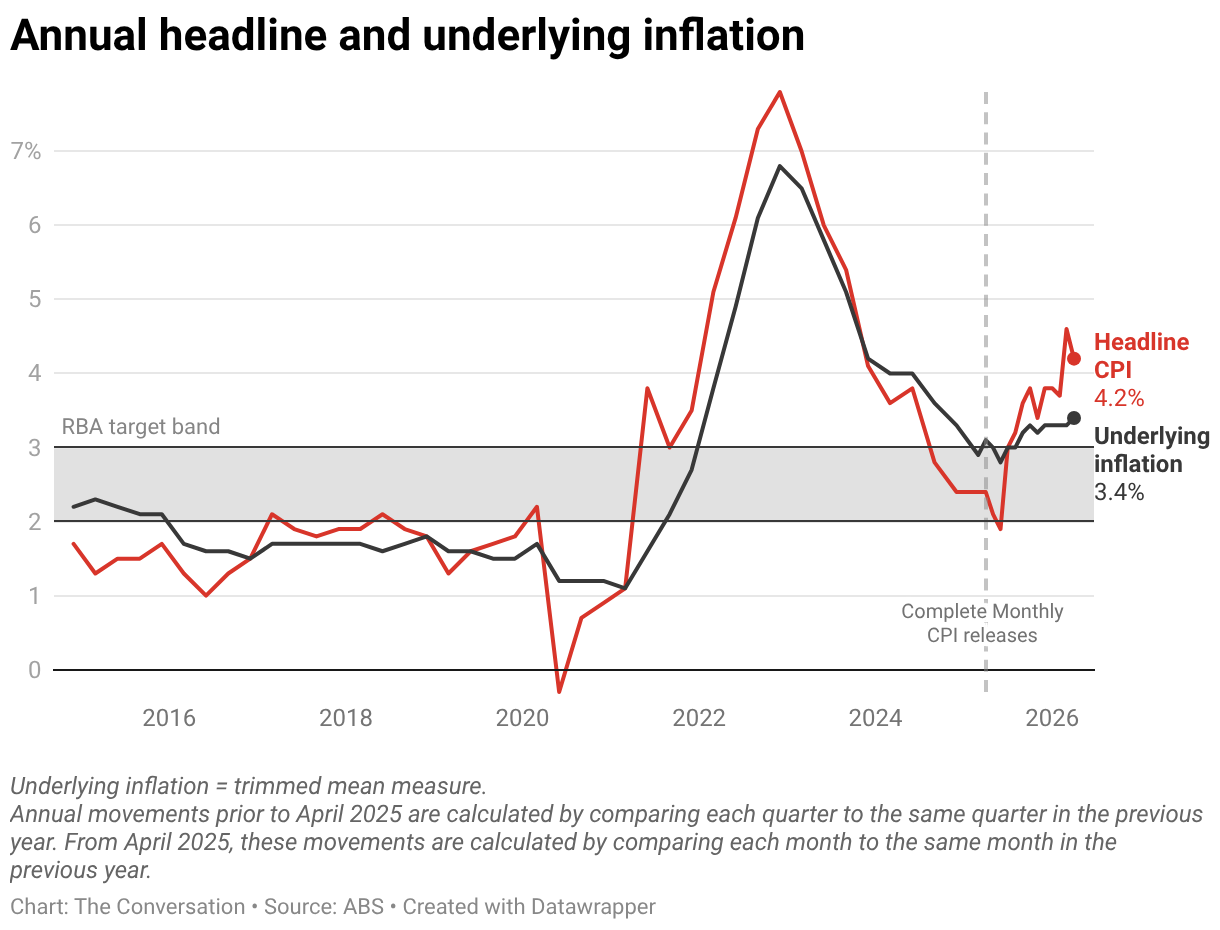
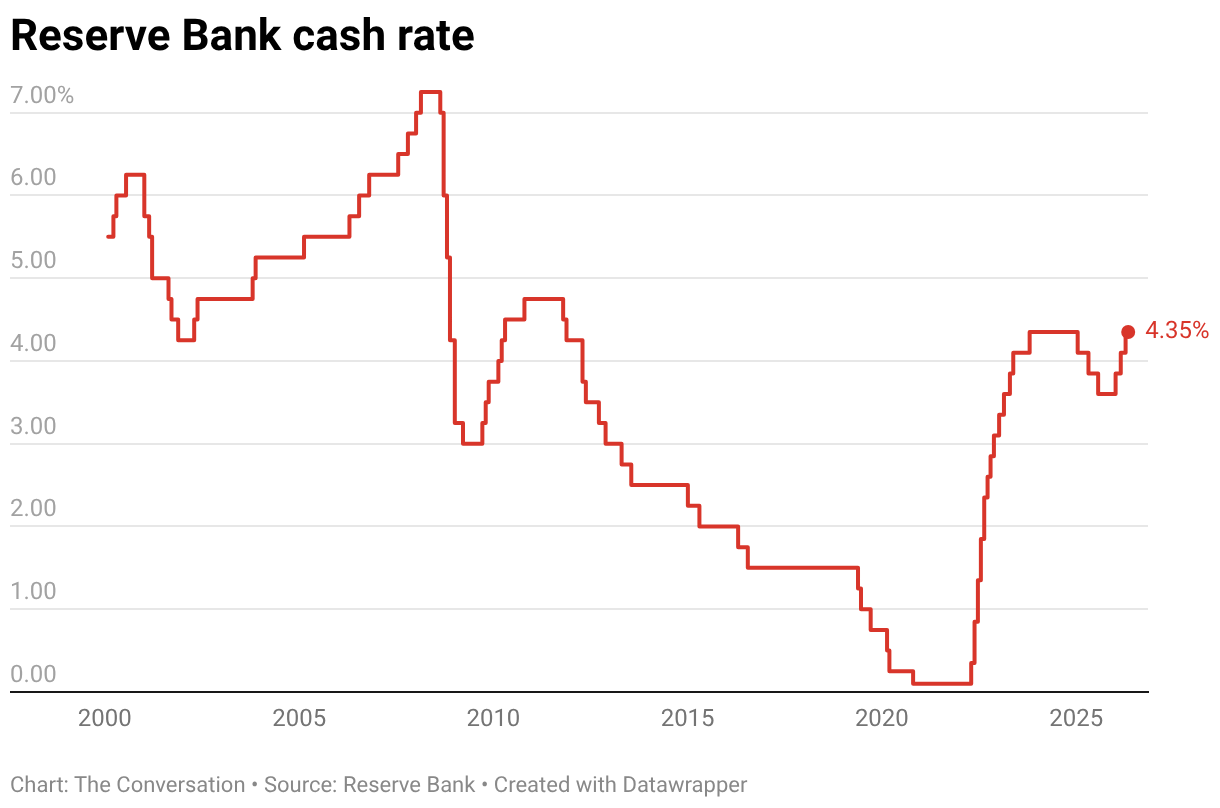
Together, these figures strengthen the case for the Reserve Bank to keep rates on hold in June. But the rise in trimmed mean inflation means the Bank is still likely to emphasise caution, rather than signal Australia's inflation problem has passed.
Looking ahead
The next few months will be critical. If global energy markets stabilise and supply disruptions ease, some inflation pressure could fade relatively quickly. That would give the Reserve Bank more confidence that inflation is moving back towards 2-3%.
But if oil prices remain elevated, or if businesses keep passing higher transport, freight and import costs through to consumers, the inflation problem could become more persistent.
The Reserve Bank is particularly alert to the possibility that repeated global inflation shocks - first the COVID pandemic, then supply chain disruptions, and now oil prices - may gradually change how businesses and households think about inflation itself.
That is why the Reserve Bank's focus is shifting from the direct impact of higher petrol prices to the broader behavioural response across the economy.


 °C
°C
 5
Min
5
Min