°C
°C
 3
Min
3
Min
BOSTON (AP) – At Harvard University, earning straight A’s is about to get harder. Harvard’s Faculty of Arts and Sciences announced Wednesday that it would limit the number of A grades awarded to undergraduates, adopting one of the most ambitious efforts by a major university to curb grade inflation.
Harvard faculty votes to make it more difficult for undergrads to earn A’s
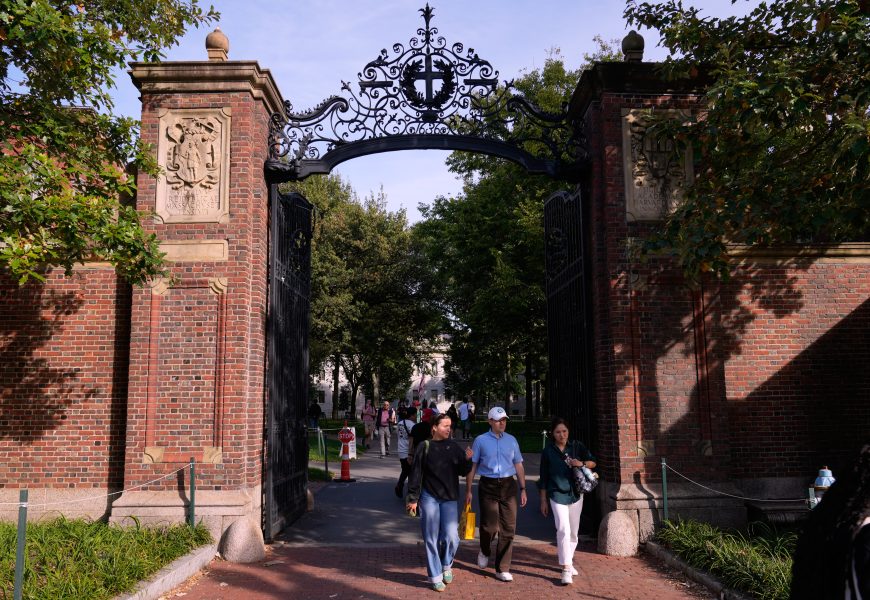

BOSTON (AP) - At Harvard University, earning straight A's is about to get harder.
Harvard's Faculty of Arts and Sciences announced Wednesday that it would limit the number of A grades awarded to undergraduates, adopting one of the most ambitious efforts by a major university to curb grade inflation. The decision was made by faculty vote earlier this month.
The move comes after top grades became so common that some Harvard faculty argued they no longer reliably distinguished exceptional work. More than 60% of all grades awarded to undergraduates in recent years were in the A range, according to university data cited by faculty members who supported the measure.
"The Harvard faculty voted to make their grades mean what they say they mean," members of the faculty subcommittee that proposed the changes said in a statement.
They said the reform would ensure that "a Harvard A grade will now tell students, as well as employers and graduate schools, something real about what a student has achieved."
Harvard is not the first elite university to confront grade inflation. Princeton University adopted a policy in 2004 to limit A-range grades to 35% of those awarded, though it abandoned the system a decade later after criticism that it disadvantaged students in competition for jobs and graduate school admission.
Nationally, grade-point averages at four-year public and nonprofit colleges rose more than 16% between 1990 and 2020, according to the U.S. Department of Education.
Amanda Claybaugh, Harvard's dean of undergraduate education, called grade inflation a "complex and thorny issue" and a "problem that many people have recognized, but no one has solved" in a statement Wednesday.
Steven Pinker, a cognitive scientist and Harvard psychology professor who has long criticized grade inflation, said in an email to The Associated Press that he was "delighted" by the result.
For too long, Pinker said, professors "who held the line with challenging material and high standards would see their enrollments plummet." Failure to address the issue turned "universities into national laughingstocks."
"Grade inflation forced a race to the bottom," he said, adding that the problem could only be solved through a university-wide policy.
Beginning in fall 2027, instructors in letter-graded courses at Harvard College will be allowed to award A grades to no more than 20% of students in a class, plus four additional students. Other letter grades, including A-minus, will not be subject to a limit.
Faculty also approved a proposal to use average percentile rank rather than grade-point average when comparing students for honors, prizes and awards.
A separate proposal that would have allowed courses to opt out of the A-grade cap by switching to a satisfactory/unsatisfactory system with a new SAT+ designation for exceptional performance failed.
The new policies will be reviewed after three years. The Faculty of Arts and Sciences is Harvard's largest school, comprising 40 academic departments. It is the home of Harvard College, Harvard's undergraduate program, and all of Harvard's Ph.D. programs.
Max Abrahms, a political science professor at nearby Northeastern University who studies terrorism and international security, was among those outside Harvard who applauded the decision.
"When everyone gets an A there is no signal," he wrote on X, calling Harvard's vote "a huge win for higher education."
More Top Stories