°C
°C
 5
Min
5
Min
NKULAGIRIRE, Uganda (AP) – Uganda is a land of verdant hillsides and fetid trash heaps, of hulking gated estates and crude little shacks, of crowded city markets and countryside chapels.
As Africans age, needs rise but support lags

NKULAGIRIRE, Uganda (AP) - Uganda is a land of verdant hillsides and fetid trash heaps, of hulking gated estates and crude little shacks, of crowded city markets and countryside chapels.
Cherubic babies, swathed tight on their mothers' backs, turn to eager schoolchildren, who sing songs about someday becoming nurses and lawyers and teachers. Young men and women, in turn, diplomas in hand and little opportunity in sight, end up in dead-end jobs at home, or shipped off to places like Dubai, working in security or construction.
For many, to make it to old age here is to toe the line between joy and misery, to wrap oneself in vivid fabric, stand in a radiant sun and dance outside church, singing in gratitude, only to return to a darkened shack, wrinkled and stooped, and go to bed alone and hungry.
"Old age is not something to brag about here," says 75-year-old Tereza Nabunya. "Poverty strikes when you're old."
Nabunya's roof leaks. She has no tank to collect water and the nearest well is deep in the bush, about a half-mile away. She is wracked with pain and needs to see a doctor.
There is no way to pay for any of it, so she weaves a mat from papyrus leaves to try and earn some money. She figures it'll take a week to weave and much longer to find a buyer. It will go for 3,000 shillings - less than a dollar - and will be spent as soon as it's in her hand.
A far higher proportion of Africans work in old age than anywhere else in the world. In desperation, they dig neighbor's gardens in exchange for food or collect firewood and try to sell it for a few shillings. There are few options. There is little help anywhere.
The government safety net is minimal and most charities are focused on the young.
"That is the tragedy of getting old in Africa," says Dr. Zelalem Habtamu, who leads operations in Ethiopia for Cure Blindness, which does cataract surgeries on older people around the continent. "They are working on child health, they are working on maternal healthy, they are working on HIV and malaria, but it's very rare to see the government or the NGOs working to help the elders."
In Nabunya's case, she turned to Reach One Touch One, which put her on its waiting list for aid. Some are on the organization's waitlist a year or more. Others die without getting off it.
About four of 10 older Ugandans fit World Bank criteria for extreme poverty, meaning they live on less than $2.15 a day. Just 3% of older Ugandans live on more than $10 a day.
That poverty is at the heart of nearly every problem that rises with the longevity boom.
Reverence for the old is entrenched in Africa, but parents often seek household help from children just as economics force the young far away for work. Patients clamor for care, but with no insurance, they put off treatment, avoid tests, or forego doctors altogether. Elders are betrayed by their aging bodies, but poor village life dictates they must sow and reap crops, gather firewood and fetch water.
"The old people," says 88-year-old Pafras Jjemba, "are left with nothing."
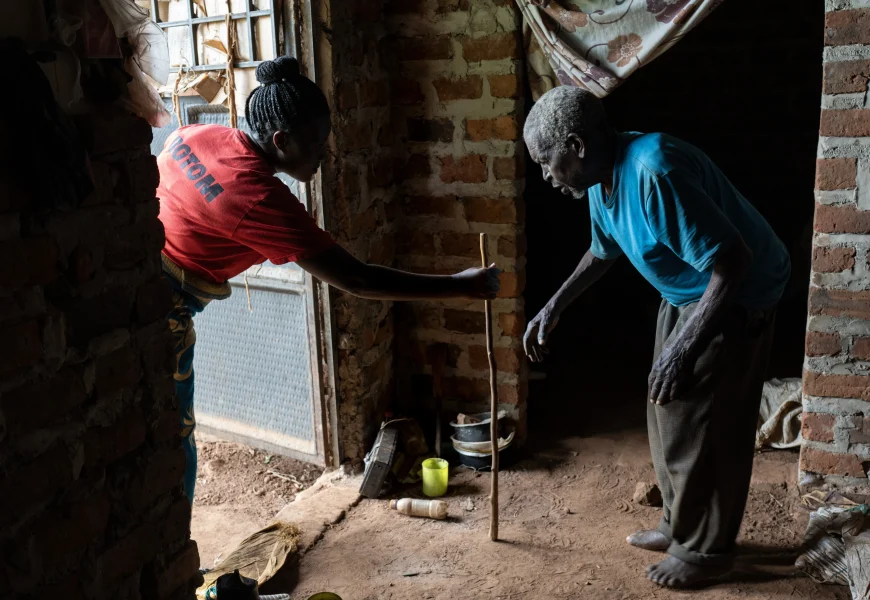
Jjemba wears gray pants that hang loose and beaten-up black shoes with mismatched laces. He is on ROTOM's waiting list and, right now, he has barely anything to eat.
Many older Africans worked in informal jobs and had no means to save for an age they never thought they'd reach. Across the continent, social security programs are often minimal, where they exist at all. While nearly seven in 10 people of retirement age around the world receive a pension, only about two in 10 in sub-Saharan Africa do, according to International Labour Organization estimates.
Uganda does have a public pension, known as SAGE, for Social Assistance Grants for Empowerment, though it is only open to people 80 and older and its benefits are tiny: Just 25,000 shillings (about $7) a month.
Jjemba was rejected when he applied and isn't sure why.
It's a story heard again and again among the country's old. Aid workers say they see many of their clients turned away for lost IDs, wrong dates of birth in government records, and other mistakes that can take years to clear up, if ever.
And so one man survives on the pity of neighbors who give him bananas, while down the road, a woman gets by on one meager meal a day. A woman shrieks in pain over the swollen ankle she can't afford to have looked at, while a man who clamors for a soda has gone so long without one that he can't even recall what kind of soda he likes. In village after village, elders dream of owning a goat or having some chicken on their plate or just having enough soap.
"Sometimes," says 84-year-old Kellen Bakeshungisa, "I want to close my eyes and not open them again."
___
Matt Sedensky can be reached at msedensky@ap.org and https://x.com/sedensky
Related Stories
More Top Stories