°C
°C
 5
Min
5
Min
Relatives of hostages held by Hamas militants in Gaza protested outside Israeli Prime Minister Benjamin Netanyahu's home Saturday, demanding his government take decisive steps to secure the release of their loved ones, while a divide over the direction of the war grows inside the Israeli cabinet.
Anger Grows, Israeli Political Divisions Deepen Amid Calls for Hostage Return
Relatives of hostages held by Hamas militants in Gaza protested outside Israeli Prime Minister Benjamin Netanyahu's home Saturday, demanding his government take decisive steps to secure the release of their loved ones, while a divide over the direction of the war grows inside the Israeli cabinet.
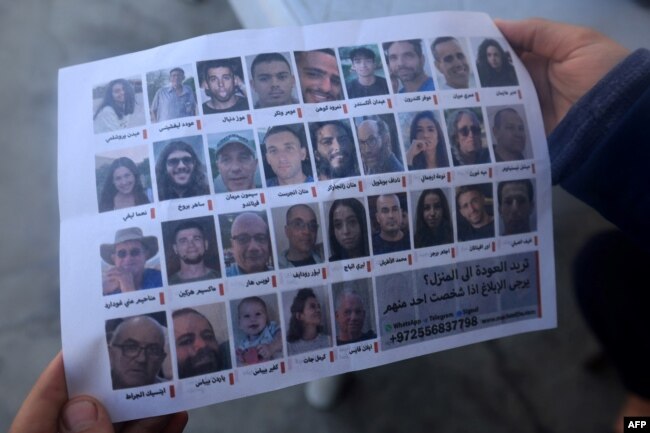
Members of a group representing families of the hostages said they had "begged for 105 days" and now demanded the government show leadership and take bold steps to free the hostages.
Former Israeli army chief Gadi Eisenkot, a member of Israel's War Cabinet, has said a cease-fire is the only way to secure their release, a comment that implied criticism of Israel's current strategy not to let up on Israel's war on Hamas militants until their destruction.
The protest outside the prime minister's home and Eisenkot's remark were among signs of growing strife in Israel over the direction of the war, now in its fourth month.
Israel's leadership faces conflicting pressures. Under heat to appease members of his right-wing governing coalition by intensifying the war against Hamas, Netanyahu also must contend with calls for restraint from ally the United States and from the families of hostages, who fear that escalating military activity further endangers the captives' lives.
The Israeli leader has said he will push for "complete victory" against Hamas but has not outlined how he would achieve it.
Critics have accused him of preventing a Cabinet-level debate about a post-war scenario for Gaza. They say Netanyahu is stalling to prevent conflict within his coalition.
U.S. President Joe Biden said Friday he spoke with Netanyahu, the first call the White House had in nearly a month with the Israeli leader, about possible solutions for creation of an independent Palestinian state, suggesting one path could involve a nonmilitarized government.
"In his conversation with President Biden, Prime Minister Netanyahu reiterated his policy that after Hamas is destroyed Israel must retain security control over Gaza to ensure that Gaza will no longer pose a threat to Israel, a requirement that contradicts the demand for Palestinian sovereignty," a statement from the prime minister's office said.
Netanyahu has stopped short of an outright and explicit rejection of Palestinian statehood. But he said Thursday that in any arrangement in the foreseeable future, "With an accord or without an accord, Israel must have security control over the entire territory West of the Jordan River. That's a necessary condition. It clashes with the principle of sovereignty but what can you do."
Strike kills Iranian Guard members
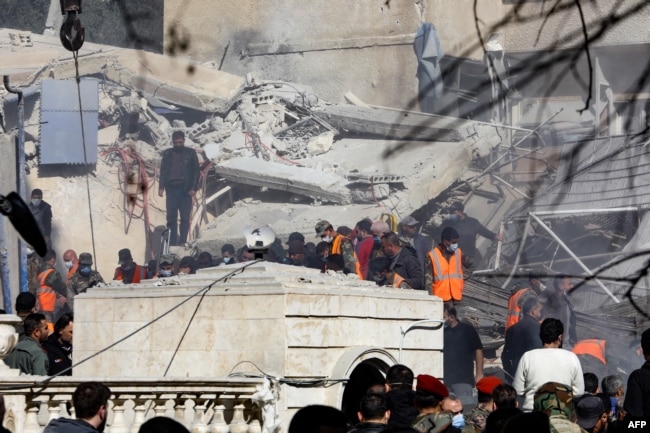
A strike on a residential building in Damascus, Syria, Saturday killed five members of Iran's Islamic Revolutionary Guard Corps, Iran said, blaming Israel.
Hours later the IRGC issued statements identifying the five dead as Hojjatollah Omidvar, Ali Aghazadeh, Hossein Mohammadi, Saeed Karimi and Mohammad Amin Samadi.
Iran has vowed to carry out revenge attacks against Israel.
Syrian state television said the building, which was destroyed in the midmorning strike, was in a neighborhood of the Syrian capital where several embassies are located.
There was no immediate comment from Israel, which rarely acknowledges its actions in Syria.
In the Gaza Strip
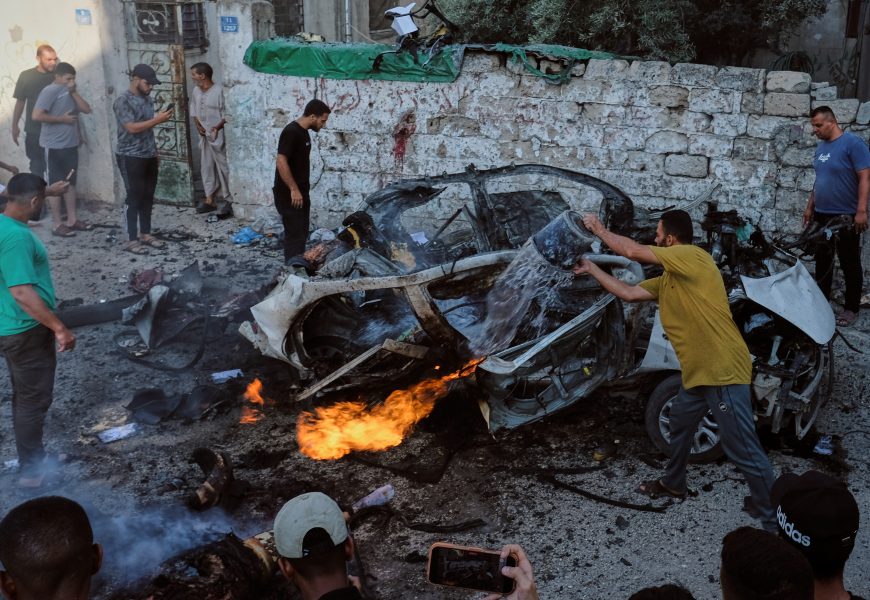
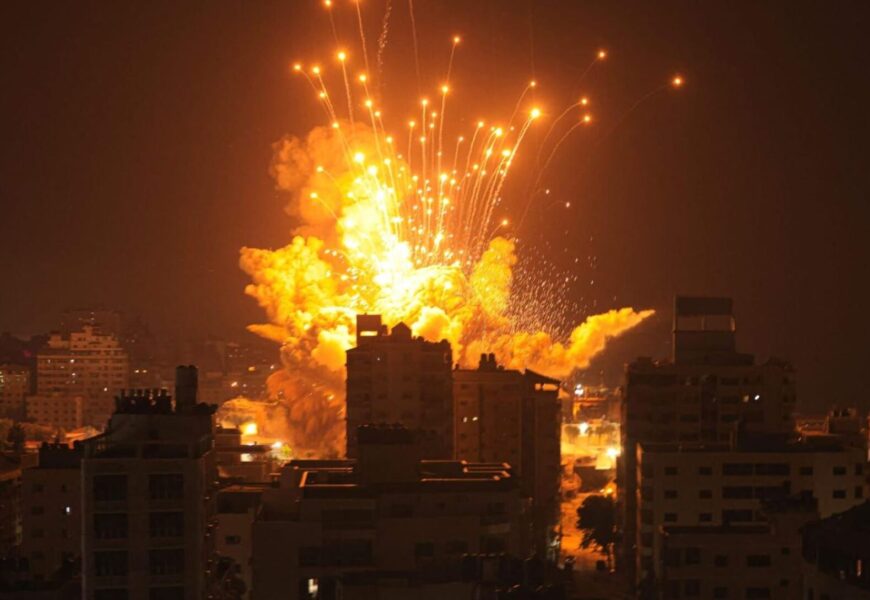
The strike came as Israel hit targets across Gaza Saturday.
Israel said it targeted militants in northern Gaza who it said were trying to plant explosives and fire missiles at Israeli tanks.
In Khan Younis, in southern Gaza, witnesses reported intense shelling overnight near Nasser Hospital. Israel said its troops raided a militant compound where it found explosives and destroyed rocket launchers.
Israel vowed to destroy Hamas, which governs Gaza, after the militant group sent fighters rampaging into Israel October 7, killing around 1,200 people, mostly civilians, according to Israel. Hamas, which has been designated a terrorist organization by the U.S. and others, also took about 240 people hostage.
The Hamas-run Gaza Health Ministry reported one of the largest single-day death tolls, including 165 Palestinians killed and 280 more wounded in the last 24 hours.
The ministry does not distinguish between combatants and civilians, but most of the nearly 25,000 Palestinians killed since the war began are civilians, health officials say.
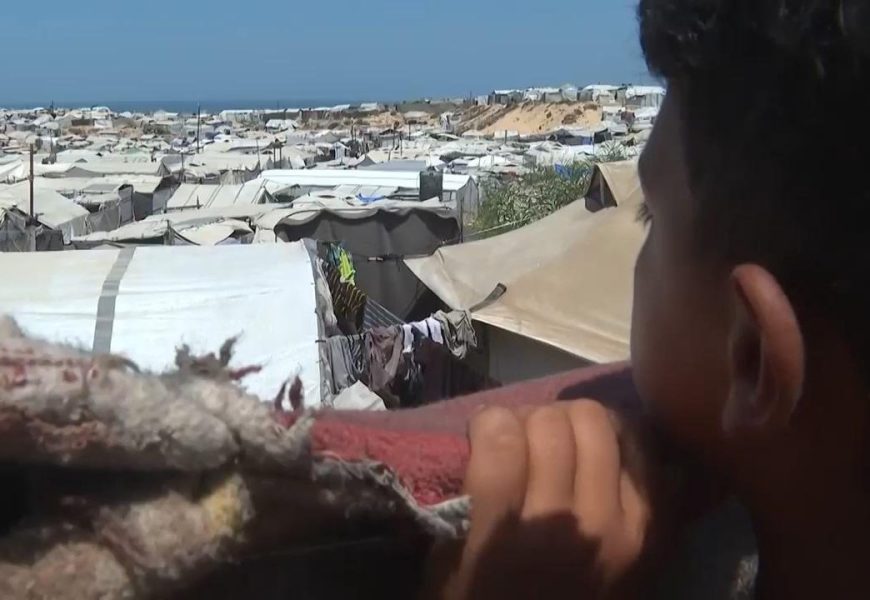
The unrelenting humanitarian crisis in Gaza "remains dire," the Red Crescent said Saturday on X, formerly Twitter, "with 800,000 Palestinians grappling with a severe scarcity of essential supplies."
Severe impact on women
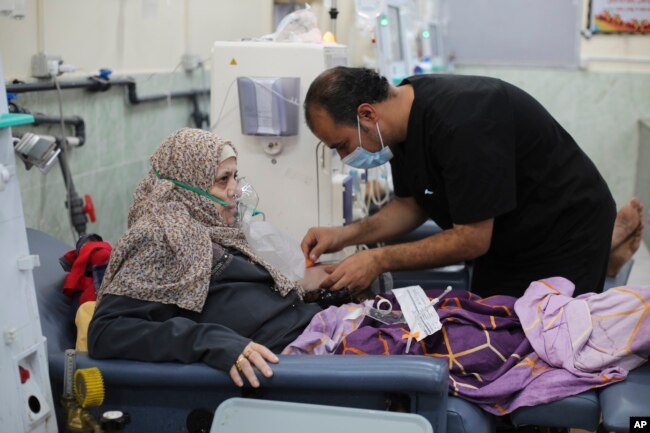
Women have been particularly hard-hit in the Gaza crisis. Seventy percent of the nearly 25,000 people killed in Gaza have been women and children, a figure that includes two mothers per hour, according to a report issued Friday by U.N. Women, the U.N. agency for gender equality and empowerment for women and girls.
"We have seen evidenced once more that women and children are the first victims of conflict and that our duty to seek peace is a duty to them," Sima Bahous, executive director of U.N. Women, said Friday in a statement accompanying the report.
In the West Bank
Israel arrested 22 Palestinians overnight in the occupied West Bank, including a woman and children, according to Al Jazeera. The arrests were conducted in Hebron, Nablus, Tubas, Bethlehem, Jenin and Jerusalem, it said.
The Palestinian Prisoners Club told Al Jazeera the arrests "were accompanied by widespread raids and abuse, in addition to widespread sabotage and destruction of citizens' homes, the destruction of infrastructure, and the confiscation of money and vehicles."
More Top Stories