°C
°C
 4
Min
4
Min
Secrecy surrounding White House security makes details hard to come by, but President Donald Trump’s court fight over his $400 million ballroom casts some light on an underground bunker at the site that has had a role in history.
Beneath Trump’s ballroom legal case: A brief history of the White House bunker
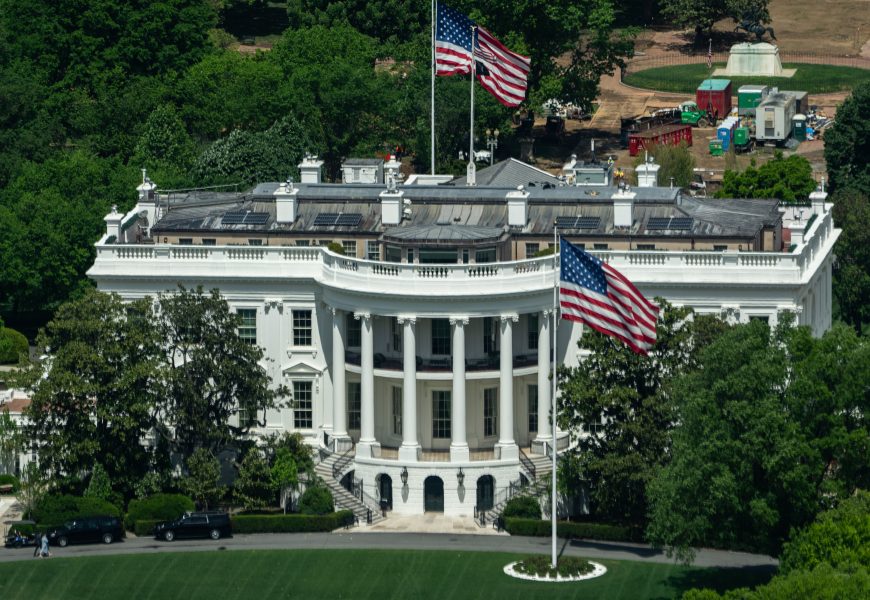

Secrecy surrounding White House security makes details hard to come by, but President Donald Trump's court fight over his $400 million ballroom casts some light on an underground bunker at the site that has had a role in history.
The bunker emerged in the Trump administration's court fight against the National Trust for Historic Preservation, which is challenging the 90,000-square-foot (8,400-square-meter) ballroom project in Washington. A federal appeals court last week permitted the president to continue with construction of the project at the site of the former East Wing, which was demolished last fall.
That ruling put on hold a lower-court judge's order blocking aboveground construction but exempted work to ensure the safety and security of the White House. The Republican administration's appeal cited materials that would be installed to make a "heavily fortified" facility, including adding bomb shelters, military installations and a medical facility underneath the ballroom.
The history of a bunker beneath the East Wing dates to Franklin D. Roosevelt's presidency, when an underground bomb shelter was installed in 1942 after the United States had entered World War II. Beyond that, detail is obscured by secrecy resulting from concerns about presidential safety.
Garrett Graff, a historian and national security author, said the Presidential Emergency Operations Center beneath the East Wing was always intended to be for short-term use.
"The whole point of the sort of presidential evacuation and continuity of the presidency is you want to get the president out of the place where everyone knows that he is and get him into a place where people don't know where he is," Graff said.
High-profile flights to an underground bunker at the White House include Vice President Dick Cheney being taken there because of the Sept. 11, 2001, attacks.
A Secret Service agent burst into the West Wing room, grabbed Cheney by the belt and shoulder and led him to a bunker underneath the White House. "He didn't say, 'Shall we go?'" Cheney told NBC News years later. "He wasn't polite about it."
More recently, Trump was rushed to a White House bunker in 2020 amid protests stemming from the death of George Floyd. At the time, there were chants from protesters at Lafayette Park that could be heard in the building, and Secret Service and law enforcement officers struggled to control the crowds.
Matthew Quinn, deputy director of the Secret Service, wrote in court filings that it's important for the ballroom project to go forward for security at the White House.
"An above-ground slab and topping structure is needed to ensure that key underground structures with a security purpose are properly protected and strengthened," Quinn wrote.
He added: "Leaving the project site unfinished imperils the ability of the Secret Service to meet its statutory mission to protect the President."
Trump last month offered a list of what's being done to enhance security while the ballroom is built.
"The roof is droneproof. We have secure air-handling systems. You know, bad things happen in the air if you have bad people," the president said. "We have biodefense all over. We have secure telecommunications and communications all over. We have bomb shelters that we're building. We have a hospital and very major medical facilities that we're building."
The president took to social media to criticize the lower-court ruling and said the underground portion wouldn't work without the aboveground facility as well.
The National Trust for Historic Preservation has argued that Trump overstepped his authority by moving forward with the project without getting approval from key federal agencies and Congress.
U.S. District Judge Richard Leon ruled in favor of the nonprofit group at the end of March but put his decision on hold briefly while allowing underground work to continue. The administration appealed.
The U.S. Court of Appeals for the District of Columbia Circuit has a hearing for June 5 to review the case.
Taxpayer dollars will pay for the security aspects of the project, though Trump has said the ballroom costs will be covered by donations from wealthy people and corporations. He's said it's a long-overdue addition to the White House complex.
"The underground portion is wedded to, and serves, the upper portion," the president said in a social media post.
What that means in practice is unclear and hinges in part on the outcome of litigation.
More Top Stories