°C
°C
 15
Min
15
Min
U.S. President Donald Trump on Wednesday claimed that China has agreed not to provide weapons to Iran as reports circulate that Beijing has considered transferring arms. China’s Foreign Ministry has repeatedly denied in recent days that the country is providing any form of military support to Iran.
The Latest: US blockade of Iranian ports ‘fully implemented’ as Trump says war is near end

U.S. President Donald Trump on Wednesday claimed that China has agreed not to provide weapons to Iran as reports circulate that Beijing has considered transferring arms. China's Foreign Ministry has repeatedly denied in recent days that the country is providing any form of military support to Iran.
In an interview that aired Wednesday, Trump said the war in Iran was "very close to over." He has declared a U.S. victory repeatedly since mere days after the war started - even as the reality on the ground has been far more complicated.
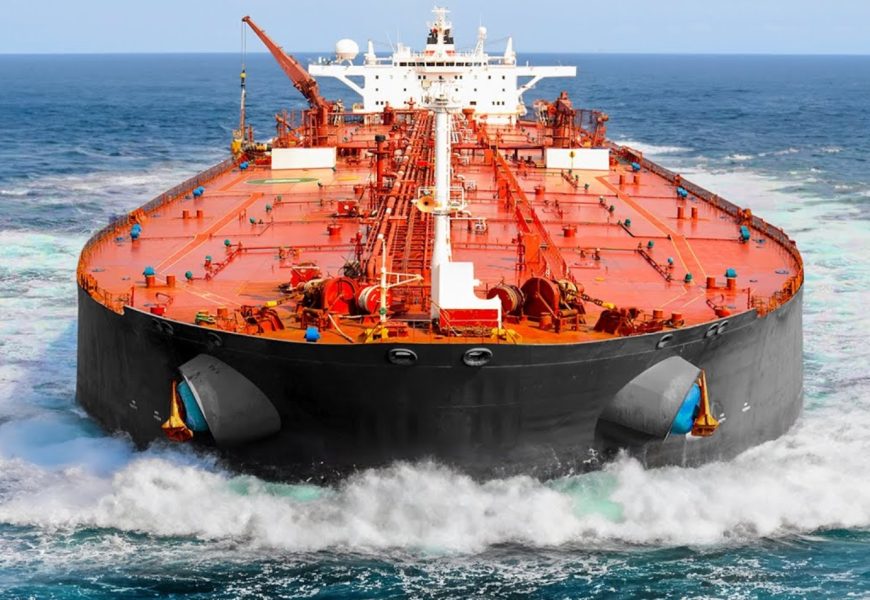
U.S. Central Command said it has achieved "maritime superiority" and that the blockade on Iranian ports had been "fully implemented" within 36 hours of its launch, according to a statement on social media late Monday.
Mediators' efforts to extend a ceasefire between the United States and Iran have made progress as the warring sides are expected to return to the negotiations table, regional officials said. Mediators aim to extend the ceasefire, which is due to expire on April 22, for at least another two weeks to allow diplomacy another chance.
Here is the latest:
UAE Vice President Sheikh Mansour bin Zayed Al Nahyan and Iran's parliamentary Speaker Mohammad Bagher Qalibaf discussed regional developments on a phone call and ways to de-escalate tensions, UAE state-run news agency WAM reported, without further details.
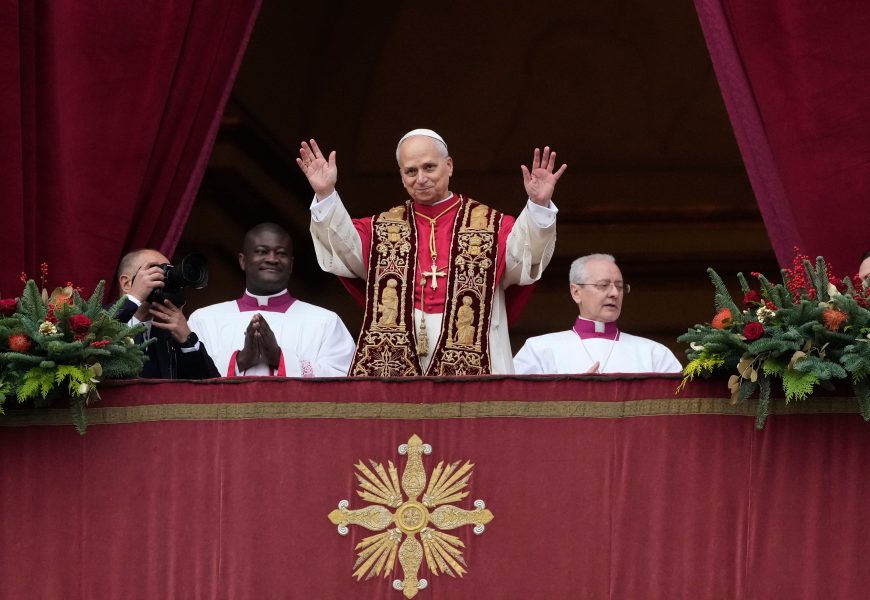
The chairman of the U.S Conference of Catholic Bishops' Committee on Doctrine is defending Pope Leo XIV's comments on the church's "just war" doctrine.
The statement doesn't directly refer to the Iran war, President Trump or Vice President Vance. But it cites "recent public comments" regarding church teachings on war and peace. It comes after Trump blasted the pope on social media. Vance, a Catholic convert, said Leo should be "careful" addressing such matters.
Bishop James Massa said the Catholic Church has long taught that "a nation can only legitimately take up the sword 'in self-defense, once all peace efforts have failed.'"
That, said Massa, is the basis of Pope Leo's comment that God "does not listen to the prayers of those who wage war.'"
The pope is "not merely offering opinions on theology, he is preaching the Gospel and exercising his ministry as the Vicar of Christ," Massa said.
UN Relief Chief Tom Fletcher said $12 million has been allocated for humanitarian support in Iran.
"Thousands of civilians killed. Infrastructure destroyed. Essential services disrupted. This funding will help our partners deliver life-saving assistance at scale," he wrote on X.
"If you wade into political waters, I think you should expect some political response," the Republican leader said at the Capitol. "The pope's received some of that."
Johnson insisted he's not one to criticize clerics or religious leaders, but he leaned into what he called the just war doctrine when it comes to the U.S. military action against Iran. "The stakes are so high," he said.
"I don't want to engage in a theological debate with the pope," he said. "These are matters that people of good faith and good sense can debate."
Johnson a day earlier at the Capitol said that he had asked Trump to take down a social media post that was interpreted as the president depicting himself as Jesus.
An Israeli official said the meeting would be held Wednesday evening. The official spoke on the condition of anonymity because they were not authorized to speak to the media.
The meeting comes a day after Lebanon and Israel held their first direct diplomatic talks in decades in Washington, following more than a month of war between Israel and the Iran-backed Hezbollah militant group.
- Melanie Lidman
U.S. Central Command said in a statement Wednesday that no vessels have made it past U.S. naval forces during the first 48 hours of the blockade on ships entering and exiting Iranian ports.
Central Command also said nine vessels have complied with direction from U.S. forces to turn around and return toward an Iranian port or Iran's coastal area.
A Malta-flagged vessel is the first crude oil carrier to head west through Strait of Hormuz since the United States blocked Iranian ports, according to a global shipping tracking monitor.
The Malta-flagged VLCC Agios Fanourios I is expected to arrive on Thursday to Basra, Iraq, where ports are not under U.S. blockade. Marine Traffic said the vessel attempted again a transit after anchoring in the Gulf of Oman for nearly two days.
The negotiating team led by Vice President JD Vance called for Iran to agree to a uranium enrichment moratorium as part of a potential deal to end the war, according to a regional official involved in the mediation efforts and a person briefed on the matter.
The Iranians rejected the U.S. plan laid out during last weekend's talks in Islamabad and came back with a counteroffer to suspend enrichment for five years, the regional official and a person briefed on the matter. They spoke on condition of anonymity because they were not authorized to comment publicly on the negotiations.
The White House rejected the Iranian proposal that was conveyed by Tehran's negotiators earlier this week.
The White House and the vice president's office did not respond to requests for comment about the proposals.
The U.S. and Iranian proposals were first reported by the New York Times.
Attending a Senate Foreign Relations committee hearing on reforms to the United Nations, ambassador Mike Waltz unintentionally became the highest-level U.S. official to testify before Congress since U.S. and Israeli strikes started a war against Iran.
Democratic senators, including Chris Coons, Chris Murphy and Tim Kaine, took that opportunity to express their frustration with the Trump administration's decision not to consult or further brief Capitol Hill on military action it is taking against Tehran.
"Those of us on the Democratic side do find it amazing that we still have not had an open hearing on this committee or the Armed Services Committee on this conflict," Murphy, who represents Connecticut, told Waltz.
Asked several times about Trump's threats last week to end Iranian civilization, Waltz defended it as "tough talk" and a "mean tweet" that yielded diplomatic results.
"They clearly got the message, and they clearly came back to the table," he said.
Johann Wadephul said it is "unacceptable" that the strait is being controlled by a single state and that tolls are being collected.
"We will demand that a complete opening of the Strait of Hormuz is guaranteed once again," the foreign minister told reporters in Berlin on Wednesday. "This is not just in the interest of the Gulf states, this is not just in the interest of the immediate Asian neighboring states, but it is in the interest of the entire global community."
Referring to the Iran war, Wadephul reiterated that "this conflict can't be solved through military means, it must be solved through negotiations."
He also stressed that "the demands of the U.S. president are right - that the result of negotiations must be that there is no nuclear threat coming from Iran in the future.
The attacks in southern Lebanon killed three paramedics, wounded six others and left a fourth medic missing in the town of Mayfadoun, the health ministry said.
The ministry said Israel struck the first team of paramedics on Wednesday as it was heading to rescue wounded people, killing one paramedic. Another medical worker on that initial mission remains "missing," the ministry said, without elaborating.
Israel struck the second team as it rushed to rescue the first, wounding three more paramedics.
In the third and final rescue attempt, Israel again hit ambulances heading to the site, killing two paramedics and wounding three more.
The Israeli military did not immediately respond to a request for comment on the strikes.
Lebanon's health ministry denounced Israel's attacks as "a flagrant crime" and warned that "paramedics have become direct targets, pursued relentlessly in a blatant violation (of) ... international humanitarian law."
Prime Minister Shehbaz Sharif arrived in Jeddah on Wednesday and is set to meet Saudi Crown Prince Mohammed bin Salman to discuss bilateral ties and regional issues, following recent Pakistan-hosted talks between the United States and Iran.
A statement from Sharif's office in Islamabad said the prime minister was received at the airport by senior Saudi officials.
Sharif is accompanied by a high-level delegation including Foreign Minister Ishaq Dar, Information Minister Attaullah Tarar and the prime minister's spokesman, Mosharraf Zaidi.
Jawad Younes, 11, and his cousins were playing soccer in the lot between their houses, as they often did. His little brother, 4-year-old Mehdi, had joined them but grew tired, so Jawad took him home and handed him off to their mother before returning to the game. Minutes later, an Israeli strike came.
The target was Jawad's uncle's home. The blast shook neighboring buildings and threw Jawad's siblings at home to the ground. As their mother, Malak Meslmani, scrambled to help them up, she could think only of Jawad.
"I was pulling my children off the floor in the house, but as I was running to pick them up, I screamed, 'Jawad,'" she said. "My heart told me."
Her son was instantly killed in the March 27 Israeli strike in Saksakieh. So was one of his cousins - so close they were more like brothers. Several other children were wounded.
Pakistan's army chief arrived in Tehran on Wednesday in the latest diplomatic move to ease tensions in the region and facilitate a second round of negotiations between the United States and Iran, two Pakistani officials said.
The military said the visit is "part of the ongoing mediation efforts" and gave no details.
The head of the U.N. General Assembly's nuclear watchdog said Wednesday that "very detailed" measures to verify Iran's nuclear activities must be included in a potential U.S.-Iran agreement to end their war in the Middle East.
International Atomic Energy Agency Director General Rafael Grossi stressed the need for a thorough verification regime for Iran's nuclear program, as U.S. President Donald Trump said Tuesday that a second round of talks could happen over the next two days.
The Trump administration has said that preventing Iran from gaining a nuclear weapon is a key war aim. Iran has previously said it isn't developing such weapons but rejected limits on its nuclear program.
Lebanese were divided on Wednesday over their government's decision to pursue rare, direct negotiations with Israel in hopes of ending the war between Israel and Iran-backed Hezbollah.
Some forced to flee their homes and communities in southern Lebanon say they believe Israel's ground invasion can only be stopped through military force, not diplomacy.
"We stand with the young men, the fighters, and those stationed on the border, and with whatever decision they make," said Mustafa Alaa Al-Din, now living in Beirut after being displaced from a southern border village. "These negotiations do not represent us ... it's as if they never existed."
Others said they support any initiative that promises to hasten the end of the war.
"The negotiations are more in our interest than in Israel's interest, because we are the ones whose country is being destroyed, we are the ones suffering losses," said Mohamed Saad, a resident of Beirut, the Lebanese capital. "We are the ones out in the streets."
British Prime Minister Keir Starmer has defended sending King Charles III to the U.S. for a state visit later this month despite Trump's threat to tear up a trade agreement with the U.K.
Liberal Democrat leader Ed Davey asked Starmer in Parliament how he could allow Charles to travel to the U.S. after Trump threatened to punish the U.K. "for us not joining his idiotic war in Iran."
"This must be the last straw," Davey said Wednesday. "Surely the prime minister can't send our king to meet a man who treats our country like a Mafia boss running a protection racket."
Starmer says the visit is to mark the 250th anniversary of the U.S. and the bond between the two countries that is more important "than anyone who occupies any particular office at any particular time."
Lebanon's Foreign Ministry has filed an official complaint with the U.N. Security Council over Israel's intense barrage on the country last week that it says killed over 300 people and wounded 1,150 others.
In less than 10 minutes last Wednesday, Israel struck 100 targets across Beirut, the Bekaa Valley and southern Lebanon without warning during rush hour, marking one of the deadliest single bombing campaigns in the country's history. The ministry said in its letter on Wednesday that the majority of casualties were unarmed civilians.
Israel says it targeted Hezbollah militants and infrastructure, but has offered few details on what was hit.
The foreign ministry also condemned Israeli attacks on Lebanese medical facilities as violations of international law. It said Israel has launched 17 attacks on hospitals and 101 attacks on emergency response teams in its latest war against Hezbollah.
Iranian Foreign Ministry spokesman Esmail Baghaei said Iran is open to discussing the type and level of its uranium enrichment, but his country "based on its needs, must be able to continue enrichment," Iran's state media reported.
A senior U.S. official said Wednesday that the United States has not formally agreed to extend the ceasefire and that "engagement" with Iran continues.
The official spoke on condition of anonymity as they were not authorized to publicly discuss the sensitive negotiations.
___
Associated Press reporter Seung Min Kim contributed to this report.
British Prime Minister Keir Starmer said he would not alter his stance to stay out of the war in Iran after U.S. President Donald Trump threatened to tear up a trade deal with the U.K.
Trump told Sky News on Tuesday night that the U.K. had not been there when the U.S. needed their help. Trump said the so-called special relationship between the allies had been better.
"It's been better, but it's sad," Trump said. "And we gave them a good trade deal. Better than I had to. Which can always be changed."
Starmer said a lot of pressure had been put on him to change course, including Trump's latest remarks.
"I'm not going to change my mind," Starmer said. "I'm not going to yield. It is not in our national interest to join this war, and we will not do so."
Trump on Wednesday claimed that China has agreed not to provide weapons to Iran, as reports circulate that Beijing has considered transferring arms.
Trump wrote in a social media post that China is "very happy that I am permanently opening the Strait of Hormuz." He said, "They have agreed not to send weapons to Iran." He seemed to suggest the two are linked.
The president had told an interviewer on Tuesday that Chinese President Xi Jinping had denied sending weapons to Iran.
China's Foreign Ministry spokespersons have repeatedly denied in recent days that the country is providing any form of military support to Iran.
China has long supported Iran's ballistic missile program and backed it with dual-use industrial components that can be used for missile production, according to the US government.
Iranian state media reported that the commander of Iran's joint military command warned that Iran would completely block exports and imports across the Persian Gulf region, the Sea of Oman, and the Red Sea if the United States does not lift its blockade on Iranian ports.
"Iran will act with strength to defend its national sovereignty and its interests," said Ali Abdollahi.
He added that the U.S. blockade is "a prelude to violating the ceasefire."
Iran effectively closed the Strait of Hormuz when Israel and the United States launched strikes against it more than a month ago. The United States on Monday began blockading ships trying to enter or leave Iranian ports and said it would not impede the freedom of navigation of other vessels in the Persian Gulf.
Trump said in the Fox News interview that Xi Jinping issued the denial in a written response letter to Trump, after the U.S. president wrote him following reports that surfaced about China supplying Iran with weapons for the war.
"I wrote him a letter asking him not to do that. And he wrote me a letter saying that, essentially, he's not doing that," Trump said.
Trump is scheduled to meet Xi in Beijing in early May.
In an interview Sunday with Maria Bartiromo of Fox News, Trump had said fuel prices could be the same or "maybe a little bit higher" by the November congressional elections.
But in a separate interview with Bartiromo, which was taped on Tuesday at the White House and broadcast on Wednesday, Trump claimed he'd been misquoted and tried to overcome the blowback from his previous comments.
He said he's happy with oil costing about $92 per barrel. "It's going to come dropping down very big as soon as this is over," he said, referring to the war. "And I think it can be over very soon."
Later in the interview, he predicted that gas prices, now averaging slightly above $4 a gallon, will be "much lower" by the elections.
Speaking again about the war, Trump said, "When that's settled, gas prices are going to go down tremendously."
Israel's military said on Wednesday that it had struck more than 200 Hezbollah targets in southern Lebanon as it presses ahead with its aerial and ground war there despite the U.S.-Iran ceasefire.
Lebanon's National News Agency reported airstrikes and artillery shelling in multiple southern Lebanese locations on Wednesday, including near Bint Jbeil, where Israeli forces have encircled Hezbollah fighters.
The fighting in the south has continued after Israeli and Lebanese officials concluded their first direct talks in decades. Lebanese officials want a ceasefire to halt fighting that has displaced more than 1 million people in their country, while Israel wants the Lebanese government to assume responsibility for disarming Hezbollah.
More Top Stories