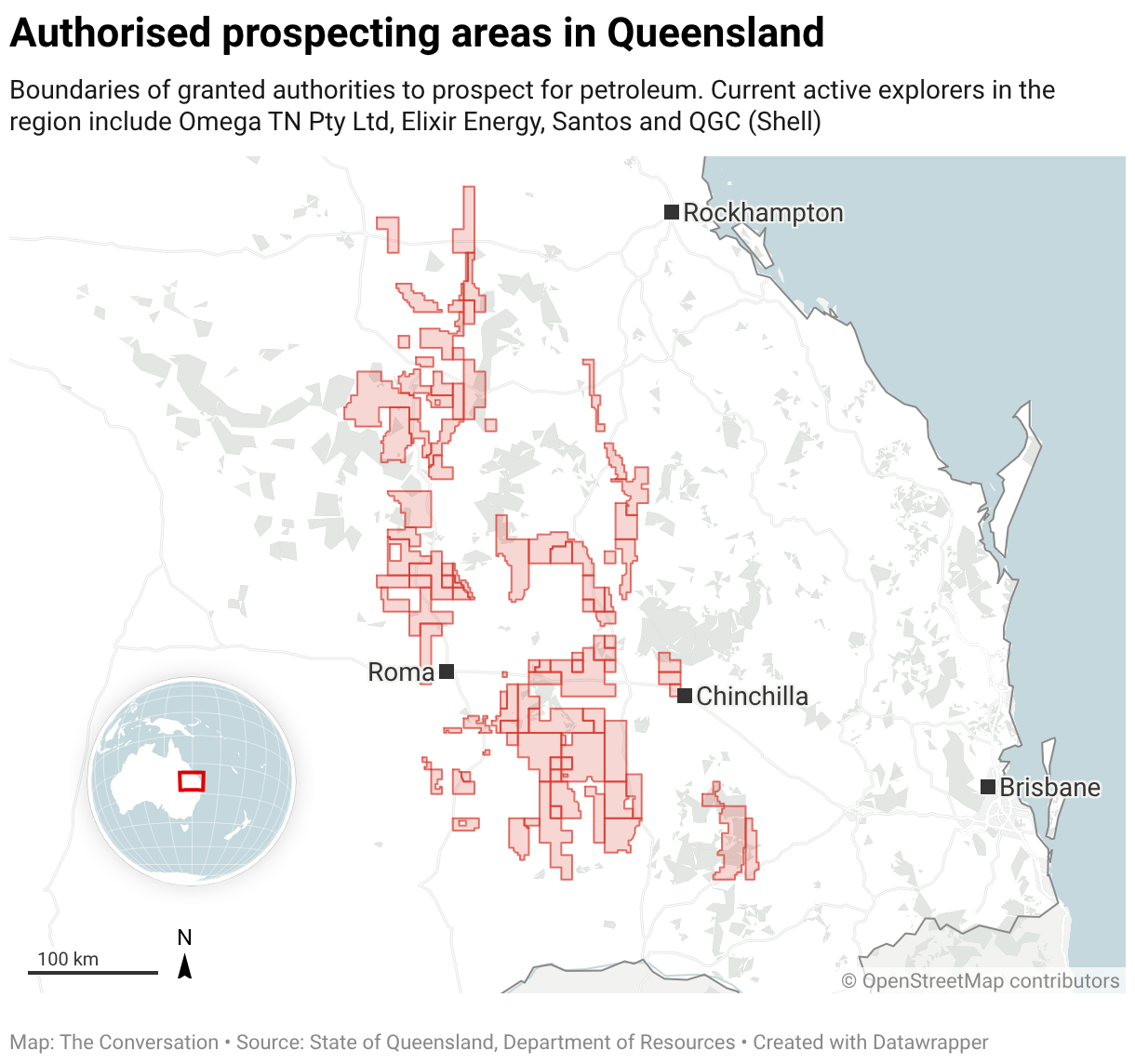
Fracking uses large volumes of water, which companies would likely look to draw from the Great Artesian Basin and the nearby Dawson River, or use recycled water from the fracking process.
Either way, the region's large agricultural sector may oppose oil and gas interests using water - especially given concerns around possible pollution of groundwater. Previous attempts to frack agricultural areas triggered strong resistance from groups such as Lock the Gate.
Backers may see this year's fuel crisis as a way to fast-track to open up the Taroom Trough. But it's not the only domestic option. The Dorado oil field was found off Western Australia's coast in 2018. Its potential resources could almost double Australia's commercial oil reserves. Despite interest, it has been deferred several times.
History repeating?
In 1964, oil began to flow from Australia's first oil field, Queensland's Moonie. This success drove significant interest in domestic oil and led to exploration of the Gippsland Basin, which has supplied more than 5 billion barrels of oil.
In 1973, an oil shock hit the world economy for the first time amid the Arab embargo. In Australia, the "Rundle Twins" - Southern Pacific Petroleum and Central Pacific Minerals - promised a solution: open up the Stuart field near Gladstone, which, they claimed, boasted 20 billion tonnes of shale oil - bigger than the enormous North Sea field. The two smaller companies drew oil giant Exxon to the project - only for it to walk away when the project didn't stack up economically or environmentally.


 °C
°C
 6
Min
6
Min