°C
°C
 4
Min
4
Min
LIMA, Peru (AP) – Keiko Fujimori, the conservative daughter of a disgraced former Peruvian president, and Roberto Sánchez, a nationalist congressman and former minister, were leading in the race for Peru’s next president as ballots were being tallied on Wednesday for a fourth straight day.
Allies of disgraced former presidents lead in Peru presidential election
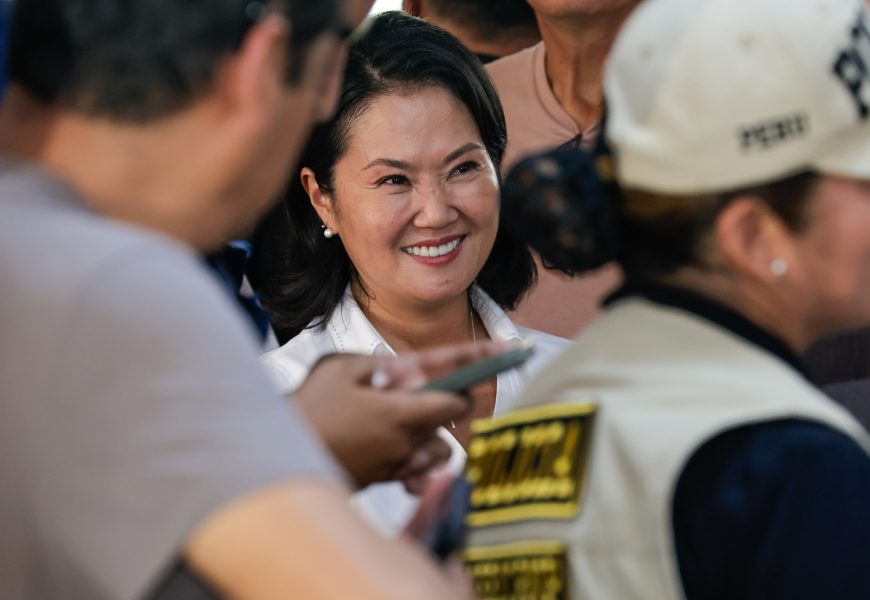

LIMA, Peru (AP) - Keiko Fujimori, the conservative daughter of a disgraced former Peruvian president, and Roberto Sánchez, a nationalist congressman and former minister, were leading in the race for Peru's next president as ballots were being tallied on Wednesday for a fourth straight day.
Voting in Sunday's election had been extended into Monday after ballots were not delivered in time to polling stations.
With 90% of the ballots counted, official results on Wednesday showed Fujimori leading with 16.98% of the votes, while Sánchez had earned 12.04%. Trailing narrowly in third place was Rafael López Aliaga, the ultraconservative former mayor of Peru's capital, Lima, with 11.90%.
The election has been mired in logistical problems that left thousands in the country and abroad unable to cast ballots. That prompted authorities to allow more than 52,000 residents of Lima to vote on Monday. The extension, announced after vote counting had begun on Sunday evening, also covered Peruvians registered to vote in Orlando, Florida, and Paterson, New Jersey.
A presidential candidate needs more than 50% of votes to win outright. The two candidates with the most votes in a first round advance to the runoff on June 7.
The sluggish pace of the count mirrored Peru's 2021 presidential election, a contest where final tallies were not completed until five days after polls closed.
The winner will be Peru's ninth president in just 10 years and will replace José María Balcázar, who was elected interim president in February. He replaced another interim leader who was ousted over corruption allegations just four months into his term.
Fujimori is the daughter of Alberto Fujimori, whose decade-long presidency began with triumphs righting Peru's economy and defeating a brutal insurgency only to end in autocratic excess that later sent him to prison.
In her fourth bid for the presidency, Keiko Fujimori has promised to crack down on crime but has also defended laws that experts say make it difficult to prosecute criminals. The laws, which her party backed in recent years, eliminated preliminary detention in certain cases and raised the threshold for seizing criminal assets.
If elected, she has said that judges presiding over criminal cases will be anonymous and prisoners will have to work to earn their food.
Sánchez, who served as minister of foreign trade under ex-President Pedro Castillo, has pledged to use the executive power of the pardon if elected to release his ally and former mentor.
During Sánchez's campaign, he frequently wore a wide-brimmed Andean peasant hat, a gift from Castillo, his political ally now in prison. Castillo was sentenced in 2025 to 11 and a half years in prison for conspiring to commit a rebellion in 2022.
Voting is mandatory for Peruvians from the ages of 18 to 70 and failure to vote comes with a fine of up to $32.
The election took place against a backdrop of surging crime and corruption that has fueled widespread discontent among voters, who largely view candidates as dishonest and unprepared for the presidency.
Peru's economy, however, has defied both the crime surge and the political instability stemming from a revolving door of presidents, having had three since last October alone. Aided by its status as one of the world's largest copper producers, the country posted more than 3% growth in 2024 and 2025, though that's lower than the 5%-6% annual growth it saw in the 2000s.
Will Freeman, a fellow for Latin American Studies at the Council on Foreign Relations, explained that the independence of the country's central bank has also contributed to economic growth.
"Although Peru has had all these presidents, it has had only one central bank president since the mid-2000s," Freeman said. "He's been a real source of stability and given investors some confidence that there is an institutional core that remains from one presidency to the next in Peru."
More Top Stories