°C
°C
 17
Min
17
Min
Pakistan’s army chief is set to meet with Iranian officials in Tehran on Thursday in a bid to ease tensions in the Middle East and arrange a second round of negotiations between the United States and Iran after almost seven weeks of war.
The Latest: Pakistan’s army chief to meet Iranian officials in Tehran to push new US-Iran talks
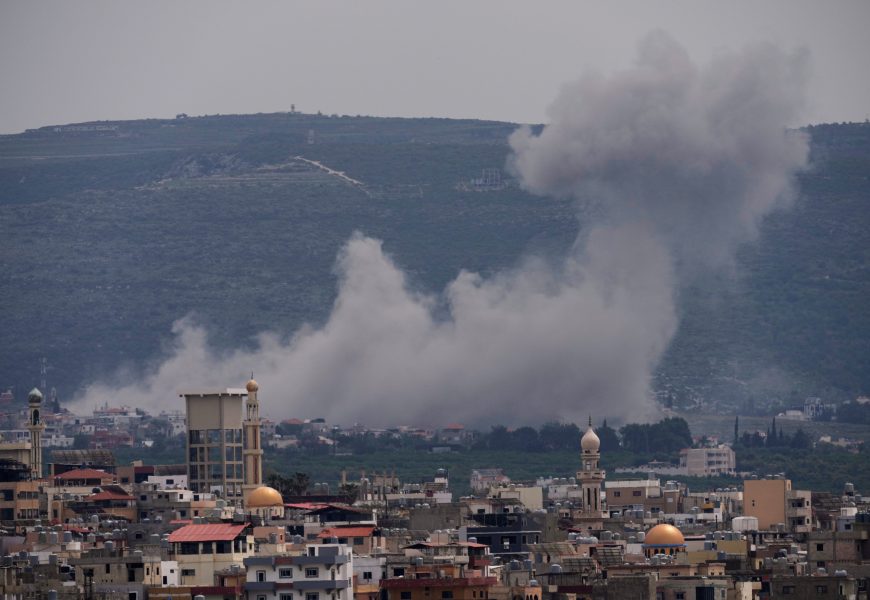

Pakistan's army chief is set to meet with Iranian officials in Tehran on Thursday in a bid to ease tensions in the Middle East and arrange a second round of negotiations between the United States and Iran after almost seven weeks of war.
In a related development, China's foreign minister told his Iranian counterpart that reopening of the Strait Hormuz was an international demand. Wang Yi told Abbas Araghchi in a phone call that Iran's sovereignty, security, and legitimate rights should be respected as a littoral state of the Strait of Hormuz, but freedom of navigation and safety through the strait should be ensured.
"Working to resume normal passage of the strait is a unanimous call from the international community," Wang was quoted as saying in a government statement late Wednesday.
The U.S. naval blockade of Iranian ports continued as U.S. Treasury Secretary Scott Bessent said the Trump administration would ramp up economic pain on Iran with new economic sanctions on countries doing business with it, calling the move the "financial equivalent" of a bombing campaign.
The White House said any further talks with Iran would likely take place in the Pakistani capital of Islamabad, though no decision had been made on whether to resume negotiations. Pakistan has emerged as a key mediator after it hosted direct talks between the U.S. and Iran in Islamabad.
In a development in the war's other front, Trump wrote late Wednesday on Truth Social that leaders from Israel and Lebanon would speak the next day in a renewed effort to broker a ceasefire after the countries' first direct talks in decades ended the previous day in Washington without a deal. It was not clear what leaders Trump was referring to. The Israeli prime minister's office did not immediately respond for comment, which was posted before dawn in Israel and Lebanon.
Here is the latest:
Trump wrote late Wednesday on Truth Social that leaders from Israel and Lebanon would speak the next day in a renewed effort to broker a ceasefire after the countries' first direct talks in decades ended the previous day in Washington without a deal. It was not clear what leaders Trump was referring to. The Israeli prime minister's office did not immediately respond for comment, which was posted before dawn in Israel and Lebanon.
Chinese Foreign Minister Wang Yi told his Iranian counterpart that reopening the Strait of Hormuz was a unanimous demand from the international community.
Wang Yi told Iran's Foreign Minister Abbas Araghchi in a phone call that Iran's sovereignty, security, and legitimate rights should be respected as a littoral state of the Strait of Hormuz, but freedom of navigation and safety through the strait should be ensured.
"Working to resume normal passage of the strait is a unanimous call from the international community," Wang was quoted as saying in a government statement late Wednesday.
Wang noted that the current situation had reached a critical juncture between war and peace and also said that the window of peace was opening .
Paramedic groups say a fourth Lebanese rescue worker has died after three consecutive, targeted strikes by the Israeli military Wednesday that also wounded six others.
The back-to-back Israeli attacks on the southern village of Mayfadoun, near the bigger town of Nabatiyeh, hit the first group of medics responding to a distress call from wounded civilians, a second group trying to assist their wounded colleagues and a third group rushing to aid the first two teams that had been targeted.
The Israeli military did not respond to a request for comment on the strikes beyond saying it was "looking into" what happened. It has previously accused the Iran-backed Hezbollah militant group of using ambulances as cover for militant activities, without offering evidence.
Officials say there were no suspicious circumstances behind the blaze that broke out late Wednesday at the Viva Energy Geelong refinery southwest of Melbourne, and no one was injured.
The facility is one of two refineries in Australia and provides 10% of the nation's gasoline, diesel and jet fuel.
Australia has agreed to underwrite two companies buying fuel at prices inflated by the war. Prime Minister Anthony Albanese warned last week that supply disruptions would "have a long tail" even if the Iran ceasefire holds.
The government had agreed to terms with Australia's largest suppliers Ampol and Viva Energy to underwrite contracts for gasoline and diesel bought on the spot market for prices above normal commercial rates, Albanese said.
Energy Minister Chris Bowen said Thursday it was too early to tell the extent of the fire's impact on gasoline production.
"The refinery is still producing diesel and jet fuel at reduced levels as a safety precaution," Bowen told the Australian Broadcasting Corp.
On gasoline, Bowen said, "It's not a positive development. It will have an impact."
Firefighters said the blaze had been contained to the gasoline plant.
According to the statement, Sharif assured the Kingdom of Pakistan's "full solidarity and support" and praised what he described as Saudi Arabia's restraint under the crown prince's leadership.
Pakistan has a defense agreement with the Kingdom, which has faced retaliatory attacks from Iran in recent weeks, causing damage.
Prime Minister Shehbaz Sharif met Saudi Crown Prince Mohammed bin Salman during a visit to the Kingdom, briefing him on Pakistan's efforts to ease U.S.-Iran tensions and assuring him of Islamabad's "full support," his office said before dawn Thursday.
Wednesday's meeting lasted more than two hours, and Sharif was accompanied by Foreign Minister Ishaq Dar.
The statement said the crown prince praised what it described as the constructive role played by Sharif and Pakistan's army chief, Field Marshal Asim Munir, in the peace process.
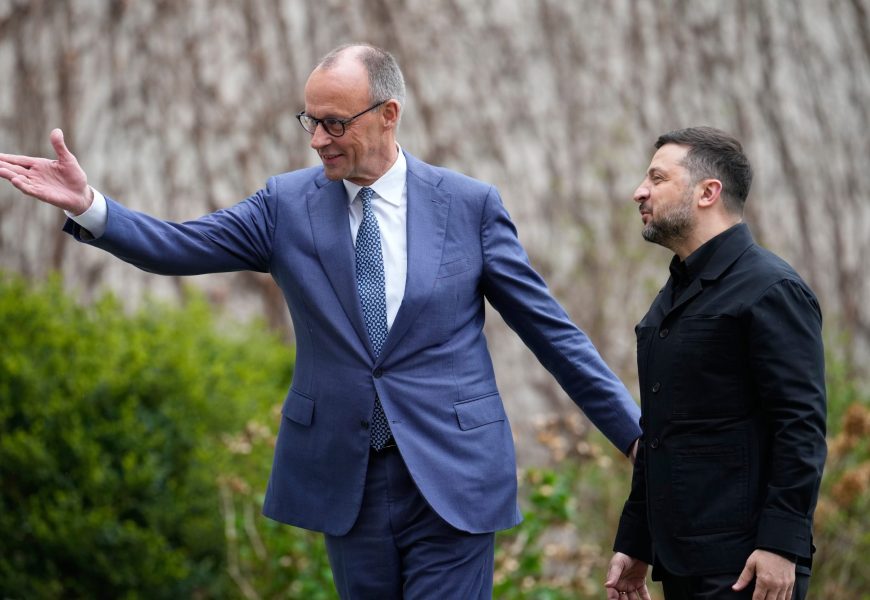
Sharif dispatched Munir to Tehran for talks with Iranian leaders.
Pakistan has long maintained close ties with Saudi Arabia while also keeping relations with Iran.
"We are subject to the decisions of the relevant officials, but personally I do not agree to extend the ceasefire," said Mohsen Rezaei, formerly a commander in the Iranian Revolutionary Guard Corps who now advises Mojtaba Khamenei on military affairs, Iranian state media reported.
Rezaei also urged officials to be more cautious than they had been before in negotiations over economic matters with the U.S.
He said Iran was setting the preconditions in the next round of talks, not the U.S.
"Unlike the Americans who are afraid of continuous war, we are fully prepared and familiar with a long war," he said, according to the report.
That's according to Adm. Brad Cooper, head of U.S. Central Command, who says: "U.S. forces have completely halted economic trade going in and out of Iran by sea."
The command said Wednesday that no vessels have made it past its forces during the blockade's first 48 hours. The blockade began Monday.
Central Command noted that 10 vessels have complied with directions to turn around and return toward an Iranian port or Iran's coastal area.
The blockade is being enforced "impartially against all vessels of all nations entering or leaving coastal areas or ports in Iran," the Command said. Vessels avoiding Iranian ports are not affected.
The action could put serious pressure on the Iranian economy, while Tehran's earlier cutoff of the waterway crucial to oil and gas supplies has sent energy prices higher.
The U.S. stock market hit a record Wednesday after adding to its two-week rally built on hopes the war won't create a worst-case scenario for the global economy.
The S&P 500 rose 0.8% and eclipsed its prior all-time high set in January. After falling nearly 10% below its record in late March, the index at the heart of many 401(k) accounts has since roared more than 10% higher.
Much of the rally was due to expectations for calming tensions in the war and a resumption of the full flow of oil from the Persian Gulf. Hopes remained high as regional officials told The Associated Press that the U.S. and Iran had an "in principle agreement" to extend a ceasefire to allow for more diplomacy.
The world's largest aircraft carrier, the USS Gerald R. Ford, broke the U.S. record Wednesday for the longest post-Vietnam War deployment, a nearly 10-month span that saw it take part in both the military raid that captured Venezuela's leader and the Iran war.
The ship's 295th day at sea surpassed the previous longest modern deployment by an aircraft carrier, when the USS Abraham Lincoln was sent out for 294 days in 2020 during the COVID-19 pandemic, according to data compiled by U.S. Naval Institute News, a news outlet run by the nonprofit U.S. Naval Institute.
Sen. Tim Kaine said the record-breaking deployment has taken "a serious toll" on the mental health and well-being of the crew.
"They should be home with their loved ones, not sent around the world by a President who acts like the U.S. military is his palace guard," the Virginia Democrat said.
Narges Mohammadi 's family and lawyers visited her in Zanjan prison twice in the last month, a statement by the Narges Mohammadi Foundation said on X Wednesday, finding that her health condition was dire. She is weak, pale and has lost weight, said the statement.
The report comes after Mohammadi had a heart attack in the prison on March 24, according to a cardiologist she saw soon after, according to the statement.
The statement said that following the heart attack Mohammadi was unconscious without anyone resuscitating her for over an hour.
Her brother, Hamidreza Mohammadi, said in the Wednesday statement that the cardiologist who saw her after the collapse told the family it was partially due to the medicines she'd been prescribed by prison doctors.
He added that she was being kept in a cell with people convicted of murder and that she'd faced threats from them on numerous occasions.
Mohammadi is a rights lawyer who won the Nobel Peace Prize in 2023 while in prison. She was arrested in December during a visit to the eastern Iranian city of Mashhad and sentenced to seven more years in prison.
Iranian foreign minister Abbas Araghchi took part in a preliminary meeting with the Pakistani Army Chief of Staff, Asim Munir, in Tehran Wednesday, according to a report on IRIB, Islamic Republic of Iran Broadcasting.
The report said more extensive talks would continue Thursday to discuss latest communications with the US.
Pakistan is mediating talks between Washington and Tehran.
A U.S. official says President Donald Trump would welcome an end to the Israel-Hezbollah conflict as part of a broader peace agreement between Israel and Lebanon but has not specifically asked for one.
The official, speaking on condition of anonymity to discuss the Trump administration's position during closed-door talks between Israel and Lebanon, said an Israel-Hezbollah truce is not part of peace negotiations the U.S. is having with Iran.
Iran has demanded a truce between Israel and its proxy Hezbollah as a condition to return to talks with the United States.
Secretary of State Marco Rubio on Tuesday hosted the first talks in decades between high-level Israeli and Lebanese officials.
Prime Minister Benjamin Netanyahu said the current fighting is concentrated in the strategic south Lebanon town of Bint Jbeil, where Israeli troops are about to "eliminate this great stronghold of Hezbollah."
Netanyahu, in a video address Wednesday evening, said he has given instructions for the military to continue to widen the security zone in south Lebanon - a reference to areas close to the border that the Israeli army now occupies - and to spread it eastward.
He said Israel is concurrently negotiating with Lebanon, with two central goals: disarming Hezbollah and a sustainable peace. "Peace through strength," he added.
He also said the U.S. was updating Israel on the talks with Iran and that Israel was prepared for any scenario, should the fighting with Iran resume.
The Republican-led Senate on Wednesday rejected the latest Democratic attempt to halt President Donald Trump's war in Iran, turning aside a resolution that would require the U.S. to withdraw forces from the conflict until Congress authorizes further action.
The 47-52 vote was the fourth time this year that the Senate has voted to cede its war powers to the president in a conflict that Democrats say is illegal and unjustified. Republicans say they will keep faith in Trump's wartime leadership, for now, citing Iran's nuclear capabilities and the high stakes of withdrawal. But GOP lawmakers are also anxious for the conflict to end - and they may not defer to the executive branch indefinitely.
Some Republicans have already made clear that they are eyeing future votes that could become an important test for the president if the war drags on.
The U.S. is imposing sanctions targeting an Iranian oil smuggling network tied to the deceased senior Iranian security official Ali Shamkhani.
Sanctions include dozens of individuals and companies accused of transporting and selling Iranian and Russian oil through front companies, many of which are in the UAE.
Treasury Secretary Scott Bessent said in a statement, that banks "should be on notice that Treasury will leverage all tools and authorities, including secondary sanctions, against those that continue to support Tehran's terrorist activities."
Treasury Secretary Scott Bessent warned on Wednesday that the U.S. is preparing to ramp up economic pain on Iran, saying the Republican administration is preparing action that will be the "financial equivalent" of the bombing campaign.
Bessent said the administration has "told companies, we have told countries that if you are buying Iranian oil, that if Iranian money is sitting in your banks, we are now willing to apply secondary sanctions, which is a very stern measure. And the Iranians should know that this is going to be the financial equivalent of what we saw in the kinetic activities."
The warning comes the day after Treasury Department sent a letter to financial institutions in China, Hong Kong, the United Arab Emirates, and Oman, threatening to levy secondary sanctions for doing business with Iran.
White House press secretary Karoline Leavitt said the U.S. had not "formally requested an extension of the ceasefire" with Iran.
The ceasefire announced on April 7 is currently slated to expire next Tuesday.
"At this moment, we remain very much engaged, in these negotiations, in these talks," Leavitt said, adding that there are "discussions" about more talks being held unperson "but nothing is official until you hear it from us here at the White House."
She said that the possible next rounds of talks "would very likely" be in the Pakistani capital of Islamabad as they were previously.
Asked if the tax refunds would go toward gasoline averaging more than $4 a gallon, Treasury Secretary Scott Bessent said the public is free to spend its money however it wants.
"Americans have more money. They can decide how they want to spend it," Bessent said.
Higher prices at the pump because of the Iran war has created the risk that President Donald Trump's tax cuts will offset the cost of fueling up autos to go to work and run errands, instead of boosting spending in ways that could help overall economic growth.
Treasury Secretary Scott Bessent told reporters that he believes gasoline prices will be closer to $3 gallon this summer, saying pumping oil can resume within a week of the Strait of Hormuz opening.
"I'm optimistic that sometime between June 20th and September 20th that we can have $3 gas again," said Bessent.
Gas prices are averaging $4.11 a gallon, up from $3.17 a year ago, according to AAA.
U.S. Navy warships are telling merchant ships in and around Iran that they are ready to board them and use force to compel compliance with the blockade on ships trading with Iran.
"Vessels will be boarded for interdiction and seizure transiting to or from Iranian port," a Navy radio message, posted to social media by U.S. Central Command, said. A military official, who spoke on condition of anonymity to discuss an ongoing military operation, confirmed the message is currently being broadcast to all ships in the region.
"If you do not comply with this blockade, we will use force," the radio message added.
- Konstantin Toropin
UAE Vice President Sheikh Mansour bin Zayed Al Nahyan and Iran's parliamentary Speaker Mohammad Bagher Qalibaf discussed regional developments on a phone call and ways to de-escalate tensions, UAE state-run news agency WAM reported, without further details.
U.N. Relief Chief Tom Fletcher said $12 million has been allocated for humanitarian support in Iran.
"Thousands of civilians killed. Infrastructure destroyed. Essential services disrupted. This funding will help our partners deliver life-saving assistance at scale," he wrote on X.
An Israeli official said the meeting would be held Wednesday evening. The official spoke on the condition of anonymity because they were not authorized to speak to the media.
The meeting comes a day after Lebanon and Israel held their first direct diplomatic talks in decades in Washington, following more than a month of war between Israel and the Iran-backed Hezbollah militant group.
- Melanie Lidman
U.S. Central Command said in a statement Wednesday that no vessels have made it past U.S. naval forces during the first 48 hours of the blockade on ships entering and exiting Iranian ports.
Central Command also said nine vessels have complied with direction from U.S. forces to turn around and return toward an Iranian port or Iran's coastal area.
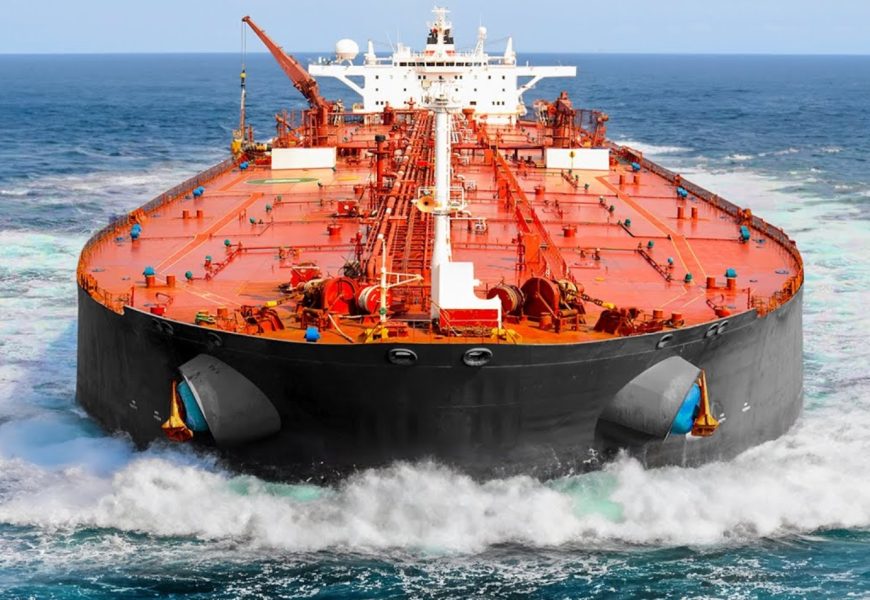
A Malta-flagged vessel is the first crude oil carrier to head west through Strait of Hormuz since the United States blocked Iranian ports, according to a global shipping tracking monitor.
The Malta-flagged VLCC Agios Fanourios I is expected to arrive on Thursday in Basra, Iraq, where ports are not under U.S. blockade. Marine Traffic said the vessel attempted again a transit after anchoring in the Gulf of Oman for nearly two days.
The negotiating team led by Vice President JD Vance called for Iran to agree to a uranium enrichment moratorium as part of a potential deal to end the war, according to a regional official involved in the mediation efforts and a person briefed on the matter.
The Iranians rejected the U.S. plan laid out during last weekend's talks in Islamabad and came back with a counteroffer to suspend enrichment for five years, the regional official and a person briefed on the matter. They spoke on condition of anonymity because they were not authorized to comment publicly on the negotiations.
The White House rejected the Iranian proposal that was conveyed by Tehran's negotiators earlier this week.
The White House and the vice president's office did not respond to requests for comment about the proposals.
The U.S. and Iranian proposals were first reported by the New York Times.
Attending a Senate Foreign Relations Committee hearing on reforms to the United Nations, ambassador Mike Waltz unintentionally became the highest-level U.S. official to testify before Congress since U.S. and Israeli strikes started a war against Iran.
Democratic senators, including Chris Coons, Chris Murphy and Tim Kaine, took that opportunity to express their frustration with the Trump administration's decision not to consult or further brief Capitol Hill on military action it is taking against Tehran.
"Those of us on the Democratic side do find it amazing that we still have not had an open hearing on this committee or the Armed Services Committee on this conflict," Murphy, who represents Connecticut, told Waltz.
Asked several times about Trump's threats last week to end Iranian civilization, Waltz defended it as "tough talk" and a "mean tweet" that yielded diplomatic results.
"They clearly got the message, and they clearly came back to the table," he said.
More Top Stories