°C
°C
 4
Min
4
Min
INDIANAPOLIS (AP) – Alexander Rossi wasted no time offering a blunt critique of how race officials reacted to his stalled car during Saturday’s Indianapolis Grand Prix.
Delayed full-course caution in Indianapolis GP prompts IndyCar officials to make rule change
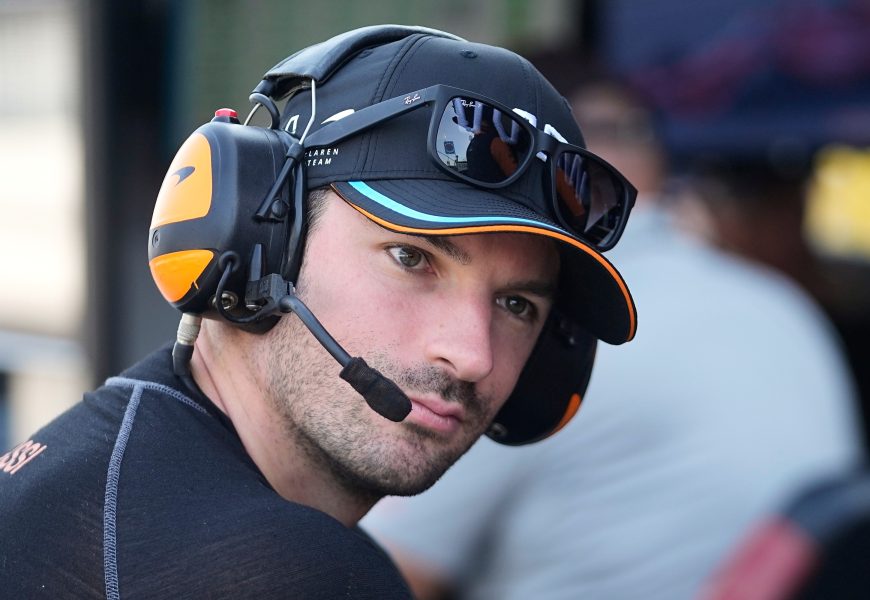

INDIANAPOLIS (AP) - Alexander Rossi wasted no time offering a blunt critique of how race officials reacted to his stalled car during Saturday's Indianapolis Grand Prix.
Naturally, he was upset the No. 20 car wound up parked next to the concrete wall near Indianapolis Motor Speedway's famed yard of bricks. What really irked him, though, was waiting another lap for a full-course caution to come out.
IndyCar Officiating heard the complaints and responded Tuesday by announcing the series would no longer consider race order or pit window status to determine whether to employ a full-course yellow or a local caution.
Drivers almost universally lauded the move, just hours before their first Indianapolis 500 practice.
"I was surprised it took so long to be thrown," Marcus Armstrong of Meyer Shank Racing said Tuesday. "But there was also debris on the track at the time on the race line, which is what they threw the yellow for at Long Beach, so I thought a yellow would be thrown for that. Not sure why it wasn't, but I think it should be totally yellow when there is danger for drivers. Rossi trying to jump out of his car - safety needs to be the priority."
The rule change won't impact the Greatest Spectacle in Racing, scheduled for May 24, because there are no local yellows on ovals.
But it's intended to avoid a repeat of Saturday's scary scene when Rossi climbed out of his cockpit and across the wall separating the racetrack from pit lane before walking to his pit stall. Rossi waited for the full-course caution to come out and when it didn't the 2016 Indianapolis 500 winner, who now drives for Ed Carpenter Racing, left nobody guessing about his thoughts.
"It's pretty annoying to have failures on the car because of a product that we didn't ask for, that doesn't improve the racing, so that's frustrating," Rossi told Fox's pit reporter. "Second, the fact it took that long to throw a full-course yellow when a car is on the front straight, people are going 175 mph, also seems insane when they didn't let us run in the rain (Friday). So I don't know where the priorities lie."
The series' Independent Officiating Board tried to clarify what happened Tuesday, saying in a news release Rossi's car was out of the normal racing line and that Saturday's decision to throw a local yellow was based on a standard set of factors that included both pit windows and running order.
Moving forward, though, those two factors will not be used in the equation of when a full-course yellow is needed.
"The Lap 21 incident on Saturday made clear there needs to be a cleaner standard for how race control moves from a local to a full-course yellow," said Raj Nair, the chairman of the new board. "IndyCar Officiating, with IndyCar's full support, has made this change of approach to ensure that the only inputs to the full course yellow escalation are safety ones."
It's the second rule change the series has made since the season moved to the historic Brickyard for May. But it's one everyone seems to believe is warranted.
"The most important job in race control is to ensure the safety of our drivers, crews, safety workers and fans," IndyCar President Doug Boles said in a news release. "Saturday highlighted we must not waver from that central mission, and aligning everyone on that philosophy was critical to discuss over the last 48 hours."
The drivers concur.
"I heard there was something that came out this morning," said Josef Newgarden, a two-time 500 champion who drives for Team Penske. "Every incident is different, but I think IndyCar has always tried to optimize the show versus safety and whatever they've tried to do, I fully support."
More Top Stories