°C
°C
 16
Min
16
Min
Acting Attorney General Todd Blanche on Tuesday wouldn’t rule out the possibility that violent rioters at the U.S. Capitol on Jan. 6, 2021, will be considered for payouts from a new $1.776 billion fund to compensate individuals who believe they were targeted politically.
The Latest: Blanche faces questions from lawmakers over a fund to compensate Trump allies


Acting Attorney General Todd Blanche on Tuesday wouldn't rule out the possibility that violent rioters at the U.S. Capitol on Jan. 6, 2021, will be considered for payouts from a new $1.776 billion fund to compensate individuals who believe they were targeted politically. Testifying before Congress for the first time since taking the reins of the Justice Department last month, Blanche defended the "Anti-Weaponization Fund" while Democrats blasted it as an illegal abuse of power.
Also, Trump said he's holding off on a military strike on Iran planned for Tuesday because "serious negotiations" are underway to end the war. Trump said he had planned "a very major attack" but put it off - "for a little while, hopefully, maybe forever." He said America's allies in the Gulf asked him to wait for two to three days because they feel they're close to a deal with Iran.
Republican voters in northern Kentucky will choose between U.S. Rep. Thomas Massie and challenger Ed Gallrein in Tuesday's House primary, another test of Trump's power over his party after he handpicked Gallrein to take on the incumbent. Follow live updates of Tuesday's primary elections.
Here's the latest:
Senate Majority Leader John Thune is expressing disappointment over President Trump's endorsement of Texas Attorney General Ken Paxton in the state's upcoming GOP primary.
Thune, a Republican from South Dakota, who has long pressed Trump to endorse incumbent Sen. John Cornyn, said that Trump's decision "doesn't change the way I feel."
Cornyn is "a principled conservative, he's a very effective senator for the state of Texas," Thune told reporters shortly after Trump's announcement. "None of us control what the president does."
He did not have a heads up on Trump's decision, Thune said, and found out "the way everybody else did."
Still, Thune said, "I feel very good about where we are" as Republicans seek to hold their majority in this year's midterm elections.
The vice president continued to defend the administration's strategy in Iran, saying that active conflict lasted about as long as President Trump's initial four- to six-week prediction and that the two countries were currently in a ceasefire.
"We're going to get a good settlement that actually gets the American people what they need, or we're going to go back to a kinetic operation."
Vance, a skeptic of military intervention abroad, said, "This is not a forever war."
"We're going to take care of business and come home," he said.
Vance said his wife, Usha, would likely have known families affected by the deadly shooting on Monday at the Islamic Center of San Diego.
The vice president noted that his wife's family lives in San Diego and that he texted her after the shooting to see if she knew anyone at the center.
"And she said, 'Absolutely. I would have known some people, or at least their parents, who might have actually used the services at this community center,'" Vance said at the White House briefing.
He said the center was near a restaurant where his family eats during visits to San Diego.
Vance added "that type of violence in the United States of America is reprehensible."
Two teenage suspects killed three men in the shooting.
Asked about President Trump's plans regarding troop levels in Poland, Vance said the administration's focus is to promote "European independence and sovereignty."
"Poland is capable of defending itself with a lot of support from the United States," Vance said.
The vice president also disputed that the administration was reducing troop levels in Poland.
"What we did is that we delayed a troop deployment that was going to go to Poland," Vance said. "That's not a reduction. That's just a standard delay in rotation that sometimes happens in these situations."
The vice president remarked on a reporter referring to him as a "potential future candidate" to say: "I'm not a potential future candidate. I'm a vice president."
"I really like my job, and I'm going to try to do as good of a job as I can," Vance said.
The vice president has said similar when brushing aside questions about whether he will run for the White House in 2028.
Vance said that the expected encyclical from Pope Leo XIV on artificial intelligence will be "very important" and "have some influence," but he said he may or may not agree with its findings.
Vance noted that the previous Pope Leo led the Roman Catholic church during the industrial revolution and a transformation that, "according to a lot of people, led to the rise of fascism and communism in Europe."
Vance said the Trump administration wants to take a "pro-innovation" approach to AI and outpace other countries in developing the technology.
But the vice president said the administration wants to protect people's data and privacy as AI is developed for both the economy and national security.
"I'm not going to get ahead of the executive order or any other actions that are going to come out, but we're trying to balance those two things" regarding innovation and protecting people's privacy, Vance said.
As he defended the new Justice Department weaponization fund, Vice President JD Vance said unequivocally that neither the president, his administration, nor his family will benefit from the new $1.8 billion pot of money.
"Is a dollar of this money going to the Trump administration? No," Vance said. "Is a dollar of this money going to Donald Trump personally? No. Is a dollar of this money going to Donald Trump's family? No."
Vance said that anyone can apply to be compensated from the fund and defended using taxpayer money for it.
"Whenever the United States government incurs legal expenses, it pays out those legal expenses," Vance said.
Vice President JD Vance resurrected the Cold War-era "domino theory" to justify the Iran war, saying that a failure to stop that country's nuclear ambitions would lead to other countries pursuing atomic weapons.
"If you have every country in the world scrambling to try to get a nuclear weapon, it would make us all much less safe," Vance told reporters at the White House briefing. "And Iran would really be the first domino."
During the Cold War with the Soviet Union, U.S. policymakers argued that if a country went communist, it could cause neighboring nations to fall like dominoes into communism as well.
This led to efforts to contain the spread of communism and resulted in American interventions in Vietnam and other nations.
The Vietnam War lasted nearly 20 years.
With his briefing coming shortly after President Donald Trump's endorsement in the Texas Senate primary, Vice President JD Vance stressed that state Attorney General Ken Paxton will be a "great senator for the people of Texas."
Echoing Trump's endorsement statement, Vance noted that he has known U.S. Sen. John Cornyn for a long time, but that ultimately, Paxton was the one who was there for the president.
"I think the message that people should take from this is fundamentally, you have got to serve the people who sent you," Vance said. "And if you don't do that, you're going to find yourself out of step with voters or out of step with the president of the United States. And that's not a good place to be politically."
The vice president began his turn in the White House press briefing room on Tuesday by making a joke about what reporters to avoid.
"I've got my cheat sheet here, so I know who to call on, most importantly, who not to call on," Vance quipped. (U.S. Secretary of State Marco Rubio, during his stint at the lectern, made a similar joke.)
In his opening remarks, Vance announced that he would deliver the commencement address at the U.S. Air Force Academy next week and touted the work of his anti-fraud task force.
U.S. Secretary of State Marco Rubio will travel this week to a NATO foreign ministers meeting in Sweden, where U.S. plans to reduce troop levels in Europe, coupled with President Donald Trump's often inconsistent stance on the alliance, have raised concerns as the world grapples with the fallout from the war with Iran and rising energy prices.
The Department of State said Tuesday that Rubio would attend the NATO meeting in Helsingborg on Friday before traveling on to India, where he plans to visit four cities, including Kolkata, Agra, Jaipur and New Delhi.
In Sweden, Rubio will call "for increased defense investment and greater burden sharing in the alliance," the department said in a statement. It added that he would also focus on Arctic issues. The statement did not mention Greenland by name, but Trump has rankled Europeans with persistent talk of taking over the Danish territory.
President Trump has endorsed Texas Attorney General Ken Paxton, supercharging his effort to oust incumbent Sen. John Cornyn in a Republican primary runoff.
Paxton and Cornyn qualified for the May 26 runoff after a March 3 primary, while Congressman Wesley Hunt finished third and did not advance.
Although the four-term Cornyn has backed Trump's agenda in Washington, Paxton pitched himself as a political warrior for the Make America Great Again movement. Trump's endorsement Tuesday puts him at odds with his party's establishment, which is convinced Cornyn is the better candidate for November's general election.
The runoff has been shaping up as a bitter and expensive battle for the future of the Republican Party.
The Democrats nominated Texas State Rep. James Talarico as their Senate candidate.
In a brief appearance before reporters, Secretary of State Marco Rubio said President Trump's administration would "lean into" Ebola response efforts "pretty heavy" with a priority on funding 50 emergency clinics in affected areas.
"It's a little tough to get to because it's in a rural area. So, it's a kind of confined and hard-to-get-to place in a war-torn country, unfortunately."
The U.S. has so far contributed $13 million to the effort and Rubio said more would be coming.
Rubio said, adding that the lead agencies in the response would be the Centers for Disease Control and the World Health Organization, which Trump withdrew from last year and which Rubio complained had been "a little late to identify this thing, unfortunately."
The State Department is strongly urging Americans against any travel to the Congo, South Sudan and Uganda after the outbreak of a rare Ebola virus strain there and advising Americans to reconsider visiting Rwanda.
The heightened advisories date back to Sunday when the World Health Organization declared the outbreak an international public health emergency. The advisories expand on similar warnings issued on May 15 by the Centers for Disease Control and Prevention, which is taking the lead on the U.S. response to the virus.
Of the four, only South Sudan had previously been identified as a Level 4 - Do Not Travel - country due to unrest. Congo and Uganda had previously been identified as Level 3 - Reconsider Travel - and Rwanda as Level 2 - Exercise Increased Caution. Level 4 is the most severe warning that the State Department issues.
Adm. Brad Cooper, the top U.S. military leader in the Middle East, was questioned about reports on Iran's missile capabilities during Tuesday's hearing before the House Armed Services Committee.
The New York Times and other publications have reported that U.S. intelligence assessments have found that Iran regained access to many of its missile sites and underground facilities following U.S. and Israeli military strikes.
Cooper, the leader of U.S. Central Command, said the reports were inaccurate. He did not elaborate.
Republicans pressed acting Attorney General Todd Blanche about violent crime, drug enforcement and other conventional Justice Department topics.
But for the most part, they're steering clear of the Justice Department's creation of a new $1.776 fund created to compensate allies of President Trump who say they've been mistreated by the criminal justice system and Democrats. That's in contrast to their Democratic counterparts, who routinely pressed Blanche on the fund.
The primary exception on the GOP side was Sen. Susan Collins of Maine, who asked Blanche about the fund.
The president said he would be making an announcement in the early afternoon in the contest between incumbent Sen. John Cornyn or state Attorney General Ken Paxton, "And I hope you find it good."
Trump didn't say who he would endorse but said, "I've pretty much always known who I was going to endorse."
During a hearing Tuesday, Democrat Rep. John Garamendi asked Adm. Brad Cooper whether the Pentagon's assessment is that hostilities between Tehran and Washington have been halted since the ceasefire was announced last month.
Cooper continued to testify that the U.S. remained in a ceasefire despite several attacks from both sides in the last several weeks.
"That's not my question," Garamendi said. "My question was is the military assessment that hostilities have ceased since April?" Cooper responded that was his assessment but added that "Iran pushes it."
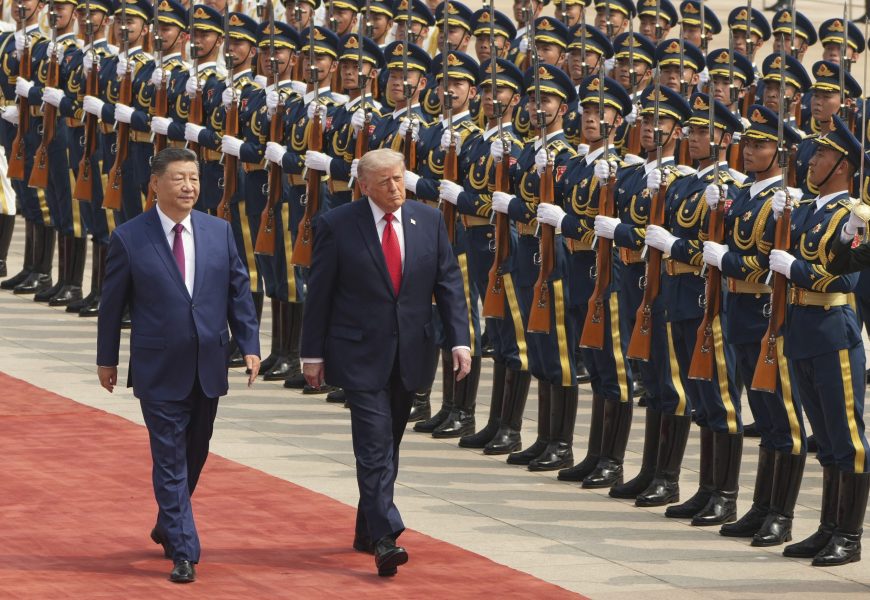
There have been reports that China, which has close ties to Iran, has considered sending weapons for use in the conflict against the United States.
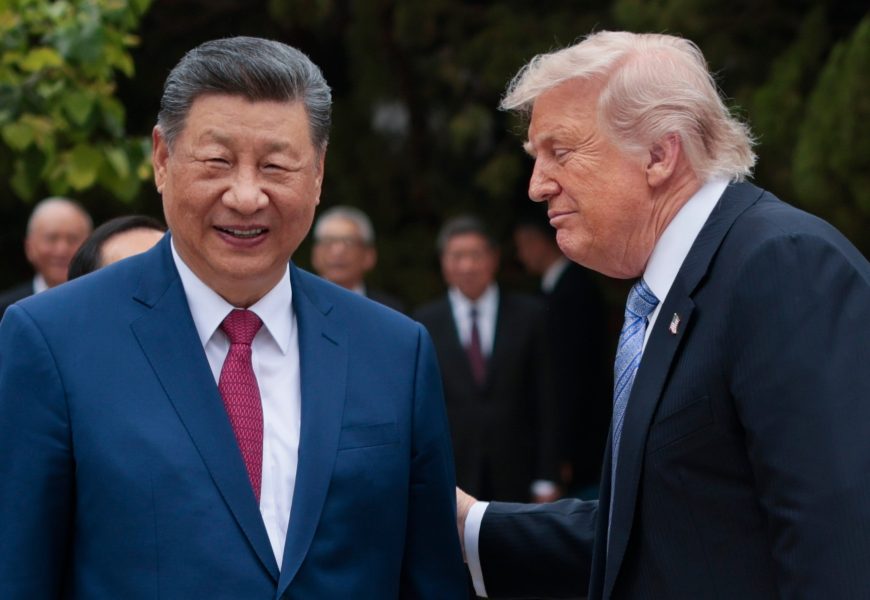
But Trump says Chinese President Xi Jinping assured him that wasn't the case.
"He promised that he's not sending any weapons," Trump told reporters after he was asked about the reports.
The leaders held two days of in-person talks last week in Beijing.
China's foreign ministry has denied the reports.
Thune told reporters he isn't sure how the administration intends to use it, but said "I don't see a purpose for that."
Thune's comments come after Louisiana Sen. Bill Cassidy, who lost reelection in a GOP primary Saturday, called it a "slush fund" on Monday.
"We are a nation of laws," Cassidy said. "You can't just make up things."
It is unclear, though, if Republicans will try to block the funding.
The House Armed Services Committee's ranking Democrat pressed the top U.S. military leader in the Middle East for information on the bombing of a school that killed more than 165 people when the U.S. and Israel launched the Iran war.
Adm. Brad Cooper, who leads U.S. Central Command, said the bombing is still under investigation. He said the strike was complex, noting how the school was on a missile site operated by Iran's paramilitary Revolutionary Guard.
Cooper said he's committed to transparency once the investigation is complete. But Democratic Rep. Adam Smith of Washington said, "I do not trust that answer."
Smith said he respects Cooper, but accused Defense Secretary Pete Hegseth of showing a "callous disregard" for protecting civilian life.
Under questioning from Sen. Jeff Merkley, an Oregon Democrat, Blanche said he "will definitely encourage the commission" responsible for deciding on the payouts to "take everything into account."
He also said he'll commit to "making sure that the commissioners are effectively doing their jobs and that includes setting your guidelines."
But he declined to explicitly rule out the idea that people implicated in the violence of Jan 6. could apply for payments from the fund, which was set up to pay people who believe they've been mistreated by the criminal justice system.
The U.S. Treasury Department imposed sanctions against four people aboard an aid flotilla bound for the Gaza Strip organized by the Popular Conference for Palestinians Abroad, also subject to U.S. sanctions.
Included in the sanctions are a group of European activists: Saif Abu Keshek, Jaldia Abubakra Aueda, Hisham Abdallah Sulayman Abu Mahfuz and Mohammed Khatib.
Israel has recently intercepted dozens of aid flotillas after more than 50 vessels departed from the port of Marmaris, Turkey, last week in what the organizers of the Global Sumud Flotilla described as the final leg of their planned journey to Gaza's shores.
In a statement, Treasury Secretary Scott Bessent called the flotilla "pro-terror" and "a ludicrous attempt to undermine President Trump's successful progress toward lasting peace in the region."
The president said he was giving Iran "two or three days," but then suggested he might give Iran a week.
"Maybe Friday, Saturday, Sunday, something, maybe early next week. A limited period of time," he said.
The president said he "was an hour away from making the decision" to launch strikes on Tuesday before calling them off Monday.
Asked how close he was to striking Iran and ending a fragile ceasefire, Trump on Tuesday said he was "an hour away" from making the call.
"I was an hour away from making the decision to go today," Trump told reporters at the White House.
He said the strikes "would have been happening right now" if he hadn't held off. "The ships are all loaded, they're loaded to the brim," he added.
Trump on Monday announced he was holding off on military strikes planned for Tuesday because "serious negotiations" were underway to end the war.
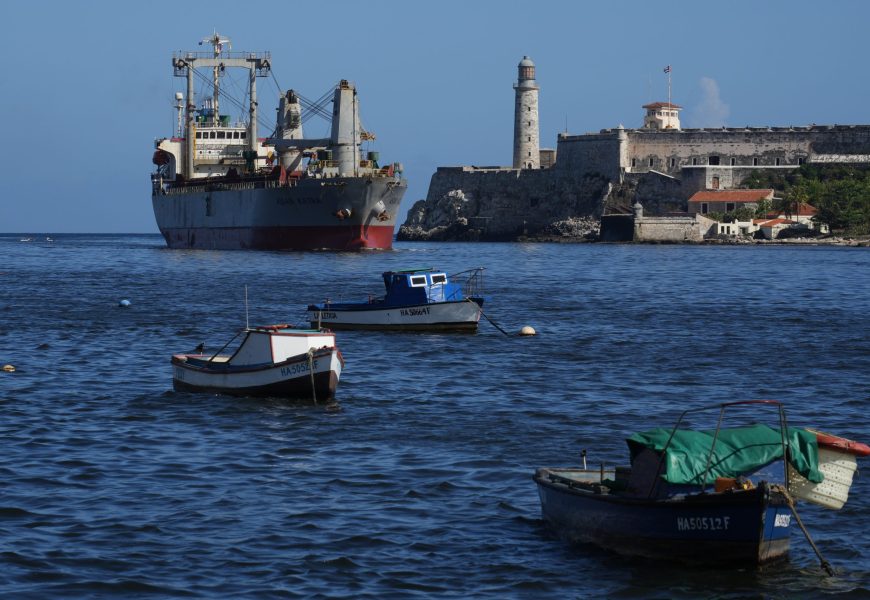
The president told reporters Cuba may not need a change in regime to address his concerns but said if he wanted to, "I can do that."
He didn't offer many details about what he wanted from Cuba but said: "That's not going to be hard for us to solve."
Cuba's economic and energy crises have deepened this year after the U.S. invaded Venezuela in early January, halting critical oil shipments from the South American country. Then in late January, Trump threatened to impose tariffs on any country that sells or provides oil to the island.
A severe gas shortage has persisted and widespread blackouts continue across the island.
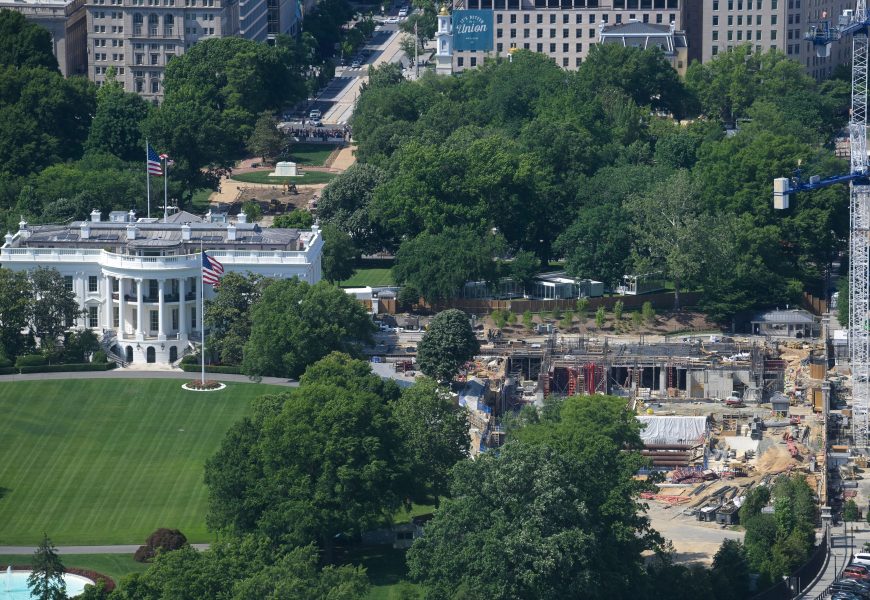
"This is a room that's been wanted for 150 years by presidents," Trump said of the ballroom.
Trump has renderings of the building on easels as he explains the various components, including what he calls a "drone-free" roof.
"One thing doesn't work without the other," he said.
Trump said the ballroom will be paid for by donors and himself. Republicans in Congress are grappling with a $1 billion funding request to cover all the security elements.
The acting attorney general said the Justice Department is committed to "full transparency" in providing public information about beneficiaries of the new fund meant to compensate allies of President Trump who say they were mistreated by the criminal justice system.
Blanche said in response to a question at the Senate budget hearing that there are privacy laws that mandate some information be kept quiet, but that otherwise, the department intended to be transparent.
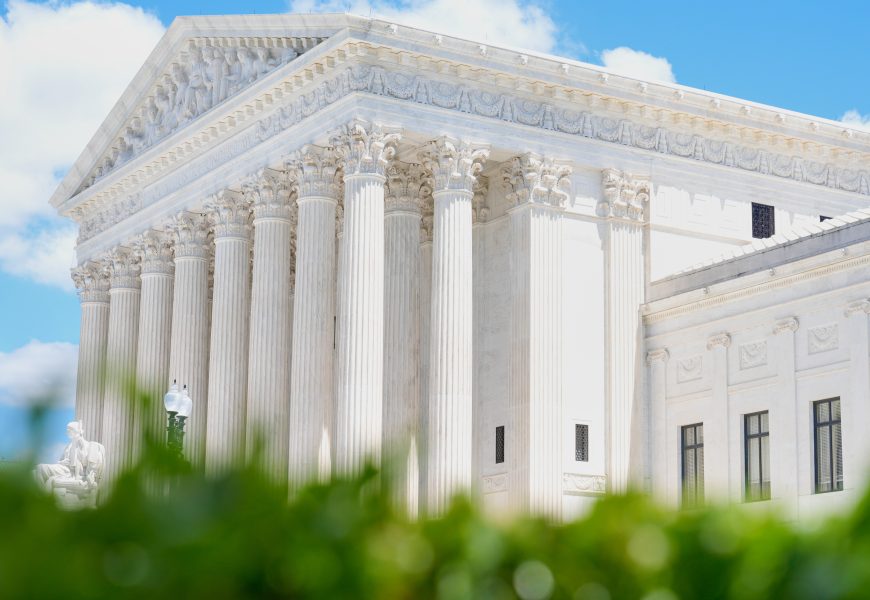
Democratic Sen. Chris Van Hollen pressed Blanche on the creation of the fund during a budget hearing and asked him directly whether Jan. 6 rioters involved in crimes of violence could apply for payment from the fund.
"As was made plain yesterday, anybody in this country is eligible to apply if they believe they were a victim of weaponization," Blanche said.
The decisions on payouts will be made a five-member commission appointed by Blanche.