°C
°C
 6
Min
6
Min
WASHINGTON (AP) – The Justice Department has ended its investigation into Federal Reserve chair Jerome Powell, clearing a major roadblock to the confirmation of Kevin Warsh as his successor.
Justice Department drops criminal probe of Fed chair Powell, likely clearing the way for Warsh
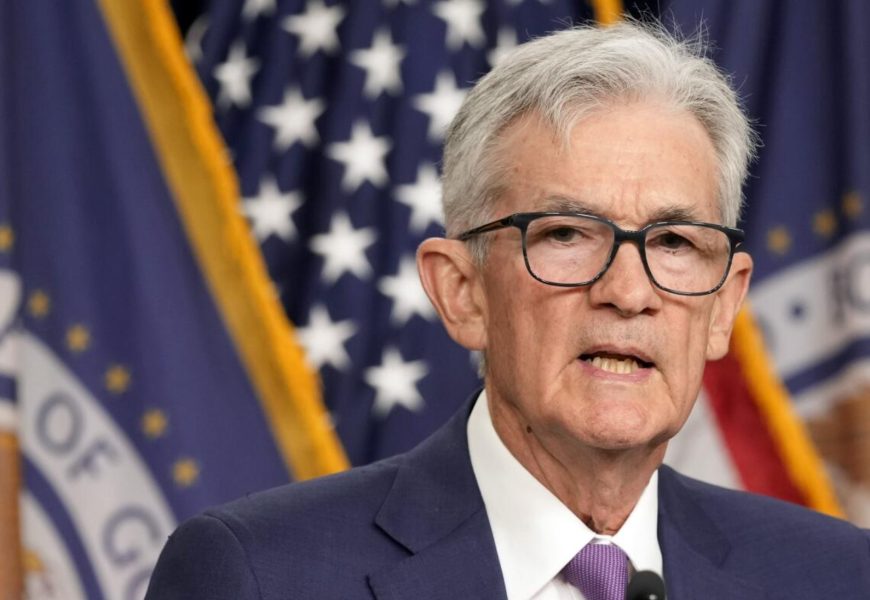

WASHINGTON (AP) - The Justice Department has ended its investigation into Federal Reserve chair Jerome Powell, clearing a major roadblock to the confirmation of Kevin Warsh as his successor.
U.S. Attorney for the District of Columbia Jeannine Pirro said on X Friday that her office was ending its probe into the Fed's extensive building renovations because the Fed's inspector general would scrutinize them instead.
The move could lead to a swift confirmation vote by the Senate for Warsh, a former top Fed official whom President Donald Trump, a Republican, nominated in January to replace Powell. Powell's term as chair ends May 15. Sen. Thom Tillis, a North Carolina Republican, had said he would oppose Warsh until the investigation was resolved, effectively blocking his confirmation.
Republicans praised Warsh during a Tuesday hearing even as Democrats questioned his independence from Trump, the lack of transparency around some of his financial holdings, and what they said was his flip-flopping on interest rates. Still, Trump's previous appointment to the Fed's board of governors, Stephen Miran, was approved by the full Senate just 13 days after his nomination.
Pirro's investigation focused on a $2.5 billion building renovation that Trump criticized sharply last year for its cost overruns. Trump visited the building last July and on camera presented to Powell an inflated cost estimate, which Powell corrected as the two stood at the construction site in hard hats.
Earlier estimates for the project had put the cost at $1.9 billion. The investigation also covered Powell's brief testimony about the renovation before the Senate Banking Committee last June.
Pirro also said on X, "I will not hesitate to restart a criminal investigation should the facts warrant doing so." Powell has previously asked the Fed's independent inspector general to investigate the cost overruns.
The probe was among several undertaken by the Justice Department into Trump's perceived adversaries. For months it had failed to gain traction as prosecutors struggled to articulate a basis to suspect criminal conduct. Other efforts by the department to prosecute Trump's adversaries, including New York state Attorney General Letitia James, a Democrat, and former FBI Director James Comey, have also been unsuccessful.
A prosecutor handling the Powell case conceded at a closed-door court hearing in March that the government hadn't found any evidence of a crime, and a judge subsequently quashed subpoenas issued to the Federal Reserve. The judge, James Boasberg, said prosecutors had produced "essentially zero evidence" to suspect Powell of a crime. Boasberg branded prosecutors' justification for the subpoenas as "thin and unsubstantiated."
The investigation was the most brazen attempt yet by the Trump administration to pressure the Fed to cut its short-term interest rate, which indirectly affects other borrowing costs for mortgages, auto loans and business loans. Trump has obsessively attacked Powell for not cutting the rate from its current level of about 3.6% to 1%, a level that no Fed official supports.
Instead, Fed policymakers, including Powell, have said they want to keep rates unchanged while they evaluate the impact of the Iran war, which has sent gas prices soaring, pushing up inflation. The increase could be a one-time shift but could also lead to more sustained inflation. The Fed seeks to restrain rising prices by keeping interest rates high, cooling borrowing and spending.
Powell said in January that the investigation was not really about the renovation or his testimony but "is a consequence of the Federal Reserve setting interest rates based on our best assessment of what will serve the public, rather than following the preferences of the President."
More recently, prosecutors made an unannounced visit to a construction site at the Fed's headquarters but were turned away, drawing a rebuke from a defense attorney in the case who called the maneuver "not appropriate."
Warsh said during a hearing by the Senate Banking Committee on Tuesday that he never promised the White House that he would cut interest rates, even as the president renewed his calls for the central bank to do so.
"The president never once asked me to commit to any particular interest rate decision, period," Warsh said under questioning by the Senate Banking Committee. "Nor would I ever agree to do so if he had."
Warsh's comments came just hours after Trump, in an interview on CNBC, was asked if he would be disappointed if Warsh didn't immediately cut rates and responded, "I would."
Massachusetts Democratic Sen. Elizabeth Warren said during the hearing that Warsh would be a "sock puppet" for Trump. When she asked if Trump had won the 2020 presidential election - which he lost to Democrat Joe Biden but incorrectly claims was decided by fraud - Warsh said only that the Senate had certified Biden as the winner. When asked for an example of an economic policy on which he disagreed with Trump, Warsh did not name one.
Robert Hur, an attorney for the Federal Reserve Board of Governors, didn't immediately respond Friday to an email seeking comment.
Trump has taken other unprecedented steps to try to pressure the Fed, including an attempt last August to fire Lisa Cook, a member of the Fed's governing board, who was appointed by Biden. Yet courts have temporarily blocked the firing, and, at an oral argument in January, the Supreme Court appeared sympathetic to the argument that Cook should keep her job.
A key question still to be resolved is whether Powell will remain on the Fed's board even after his term as chair expires next month. Powell, who serves a separate term as a governor that lasts until January 2028, has said he wouldn't leave until the investigation was dropped. Yet he did not promise to do so if it was. By remaining on the board, Powell would deprive Trump of the opportunity to fill another seat among its seven members, three of whom are Trump appointees.
Other presidents have pressured the Fed to keep borrowing costs low, notably Presidents Lyndon Johnson and Richard Nixon, though rarely as publicly as Trump. Johnson's and Nixon's demands for lower rates, however, are considered key contributors to the 15-year outbreak of high inflation that only ended in the early 1980s after then-chair Paul Volcker ratcheted the Fed's rate to an eye-watering 20%.
More Top Stories