°C
°C
 5
Min
5
Min
JOHANNESBURG (AP) – Health officials believe the Ebola outbreak in Congo started weeks ago and say they haven’t identified the source. The outbreak has been declared a public health emergency of international concern by the World Health Organization and the death toll has risen to more than 130 with around 600 suspected cases.
The Ebola outbreak in Congo went unnoticed for weeks. This is what we know
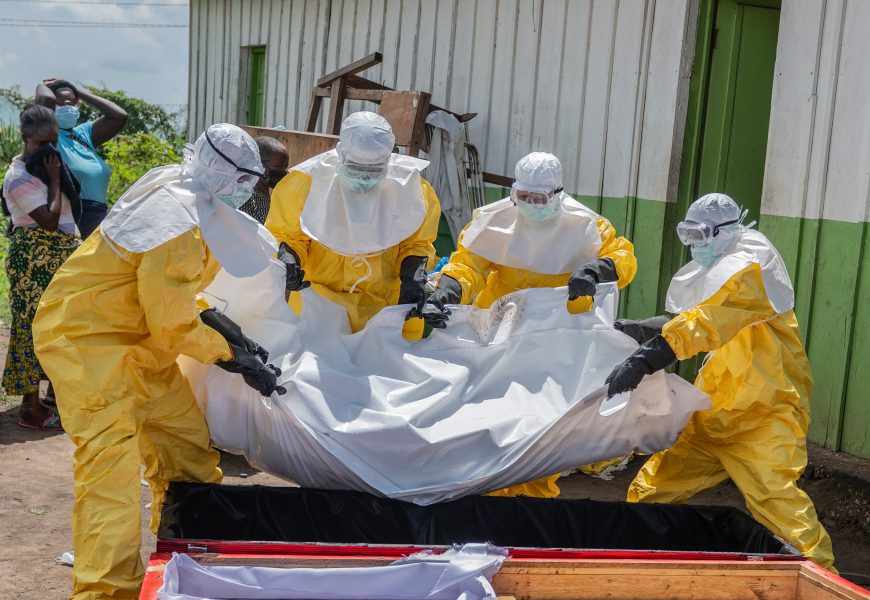

JOHANNESBURG (AP) - Health officials believe the Ebola outbreak in Congo started weeks ago and say they haven't identified the source.
The outbreak has been declared a public health emergency of international concern by the World Health Organization and the death toll has risen to more than 130 with around 600 suspected cases. Two cases, including one death, have been reported in neighboring Uganda.
Here's a timeline of what we know so far after authorities first struggled to identify the outbreak and lost vital response time because it was caused by a rarer virus not normally associated with Ebola outbreaks in Congo:
A health worker who is the first suspected case authorities know about falls ill and dies in Bunia, the capital of Ituri Province in northeastern Congo. The person's body is later transported to the nearby gold mining town of Mongbwalu, according to Congo's health minister.
The health minister says the person died on April 24. The Africa Centers for Disease Control and Prevention says they died on April 27 after severe bleeding symptoms. Authorities didn't immediately give a reason for the discrepancy.
World Health Organization officials say later that they don't believe the health worker is the first case and the outbreak started weeks or possibly months ago.
A close contact of the first known victim dies after also presenting with symptoms, according to the Africa CDC.
Field tests on samples in Bunia are negative for the Ebola virus type, sometimes known as the Zaire virus, which is the virus most commonly found in previous Ebola outbreaks in Congo. It takes another two weeks before health authorities establish that the rarer Bundibugyo virus is behind this outbreak.
Ebola disease is caused by a group of viruses. Three of them are known to cause large outbreaks: Ebola virus, Sudan virus and Bundibugyo virus, according to the WHO.
The WHO is alerted to what it calls a "high-mortality" outbreak of an unknown illness in Mongbwalu. Health workers are among the fatalities. Local reports say there are around 50 deaths already.
The Congolese health minister later says authorities believe the body of the health worker who died in Bunia and was taken to Mongbwalu may have started the outbreak there. The bodies of people infected with Ebola can be highly contagious.
A 59-year-old Congolese man experiencing fever and body aches is admitted to a hospital in Kampala, the capital of neighboring Uganda some 700 kilometers (434 miles) from Ituri. Ugandan authorities say he traveled across the border from Congo.
A WHO rapid response team visits the Mongbwalu and nearby Rwampara health zones in Ituri to investigate as the outbreak spreads further.
Thirteen blood samples from Rwampara are tested in the Congolese capital, Kinshasa. Some of them confirm the presence of an Ebola virus, but the type is not yet known.
On the same day, the Congolese man dies in the hospital in Uganda. His body is repatriated to Congo.
Laboratory analysis in Congo confirms the Bundibugyo virus in eight of the 13 samples from Rwampara. Ugandan health authorities then test a sample taken posthumously from the man who died there and it is also positive for Bundibugyo virus, a rarer Ebola virus that was first identified in a 2007-2008 outbreak in Uganda and has no approved treatment or vaccine.
The Congo Health Ministry declares an Ebola outbreak, and the Africa CDC says there are 246 suspected cases and 65 deaths. Those figures rise rapidly in the next few days.
It is the 17th significant Ebola outbreak in Congo, but the worst known outbreak linked to the Bundibugyo virus.
The WHO officially declares the Ebola outbreak in Congo and Uganda a public health emergency of international concern and hopes it will prompt more international assistance. The U.N. health agency says the outbreak does not meet the criteria of a pandemic emergency like COVID-19 and advises countries not to close their borders.
However, it says nations that share a land border with Congo or Uganda should urgently enhance their surveillance and ensure health workers are trained to investigate and manage Ebola cases.
An American doctor in Congo is among the confirmed cases, Congolese officials say. The doctor had been treating patients at a hospital in Bunia, according to the organization he works for. He is later evacuated to Germany, though officials don't give details on his condition.
WHO Director-General Tedros Adhanom Ghebreyesus says he is deeply concerned about "the scale and speed" of the outbreak, citing cases emerging in populated urban areas, the deaths of health workers and the movement of people.
As authorities grapple with a growing outbreak in a remote and vulnerable region, Tedros says it is much larger than the 139 deaths and around 600 suspected cases that have been reported.
A special adviser to the WHO warns that a vaccine to address the Bundibugyo virus will not be available for at least six to nine months.