Others have also noted the trend toward healthier snacks. In a report earlier this year, the market research company Circana found that a majority of Americans are seeking out snacks they consider “good for them.” Conagra Brands, which makes popcorn and Slim Jim meat snacks, said in a recent snacking report that Millennials and Generation Z consumers, in particular, are seeking portion-controlled and wellness-focused snacks.
Coca-Cola Zero Sugar, which was introduced in 2017, saw sales jump 9% last year, while original Coke sales grew just 2%. Mondelez is also facing competition from Hershey, which sells zero sugar versions of Reese’s Peanut Butter Cups and other candies, and Voortman, a sugar-free wafer cookie brand.
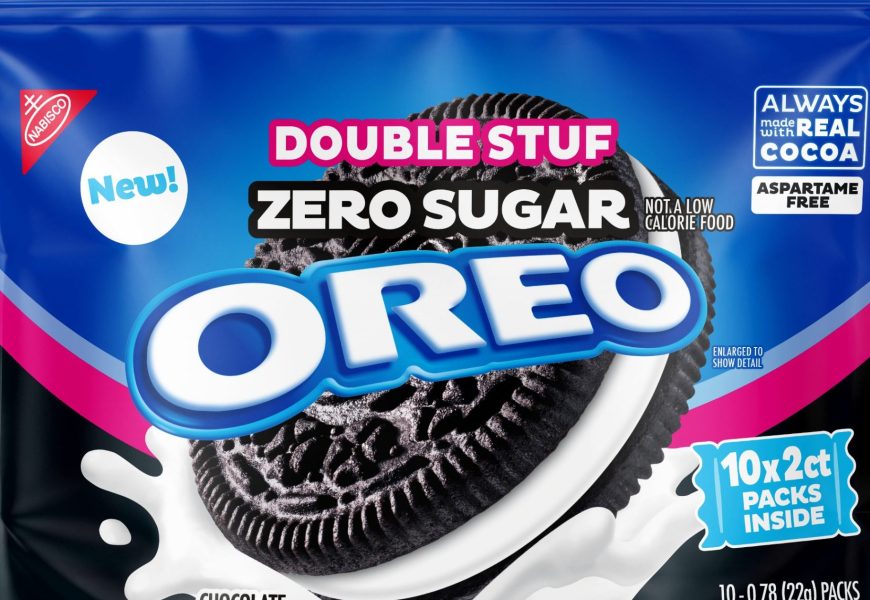
Mondelez said it spent four years developing no-sugar Oreos so it could ensure the cookies still tasted like the originals. For sweetening, the Oreos contain maltitol, a type of sugar alcohol that’s also found in some fruits and vegetables; polydextrose, a soluble fiber; sucralose, a sweetener derived from sugar; and acesulfame potassium, a synthetic sweetener.
Comparing the nutrition data on Zero Sugar and regular Oreos is tricky, since the serving sizes differ.
A serving of Oreo Zero Sugar cookies, which is defined as 22.6 grams, has 90 calories, 4.5 grams of fat and 16 grams of carbohydrates. A serving of regular Oreos, which is defined as three cookies or 34 grams, has 160 calories, 7 grams of fat and 25 grams of carbohydrates.


 °C
°C 2
Min
2
Min