°C
°C
 3
Min
3
Min
HOMS, Syria (AP) – Hundreds of mourners gathered Saturday in the rain and cold outside of a mosque in the Syrian city of Homs for the funeral of eight people killed in a bombing, as an imam warned that the attack could spark more sectarian violence.
Hundreds mourn in Syria’s Homs after deadly mosque bombing
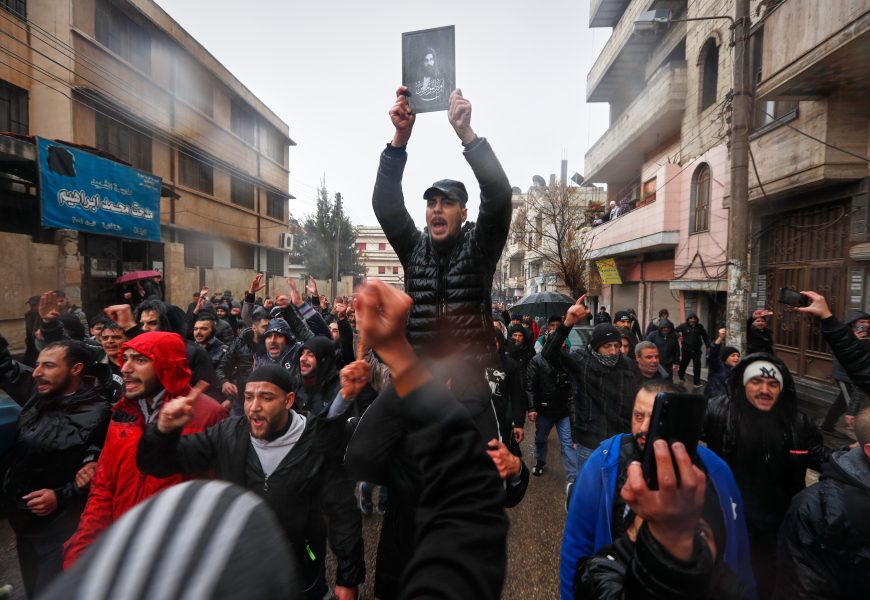
HOMS, Syria (AP) – Hundreds of mourners gathered Saturday in the rain and cold outside of a mosque in the Syrian city of Homs for the funeral of eight people killed in a bombing, as an imam warned that the attack could spark more sectarian violence.
The crowd assembled next to the Imam Ali ibn Abi Talib Mosque, the target of Friday’s attack that also wounded 18 others. The population of the Wadi al-Dhahab neighborhood, where the mosque is located, is predominantly from the Alawite minority. They later drove in convoys to bury the victims.
Officials have said the preliminary investigations indicate explosive devices were planted inside the mosque but have not yet publicly identified a suspect.
A little-known group calling itself Saraya Ansar al-Sunna claimed responsibility for the attack in a statement posted on its Telegram channel, in which it indicated that the attack intended to target members of the Alawite sect, an offshoot of Shiite Islam whom hard-line Islamists consider to be apostates.
The same group had previously claimed a suicide attack in June in which a gunman opened fire and then detonated an explosive vest inside a Greek Orthodox church in Dweil’a, on the outskirts of Damascus, killing 25 people as worshippers prayed on a Sunday.
A neighbor of the mosque, who asked to be identified only by the honorific Abu Ahmad (“father of Ahmad”) out of security concerns, said he was at home when he heard the sound of a “very very strong explosion.”
He and other neighbors went to the mosque and saw terrified people running out, he said. They entered and began trying to help the wounded.
Sheikh Mohieddin Salloum, the imam of the mosque, who was lightly injured in the explosion, said the mosque was Alawite but was open to Muslims of other sects to come and pray, and they often did so.
“This is God’s house – our Sunni neighbors come and pray here with us, but in small numbers. They might be five or 10” out of 300 attendees during Friday prayer, he said.
Salloum said he believes the attack was intended to set off a new round of sectarian strife as the country struggles to heal after a nearly 14-year civil war that ended with the ouster of former President Bashar Assad in December 2024.
Anger was palpable among Alawite residents who gathered for the funeral, but the imam called for calm.
“They set an explosion in an Alawite mosque to create emotions of hate and anger among the Alawites, and maybe a few days later someone will set off an explosion in a Sunni mosque and say that the Alawites took revenge,” Salloum said. “Then the idiots from both sides will come and start fighting, and we’ll all be dragged behind them if we don’t keep level heads.”
The country has experienced several waves of sectarian clashes since Assad’s fall. Assad, an Alawite, fled the country to Russia.
In March, an ambush carried out by Assad’s supporters against security forces triggered days of violence that left hundreds of people dead, most of them Alawites. Since then, although the situation has calmed, Alawites have been targeted sporadically in sectarian attacks.
Syrian government officials condemned Friday’s attack and pledged to hold the perpetrators accountable.
Mourners prayed outside because they were unable to enter the mosque as the crime scene remained cordoned off. Some marched through the streets chanting “Ya Ali,” a reference to the Prophet Muhammad’s cousin and son-in-law whom Shiite Muslims consider to be his rightful successor.
More Top Stories