°C
°C
 4
Min
4
Min
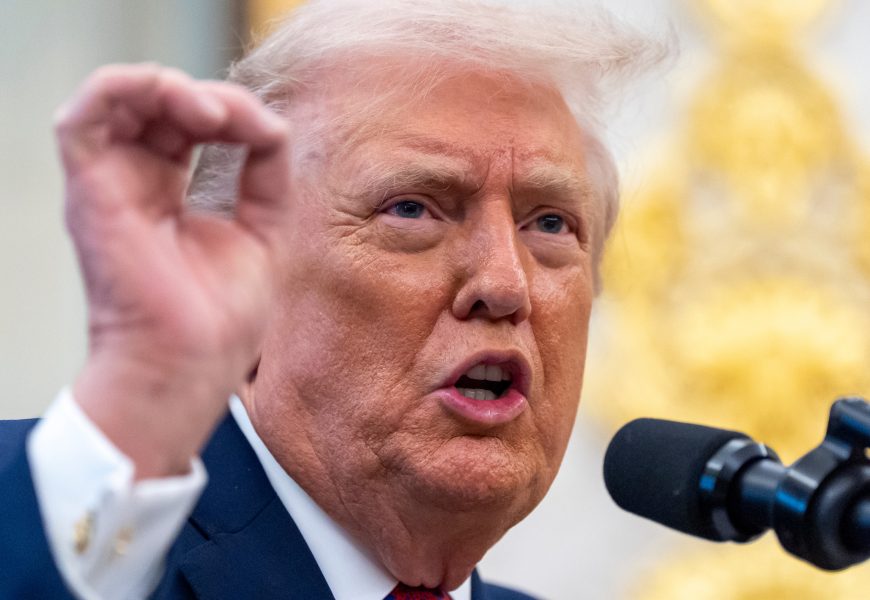
WASHINGTON (AP) – Tariffs paid by midsize U.S. businesses tripled over the course of past year, new research tied to one of America’s leading banks showed on Thursday – more evidence that President Donald Trump ‘s push to charge higher taxes on imports is causing economic disruption.
Tariffs paid by midsize US companies tripled last year, a JPMorganChase Institute study shows

WASHINGTON (AP) - Tariffs paid by midsize U.S. businesses tripled over the course of past year, new research tied to one of America's leading banks showed on Thursday - more evidence that President Donald Trump 's push to charge higher taxes on imports is causing economic disruption.
The additional taxes have meant that companies that employ a combined 48 million people in the U.S. - the kinds of businesses that Trump had promised to revive - have had to find ways to absorb the new expense, by passing it along to customers in the form of higher prices, employing fewer workers or accepting lower profits.
"That's a big change in their cost of doing business," said Chi Mac, business research director of the JPMorganChase Institute, which published the analysis Thursday. "We also see some indications that they may be shifting away from transacting with China and maybe toward some other regions in Asia."
The research does not say how the additional costs are flowing through the economy, but it indicates that tariffs are being paid by U.S. companies. The study is part of a growing body of economic analyses that counter the administration's claims that foreigners pay the tariffs.
The JPMorganChase Institute report used payments data to look at businesses that might lack the pricing power of large multinational companies to offset tariffs, but may be small enough to quickly change supply chains to minimize exposure to the tax increases. The companies tended to have revenues between $10 million and $1 billion with fewer than 500 employees, a category known as "middle market."
The analysis suggests that the Trump administration's goal of becoming less directly reliant on Chinese manufacturers has been occurring. Payments to China by these companies were 20% below their October 2024 levels, but it's unclear whether that means China is simply routing its goods through other countries or if supply chains have moved.
The authors of the analysis emphasized in an interview that companies are still adjusting to the tariffs and said they plan to continue studying the issue.
The White House did not immediately respond to questions about the analysis, which showed that U.S. companies are paying tariffs that the president had previously claimed would be paid by foreign entities.
Trump imposed a series of tariffs last year for the ostensible goal of reducing the U.S. trade imbalance with other countries, so that America was not longer importing more than it exports. But trade data published Thursday by the Census Bureau showed that the trade deficit climbed last year by $25.5 billion to $1.24 trillion. The president on Wednesday posted on social media that he expected there would be a trade surplus "during this year."
The Trump administration has been adamant that the tariffs are a boon for the economy, businesses, and workers. Kevin Hassett, director of the White House National Economic Council, lashed out on Wednesday at research by the New York Federal Reserve showing that nearly 90% of the burden for Trump's tariffs fell on U.S. companies and consumers.
"The paper is an embarrassment," Hassett told CNBC. "It's, I think, the worst paper I've ever seen in the history of the Federal Reserve system. The people associated with this paper should presumably be disciplined."
Trump increased the average tariff rate to 13% from 2.6% last year, according to the New York Fed researchers. He declared that tariffs on some items such as steel, kitchen cabinets and bathroom vanities were in the national security interest of the country. He also declared an economic emergency to bypass Congress and impose a baseline tax on goods from much of the world in April 2025 at an event he called "Liberation Day."
The high rates provoked a financial market panic, prompting Trump to walk back his rates and then engage in talks with multiple countries that led to a set of new trade frameworks. The Supreme Court is expected to rule soon on whether Trump surpassed his legal authority by declaring an economic emergency.
Trump was elected in 2024 on his promise to tame inflation, but his tariffs have contributed to voter frustration over affordability. While inflation has not spiked during Trump's term thus far, hiring slowed sharply and a team of academic economists estimate that consumer prices were roughly 0.8 percentage points higher than they would otherwise be.
More Top Stories