°C
°C
 5
Min
5
Min
JERUSALEM (AP) – The Hamas militant group is weighing a new proposal for disarming its fighters in Gaza, a major concession that would clear the way for U.S. President Donald Trump’s plan for rebuilding the war-ravaged territory.
Hamas considers a proposal to disarm in Gaza that’s central to the territory’s future
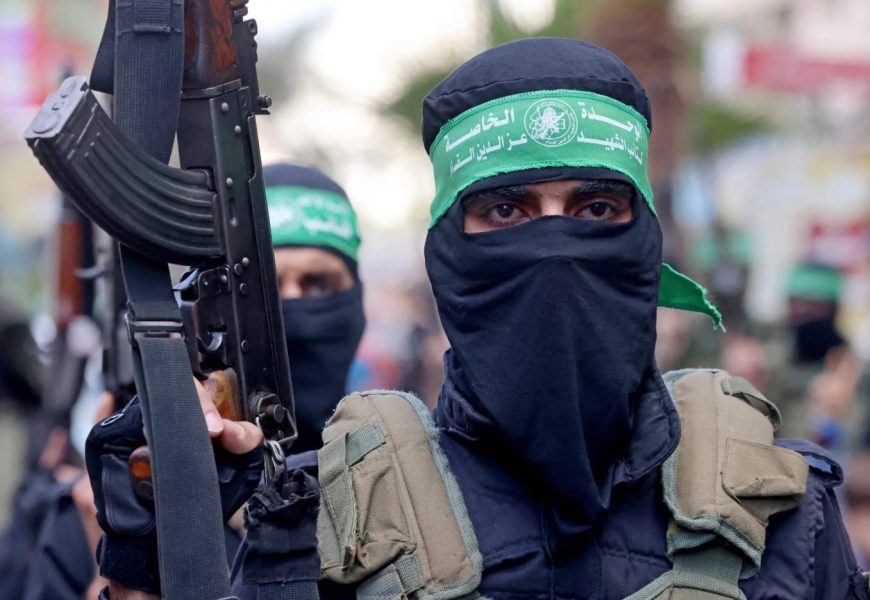
JERUSALEM (AP) - The Hamas militant group is weighing a new proposal for disarming its fighters in Gaza, a major concession that would clear the way for U.S. President Donald Trump's plan for rebuilding the war-ravaged territory.
How Hamas responds, expected in the coming days or weeks, has great implications for Gaza's 2 million people, who have been living in a grim limbo since a ceasefire took effect nearly six months ago.
Hamas' founding charter calls for armed resistance against Israel, and it has been reluctant to give up an arsenal, including rockets, anti-tank missiles and explosives, that lies at the heart of its identity.
For that reason, it is far from certain the group will comply. Hamas has indicated it is unhappy with a U.S.-backed proposal currently under discussion. The U.S.-Israel war against Iran has further complicated the Gaza efforts, threatening more delays as it draws the region's attention.
In the meantime, key components of Trump's plan - most critically, reconstruction of the devastated territory - remain on hold.
"The future of Gaza ... is entirely dependent now on Hamas decommissioning its weapons," Mike Waltz, the U.S. ambassador to the United Nations, told the Security Council this week. "We truly stand at an inflection point now."
The Oct. 10 ceasefire aimed to halt more than two years of war and launch a broader process to end Hamas' two-decade rule and rebuild Gaza.
The ceasefire has halted the heaviest fighting and increased the flow of badly needed humanitarian aid into Gaza, bringing some relief.
But Israeli strikes have killed nearly 700 Palestinians since the ceasefire, according to local health officials, and Israel still controls more than half of Gaza. Israel says its strikes are in response to violations of the truce.
The longer-term aspects of the 20-point U.S. ceasefire plan still have not been implemented.
They include the deployment of a U.N.-mandated international peacekeeping force and a foreign-trained Palestinian police force, the arrival of a recently appointed Palestinian technocratic committee to run Gaza's daily affairs, further Israeli troop withdrawals and a years-long reconstruction plan.
Hamas' disarmament is critical for all of these steps. Israeli Prime Minister Benjamin Netanyahu has said there will be no progress without disarmament, and many donor countries are reluctant to send cash or troops for the Gaza plan if there is a risk of renewed warfare.
Trump's 20-point plan says that all of Hamas' "military, terror and offensive infrastructure, including tunnels and weapon production facilities" in Gaza must be destroyed. It also says that weapons must be placed "permanently beyond use."
Israel and the U.S. say this language is clear and that Hamas must surrender all of its weapons.
Hamas has sought to differentiate between "heavy" weapons, such as rockets, and "light" weapons like rifles and pistols, Hamas officials and mediators say, speaking on condition of anonymity to discuss the negotiations.
It also wants to link any demilitarization to Israeli troop pullbacks.
Nickolay Mladenov, the director of the U.S.-backed Board of Peace, a new body led by Trump that is overseeing the ceasefire, told the U.N. Security Council this week that a proposal backed by mediator countries Turkey, Qatar and Egypt has been presented to Hamas.
"Serious discussions are underway as we speak," he said.
Mladenov said the proposal calls for the "complete decommissioning" of all Hamas weapons and putting security in Gaza under the full control of the new technocratic committee.
He said disarmament would begin with the "most dangerous weapons," including rockets, explosives and assault rifles and later move to "personal weapons."
The process would be accompanied by staged Israeli withdrawals.
Disarmament offers "the only way forward" for reconstruction and success of the new Palestinian governing committee, Mladenov said. "For the people of Gaza, the implications are profound."
Hamas' response has been cool.
Bassem Naim, a senior Hamas official, angrily accused Mladenov of siding with Israel. In a post Thursday on X, he said the envoy "is trying to be more royalist than the king himself, as he attempts to tie everything to the weapons dossier."
Other Hamas officials, speaking on condition of anonymity to discuss the negotiations, said they had accepted the new proposal "in principle," with reservations on some parts of the plan.
They said that the group's response will include amendments that address their concerns including the lack of "crucial" guarantees that Israel will halt its attacks in Gaza and not resume the war.
It is unclear when Hamas will respond to the proposal.
The uncertainty signals that more delays, or worse, could lie ahead for war-weary Gaza's population.
Israel's two-year offensive, launched in response to Hamas' Oct. 7, 2023, attack on southern Israel, flattened large swaths of Gaza and has displaced an estimated 90% of the population. Hundreds of thousands of people are still living in tents, unable to rebuild their homes or lives and heavily dependent on aid handouts.
If the negotiations drag on, that would mean delays in rebuilding Gaza and an increased risk of resuming the war.
More Top Stories