During blackouts, they climb the stairs in darkness, phone lights bouncing off concrete steps, often accompanied by the echo of children and barking dogs. People sometimes leave plastic bags with cookies or water inside elevators for those who get stuck when the power cuts midride.
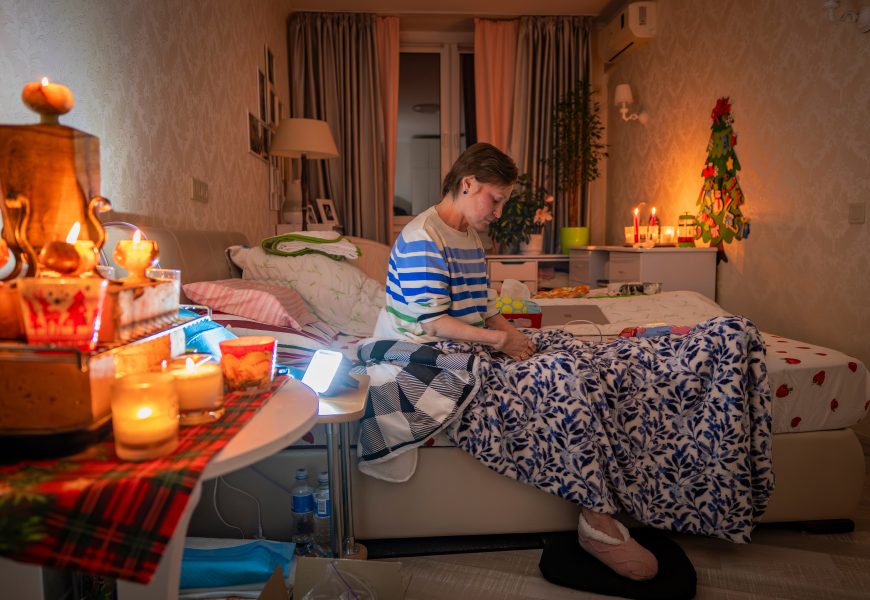
Janchuk's husband, out working most of the day, brings the groceries in the evening while her mother, 72-year-old Lyudmila Bachurina, is in charge of chores.
"It's cold, but we manage," the mother says, holding a square USB-charged flashlight she recently mounted on the wall. "When the lights come on, I start turning on the washing machine, fill up water bottles, cook food, charge power banks, run around the kitchen and run around the house."
In upscale neighborhoods, residents pool funds for generators to keep elevators running. But most blocks - home to pensioners, families and people with disabilities - cannot afford them.
Disability advocates, including groups representing wounded war veterans, say staircases have become an invisible social barrier, cutting people off inside their own homes.


 °C
°C
 5
Min
5
Min