°C
°C
 4
Min
4
Min
BRUSSELS (AP) – German Chancellor Friedrich Merz wants the European Union to consider offering “associate membership” to Ukraine and breathe new life into talks aimed at ending more than four years of war with Russia, according to a letter seen Thursday by The Associated Press.
Germany urges the EU to offer Ukraine ‘associate membership’ and boost talks with Russia
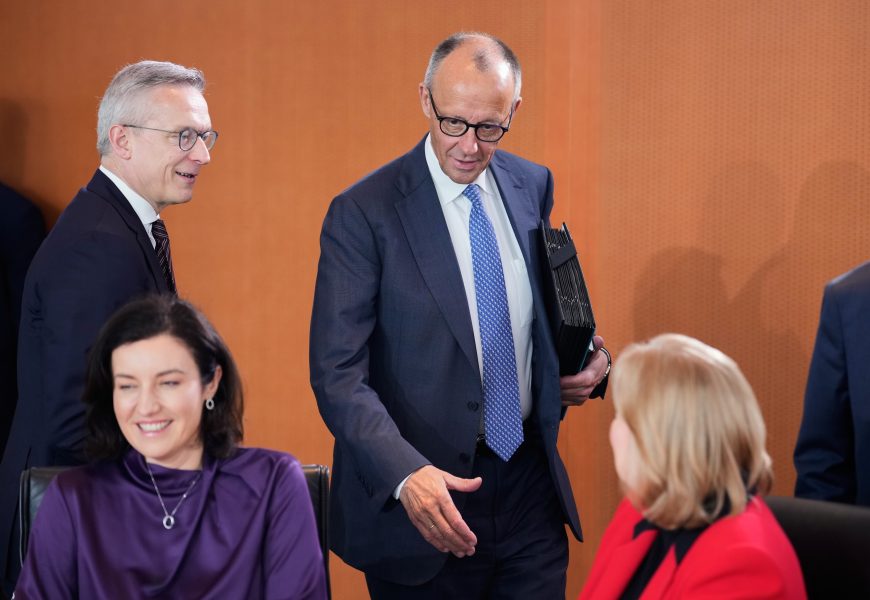

BRUSSELS (AP) - German Chancellor Friedrich Merz wants the European Union to consider offering "associate membership" to Ukraine and breathe new life into talks aimed at ending more than four years of war with Russia, according to a letter seen Thursday by The Associated Press.
His letter, to the EU's top officials, comes as the 27-nation bloc weighs whether to try to launch its own negotiations with Russian President Vladimir Putin, with U.S. mediated talks bogged down while America's attention focuses on the Iran war.
Under Merz's proposals, Ukraine would take part in EU meetings, but without voting rights, and would also have non-voting "associate members" of the bloc's powerful executive branch, the European Commission, and the European Parliament.
He insisted that this "would not be a membership light," and "go far beyond" the Association Agreement that currently governs EU-Ukraine relations. Merz suggested a "snap-back mechanism" in case Ukraine backslides on democratic standards.
European Council President Antonio Costa and European Commission President Ursula von der Leyen reaffirmed last month that official membership talks with Ukraine should be opened "without delay," and Merz too called for that process to start.
On Wednesday, Ukrainian President Volodymyr Zelenskyy welcomed signs of possible progress in the accession negotiations, saying in an address that it is "very important for us. Ukraine has fulfilled everything necessary for this progress."
Candidate countries must bring their laws into line in 35 policy areas, or "chapters," ranging from justice standards to farm and fishing rules. All 27 EU members must agree before each chapter can be opened, and then again for it to be closed.
Hungary, notably, has blocked the opening of negotiations, but with a new government now in place in Budapest this month that stance could change.
Still, Merz's plan is unlikely to please those European officials who argue that EU membership must be a merits-based process that concludes only once all the benchmarks have been met.
But the German leader did say that his approach should be extended to other countries waiting in line to join, notably those in the Western Balkans, where EU leaders are due to gather for a summit next month.
On the war, Merz wrote that his proposal "will help facilitate the ongoing peace talks as part of a negotiated peace solution. This is essential not only for Ukraine's but for the entire continent's security."
Ukraine sees EU membership as one "security guarantee" for a stable future once the war ends. Its best guarantee would be NATO membership, but the Trump administration insists that cannot happen, and others are wary of it joining while fighting continues.
As U.S-led mediation efforts have foundered, EU countries have begun to debate whether to launch a parallel negotiating track and who might mediate on their behalf in the unlikely event that Putin might agree to talk to them.
Earlier this month, Costa said that "we need, in the right moment, to have talks with Russia to address our common issues on security." He said this should not "disturb" U.S.-led talks, but that it's important for Europe to address its own security concerns.
Since then, speculation has swirled in European media about possible EU negotiators, including former German Chancellor Angela Merkel, a Russian speaker who knows Putin well, and former European Central Bank chief Mario Draghi.
Putin has suggested that he might talk to Gerhard Schröder, another past German chancellor. But officials have poured cold water on that idea even in Germany, where Schröder's ties to the Russian energy sector and friendly relationship with Putin damaged his political standing after Russia's full-scale invasion of Ukraine in 2022.
EU foreign policy chief Kaja Kallas said it would "not be very wise" to allow Putin to appoint a negotiator, and particularly a "high-level lobbyist for Russian state-owned companies."
Zelenskyy has welcomed a European role, saying on Sunday that "Europe must be involved in the negotiations. It is important for Europe to have a strong voice and presence in this process, and it is worth determining who will represent Europe specifically."
More Top Stories