°C
°C
 6
Min
6
Min
Google will soon unleash a wealth of new artificial intelligence-powered tools and systems, including an AI assistant that will help users by proactively performing tasks on their behalf.
Google announces slew of AI advances, including a personal AI assistant coming soon
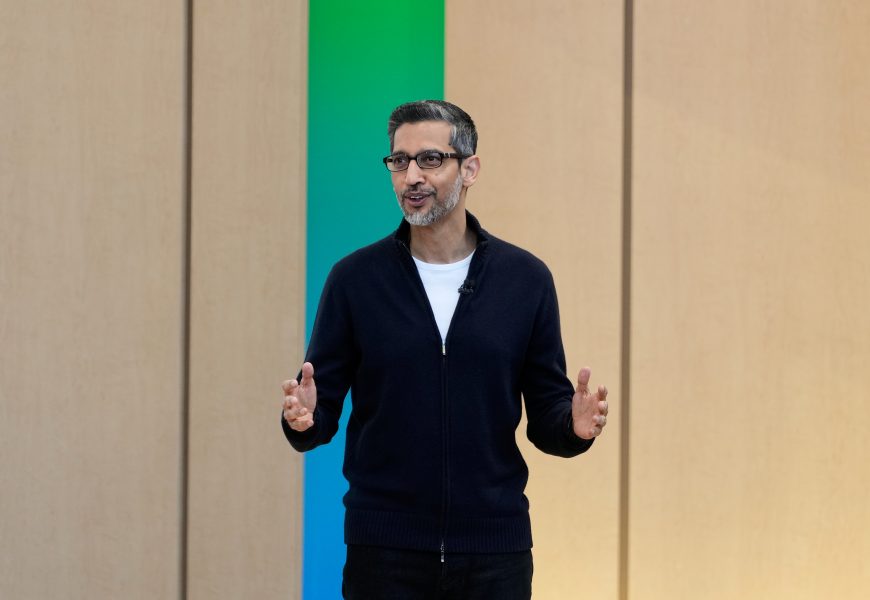

Google will soon unleash a wealth of new artificial intelligence-powered tools and systems, including an AI assistant that will help users by proactively performing tasks on their behalf.
"Agentic" AI, the recent buzzword of choice for tech firms, was a central focus of Google's annual developers conference, Google I/O. The upcoming AI agent, Gemini Spark, was one of many of the company's announcements from the conference Tuesday.
"We are firmly in our agentic Gemini era," Google CEO Sundar Pichai said Tuesday before a packed amphitheater near the company's Mountain View, California, headquarters. "I've played around with all sorts of agents and you can really see the potential, but it's still early days when it comes to making agents easy to use, super secure and truly helpful."
Google and its corporate parent, Alphabet Inc., have poured billions into AI development. Its top finance executive said on a call with investors in late April that this year's capital expenditures may climb as high as $190 billion. But the investment seems to be paying off, with its quarterly earnings showing strong growth. The stock has climbed another 11% since the report.
Pichai said during the keynote address that the Gemini app had 400 million monthly active users last year, but that usership has now surpassed 900 million, more than doubling in a year.
Google's latest family of models, Gemini 3.5, is rolling out Tuesday to billions of global users beginning with Gemini 3.5 Flash. The Flash model is focused on speed, and Google says 3.5 Flash is its strongest agentic and coding model yet, but it's also about four times faster than some competitors.
This model is now the default for the Gemini app and "AI mode" on Google search. The company is also working on the 3.5 version of Gemini Pro, which it says it's using internally and expects to launch next month.
Gemini 3.5 was developed with new, more advanced safety training and mitigations, meaning its models are less likely to generate harmful content or to mistakenly refuse to answer safe queries, the company said.
Google also announced a new model, Gemini Omni, which will enable users to create high-quality video by making a query with any input, be it text, images, videos and audio. The video Omni creates can then be edited easily though a conversation with the model. Users will eventually be able to create images and audio with Omni, but there were no details about when those features will be rolled out.
The company said Omni's videos will appear more realistic than videos created by other models because of its understanding of forces like gravity, kinetic energy and fluid dynamics.
Gemini Omni Flash, the first of the Omni family, is launching Tuesday for Google Al Plus, Pro and Ultra subscribers through the Gemini app and Google Flow. Beginning this week, it will be available at no cost on YouTube Shorts and YouTube Create App.
All videos created with Omni will include Google's imperceptible digital watermark, SynthID, but Google is also adding content credentials verification to the Gemini app. This tool determines if content like photo or video was created by AI or captured with a phone camera and edited with AI tools. It will be available in search in Chrome in the coming months. Google also announced AI companies Open AI, Kakao and Eleven Labs are adopting its SynthID technology to more of their AI-generated content.
Powered by Gemini 3.5, Gemini Spark will be able to complete mundane, routine tasks like sorting through meeting notes, emails and chats and then creating a document with the biggest takeaways and to-dos. Unlike other available agents, Spark is based in the cloud, so it continues working in the background even when users shut their laptops or lock their phones.
The proactive nature of AI agents is what differentiates them from chatbots, and that has also led to some anxieties about the technology's power. Gemini Spark is designed to ask for permission before performing "high-stakes" tasks like sending an email or making a purchase, the company said.
Select testers will have access to the agent beginning Tuesday, and the company plans to roll out the beta mode to U.S.-based subscribers to its Google AI Ultra tier.
Later this summer, Gemini Spark will operate directly within Chrome, the company said.
At last year's conference, the most talked-about development was the introduction and rollout of "AI mode" on Google's search engine. The feature gives users a more conversational answer to their query before providing relevant links, building on previously implemented changed how users experience and interact with the platform.
AI mode queries have more than doubled every quarter since its launch last year, and the tool recently surpassed 1 billion monthly users, according to Liz Reid, Google's head of search.
The new default model in search will now be Gemini 3.5 Flash and the company is introducing what it calls an intelligent search box. This change, which Reid says is the biggest upgrade to the search box in 25 years, means the box will adapt to accommodate longer queries and it can help users write out their questions with AI-powered suggestions instead of traditional autocomplete.
Users can also search using multiple modalities, using text, images, video, files and even Chrome tabs as search inputs. The new search box is starting its roll out Tuesday in all countries and languages where AI mode is currently available.
The company also announced a new tool, the Universal Cart, which it called "a truly intelligent shopping cart." It works across merchants and across services so users can add things to their cart while browsing Google search, chatting with Gemini, watching YouTube, or reading emails in Gmail. The cart then runs on Gemini models to go to work as soon as an item is placed in the cart, looking for deals and price drops, providing price history information and alerting users when something comes back in stock.
The Universal Cart tool will be available to users on search and the Gemini app this summer, with YouTube and Gmail to follow along.
More Top Stories