°C
°C
 3
Min
3
Min
LIMA, Peru (AP) – Peru’s electoral tribunal on Monday set a deadline for officials to finish counting votes and name the candidates advancing to the second round in the nation’s highly contested presidential election.
Peruvian court sets May 15 deadline for counting votes in presidential race
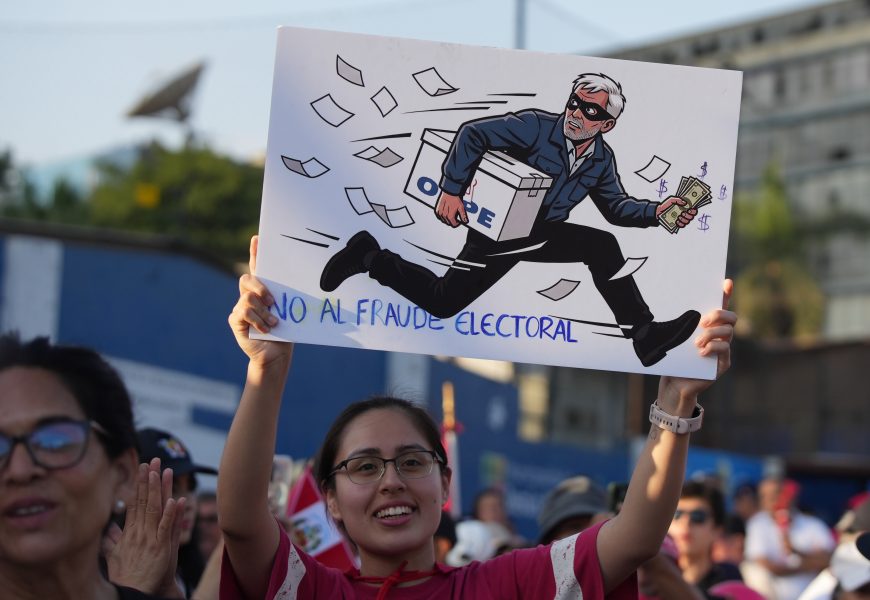

LIMA, Peru (AP) - Peru's electoral tribunal on Monday set a deadline for officials to finish counting votes and name the candidates advancing to the second round in the nation's highly contested presidential election.
The tribunal said that Peru's elections agency ONPE has until May 15 to publish full voting tallies and say which two candidates will participate in the second round.
More than 30 candidates participated in the April 12 election and the top two contenders must go to a runoff on June 7, because none of the candidates garnered more than half the votes.
However, a razor thin margin currently separates the second and third place candidates, and the election was blighted with irregularities that forced authorities to open some voting stations in the capital city of Lima for an additional day.
Authorities in Peru are still sifting through tally sheets that are arriving from remote areas and also from the nation's consulates overseas. Hundreds of tally sheets have been challenged by electoral observers and must now be reviewed by officials.
With 93.5% of votes counted, conservative leader Keiko Fujimori is leading the election with 17.05% of the vote, and looks almost certain to enter the June runoff.
Roberto Sánchez, a nationalist congressman and former minister under imprisoned ex-President Pedro Castillo, comes in second place so far with 12% of the votes, but is closely followed by the ultraconservative former mayor of Lima, Rafael López Aliaga, with 11.91% of the votes.
López Aliaga has challenged the partial results of the election saying, without providing any evidence, that a "gigantic fraud" was committed by Peruvian officials, and calling for a "complementary" election, in which hundreds of thousands of Peruvians who did not cast their ballots on April 12 can participate.
A European Union electoral observation mission said last week that while the election had experienced logistical problems there were no signs of a fraudulent vote count.
López Aliaga has focused on a hard-line security agenda during the campaign, proposing to build prisons in the country's Amazon region, allowing judges to conceal their identities and expelling foreigners who are living illegally in Peru, but has not promised major changes to the country's free market economy.
He cuts a stark contrast with Sánchez, a former commerce minister who has promised to make major economic changes that include a dramatic expansion of government spending, an extensive reform of the tax system and partial nationalization of Peru's natural resources. The leftist candidate, who has become known for wearing a wide-brimmed traditional hat during his public appearances, also said he would remove the director of Peru's central bank early in his campaign, but then modified his position saying he would respect the bank's autonomy.
While both of these candidates have garnered fewer votes in the first round of the election than Fujimori, either one of them is expected to have a good chance at defeating the conservative political leader in a runoff.
Fujimori, the daughter of a former president who was jailed for human rights abuses, has been a presidential candidate in three previous occasions. She has advanced to the second round of the elections three times, but was unable to win any of these contests.
The winner will be Peru's ninth president in just 10 years and will replace José María Balcázar, who was elected interim president in February. He replaced another interim leader who was ousted over corruption allegations just four months into his term.
More Top Stories