°C
°C
 4
Min
4
Min
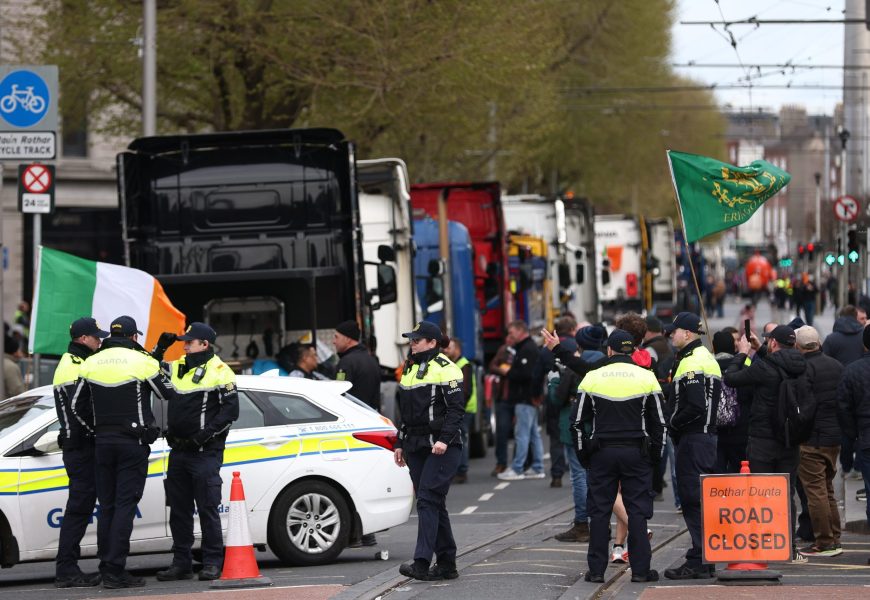
LONDON (AP) – Police broke up a blockade in the center of Dublin by fuel protesters who have brought much of Ireland to a standstill during the past week as the government prepared on Sunday to approve cost-cutting measures they hope will end six days of disruption over soaring costs at the pump.
Irish prime minister announces fuel tax cuts to stop protests over soaring pump prices
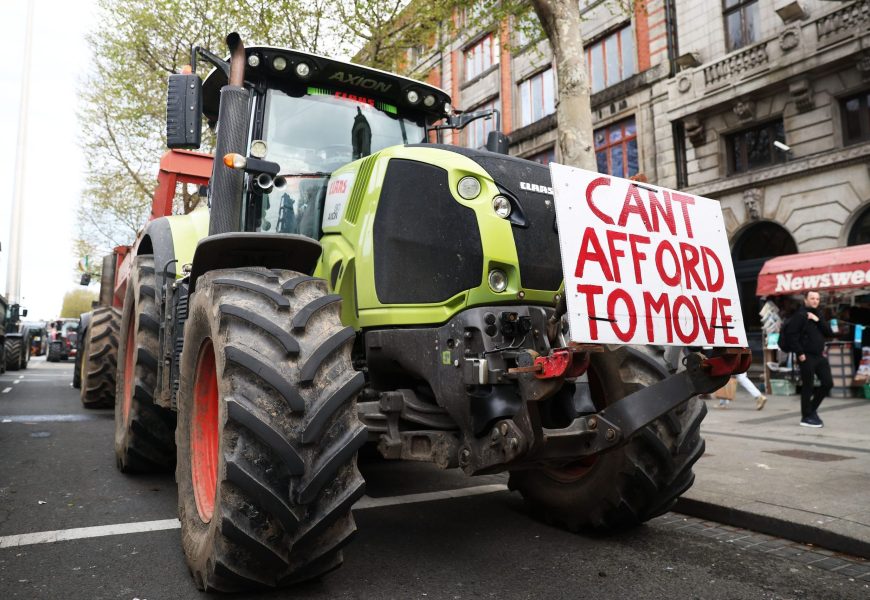

LONDON (AP) - Irish Prime Minister Micheál Martin said Sunday that his government will offer new fuel tax cuts to try to end crippling protests over soaring gas costs, though he slammed the tactics of farmers and truckers who had blocked access to the nation's only oil refinery and several depots.
Martin said the package amounting to 505 million euros ($592 million) will ease some of the cost of living pressures that have grown since the U.S.-Israel war on Iran led to the closure of the Strait of Hormuz, a vital channel for the world's oil. The relief measure, which needs parliamentary approval, would come on top of a 250 million euro tax break approved nearly three weeks ago.
It was not immediately clear if the proposal will quell the uprisings, though protests diminished Sunday amid a police crackdown.
Over six days the actions caused chaos as blockades at Ireland's refinery, a major port and several vital depots prevented tanker trucks from delivering fuel to service stations and many gas pumps ran dry. Slow-moving convoys of vehicles also caused traffic jams on major highways.
Martin said Ireland had been on the brink of having oil tankers redirected to other countries and its refinery shut down.
"It made absolutely no sense what was going on," he said. "Higher fuel scarcity and higher fuel prices would actually have been the inevitable outcome of these blockades."
Police had warned of arrests and began breaking up protests Saturday, using pepper spray to help clear people from the Whitegate refinery in County Cork and vowing to remove others who were endangering critical infrastructure and public safety because gas shortages could prevent response by emergency services.
Officers ordered trucks and tractors blocking O'Connell Street, the main thoroughfare in the capital of Dublin, to clear out early Sunday. On the other side of the country, police clashed with demonstrators to reopen the Galway docks after a military vehicle was used to knock down a makeshift barrier.
Protesters at a fuel depot in County Limerick voted to end their action Sunday and demonstrators at Rosslare Europort in Wexford agreed to begin letting trucks leave the port that is jammed with cargo that couldn't be moved.
"It's just a pity that we had to escalate a protest to this level to bring our government to the table to get fairness for every working person around this country," Neilus O'Connor, an agricultural contractor, told national broadcaster RTE, outside the Foynes depot.
Protests began Tuesday and grew as word spread on social media, with truckers, farmers, and taxi and bus operators taking part and calling for help - such as price caps or tax cuts - to bring down fuel costs they say will drive people out of business.
Government officials, who had already introduced measures to ease the burden of price rises a few weeks ago, were baffled over the rationale behind the protests because the global price spike is due to the Middle East conflict that restricted oil exports.
More than a third of gas pumps had run dry by Saturday, but the reopening of the refinery and removal of roadblocks at fuel depots was expected to begin reversing the shortage, though it could take up to 10 days to fully recover, Fuels for Ireland chief executive Kevin McPartlan said.
The rare Sunday Cabinet meeting to finalize the relief measures came as the coalition government faces new political pressures from rivals critical of their handling of the crisis.
Sinn Fein, the largest opposition party, said it would call for a no-confidence vote in the coalition government. Holly Cairns of the Social Democrats said her party would support the vote.
"They have lost the confidence of the public," Sinn Fein leader Mary Lou McDonald said. "It is clear that they still are not listening and do not accept the scale of this fuel and cost-of-living crisis."
More Top Stories