°C
°C
 3
Min
3
Min
PARIS (AP) – French former President Nicolas Sarkozy maintained his innocence at an appeal hearing in Paris on Tuesday over his conspiracy conviction last year, saying that not a single cent from Libya helped fund his 2007 presidential campaign.
Sarkozy says he owes France ‘the truth’ as he challenges conviction over alleged Libya funding
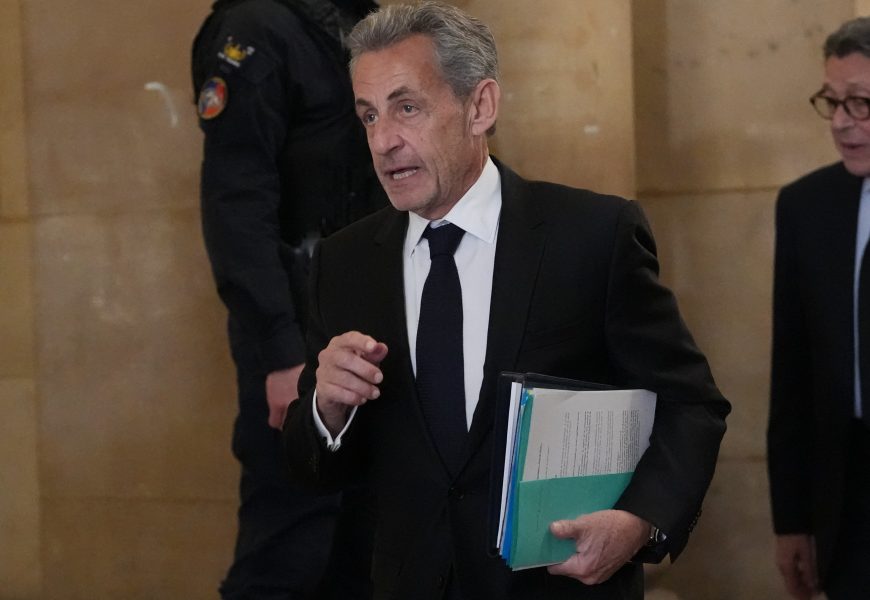
PARIS (AP) - French former President Nicolas Sarkozy maintained his innocence at an appeal hearing in Paris on Tuesday over his conspiracy conviction last year, saying that not a single cent from Libya helped fund his 2007 presidential campaign.
"I owe the truth to the French people," Sarkozy told a three-judge panel during a hearing in the case that led him to spend 20 days in prison before being granted release pending appeal.
"I'm innocent," he said.
Sarkozy, 71, is challenging his conviction after being found guilty in September of criminal conspiracy. He was sentenced to five years in prison for his alleged part in a scheme to obtain funds from the government of then Libyan leader Moammar Gadhafi in exchange for political and diplomatic favors.
Sarkozy has repeatedly denied wrongdoing and says the allegations are politically motivated.
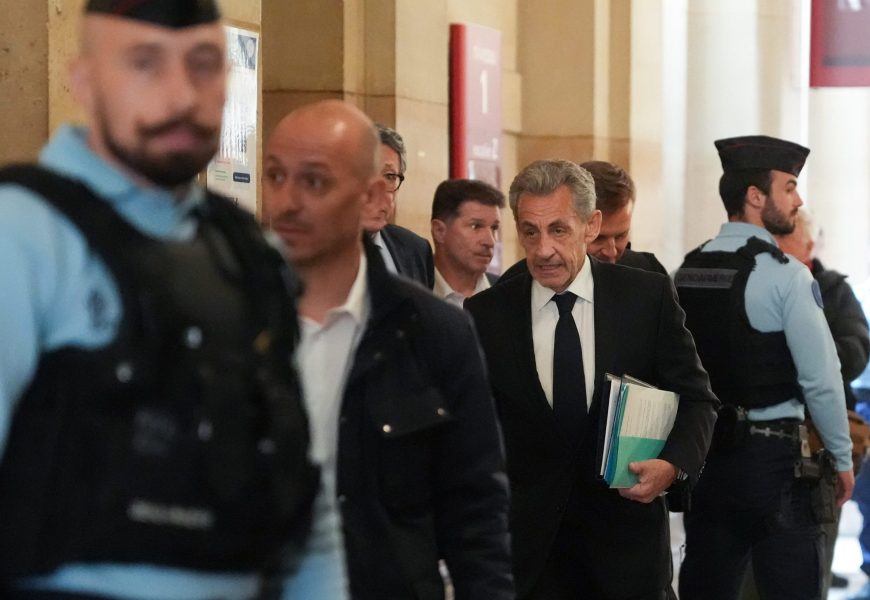
Sarkozy's wife, supermodel-turned-singer Carla Bruni-Sarkozy, attended Tuesday's hearing, which focused on his role as a conservative presidential candidate and then president from 2007 to 2012.
The 12-week appeal trial, which began last month, will reexamine all of the evidence and testimony related to him and nine co-defendants - including three former ministers.
Sarkozy said that he championed Western military intervention in Libya in 2011 after Gadhafi's government violently cracked down on anti-government protesters, when Arab Spring pro-democracy protests swept through the region.
"I took the initiative, France took the initiative. Why? Because Gadhafi had no hold over me - financially, politically or personally," Sarkozy said.
Gadhafi was killed by opposition fighters in October 2011, ending his four-decade rule of the North African country.
Sarkozy's appeal hearing comes after families of French victims of a 1989 plane bombing expressed their distress last week over possible promises made to Gadhafi's government as part of the alleged deal.
In 2003, Libya took responsibility for both the 1988 plane bombing over Lockerbie, Scotland, and the bombing of UTA flight 772 over Niger the following year that killed 170 people, including 54 French nationals.
"I believe that such unspeakable suffering can only be answered with the truth," Sarkozy said.
Financial prosecutors have accused Sarkozy of having promised to lift the arrest warrant targeting Gadhafi's brother-in-law and intelligence chief Abdullah al-Senoussi, accused of masterminding the attacks, in exchange for alleged campaign financing.
"The truth is that I did not act in favor of Mr. Senoussi ... who is in prison (in Libya) because he was arrested following the international action led by France," Sarkozy said. "I never promised him anything."
Visibly irritated, Sarkozy, who as interior minister met with Gadhafi in 2005 in Libya, told the court: "Why would I have chosen Mr. Gadhafi, whom I had never met before, to set up a suspicious financing arrangement with him during a 30-minute meeting? It makes no sense," Sarkozy said.
In 2005, people close to Sarkozy, including his chief of staff, Claude Guéant, and junior minister Brice Hortefeux, traveled to Tripoli, where they met with al-Senoussi.
The trial at Paris appeals court is scheduled to last until June 3, with a verdict expected at a later date.
"Defendants have so far been unable to explain all the inconsistencies that may exist in this case," Vincent Brengarth, lawyer for French anti-corruption group Sherpa, told reporters.
"Up to now, the various hearings have not resulted in these explanations, and we are now expecting them from the main defendant, namely Nicolas Sarkozy," he said.
Sarkozy has faced multiple legal cases since leaving office. In November, the Court of Cassation - France's top court - upheld his conviction for illegal campaign financing of his 2012 reelection bid, requiring him to spend six months under house arrest wearing an electronic ankle tag, a sentence that has yet to be implemented.
More Top Stories