°C
°C
 2
Min
2
Min
KATHMANDU, Nepal (AP) – A political party created just four years ago and led by an ex-rapper has swept Nepal’s parliamentary poll, results published by the electoral commission on Thursday showed.
Former rapper’s fledgling political party sweeps Nepal’s first post-revolt election
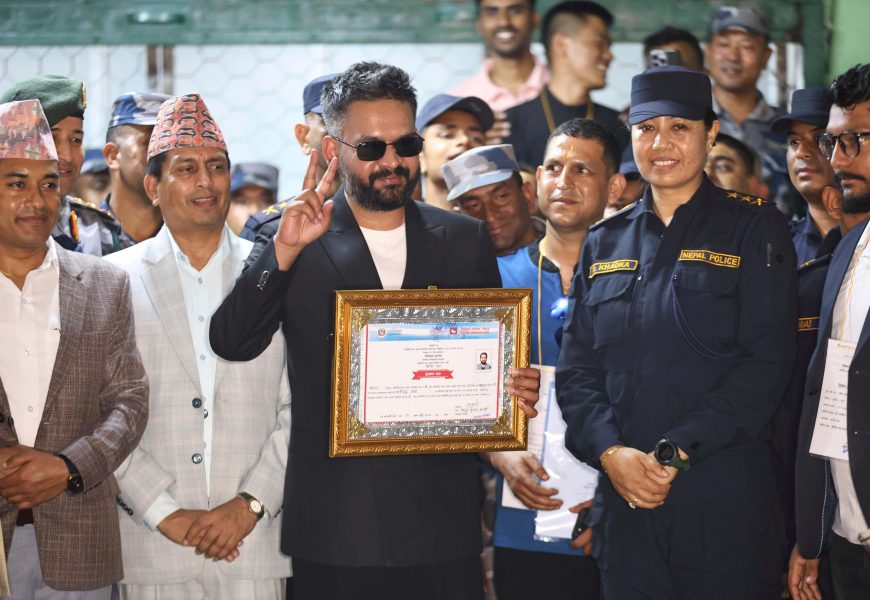
KATHMANDU, Nepal (AP) - A political party created just four years ago and led by an ex-rapper has swept Nepal's parliamentary poll, results published by the electoral commission on Thursday showed.
The election - the country's first since last year's youth-led revolt - was won by the Rastriya Swatantra Party, or RSP, of rapper-turned-politician Balendra Shah.
The RSP won 125 directly elected seats plus a further 57 as part of the proportional representation votes, giving it a total 182 seats in the 275-member House of Representative, the powerful lower chamber of parliament. The Nepali Congress party came second, with 38 seats.
In Nepal, voters directly elect 165 members to the House of Representatives. The remaining 110 seats are allocated through a proportional representation system, under which political parties are assigned seats based on their share of the vote.
The commission will ask the political parties to provide the names of members to fill the seats won through the proportional representation system. They would then report to the president, who in turn will summon the new parliament, which will elect a new prime minister - who would need the support of half its members. The RSP hold nearly two-third of seats now.
The process is likely to take several days before the country gets a new government.
Shah, who is the RSP's prime ministerial candidate, won the 2022 Kathmandu mayoral race. He emerged as a leading figure in the 2025 uprising that ousted former Prime Minister Khadga Prasad Oli.
The RSP, which was founded in 2022, gained huge support in the parliamentary election, posing a strong challenge to two long-dominant parties - the Nepali Congress and the Communist Party of Nepal (Unified Marxist-Leninist)
Last year's protests against corruption and poor governance were triggered by a social media ban before snowballing into a popular revolt against the government. Dozens of people were killed and hundreds more injured when protesters attacked government buildings and police opened fire on them.
More Top Stories