°C
°C
 5
Min
5
Min
TOKYO (AP) – Japanese Prime Minister Sanae Takaichi will host South Korean President Lee Jae Myung in her hometown on Tuesday, in a summit meant to stabilize ties between the two sometime-rivals as Japan’s worries about Chinese power in Asia grows. The meeting is part of a swirl of diplomatic activity in a region with growing tensions.
Japan will host summit with South Korea to bolster ties as Tokyo’s relations with Beijing worsen
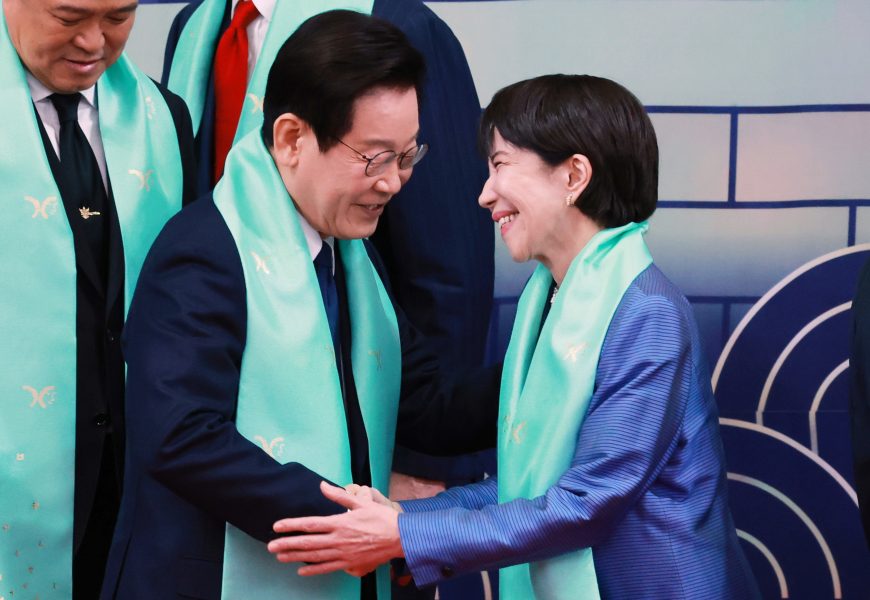
TOKYO (AP) - Japanese Prime Minister Sanae Takaichi will host South Korean President Lee Jae Myung in her hometown on Tuesday, in a summit meant to stabilize ties between the two sometime-rivals as Japan's worries about Chinese power in Asia grows.
The meeting is part of a swirl of diplomatic activity in a region with growing tensions. A week ago Lee visited China, where leader Xi Jinping sought to cozy up to Seoul amid tensions between Japan and China after Takaichi said in November that potential Chinese military action against Taiwan, the island democracy Beijing claims as its own, could justify Japanese intervention.
Lee's visit also follows the capture of Venezuelan leader Nicolas Maduro by the United States, a mutual ally of Japan and South Korea.
Takaichi and Lee will meet in her hometown of Nara, Japan's scenic ancient capital.
The talks will be their first full summit and third meeting in less than three months since Takaichi took office, Japanese Foreign Ministry officials said.
At their talks on the sidelines of the APEC summit in Gyeongju, South Korea, in October, Lee asked Takaichi to meet in Nara.
Takaichi on Monday returned to the area for the first time since taking office and posted a message on X: "I hope to further push forward Japan's relations with South Korea in the forward-looking way as we meet in the ancient capital of Nara with more than 1,300 years of history and longstanding cultural exchanges between Japan and the Korean Peninsula."
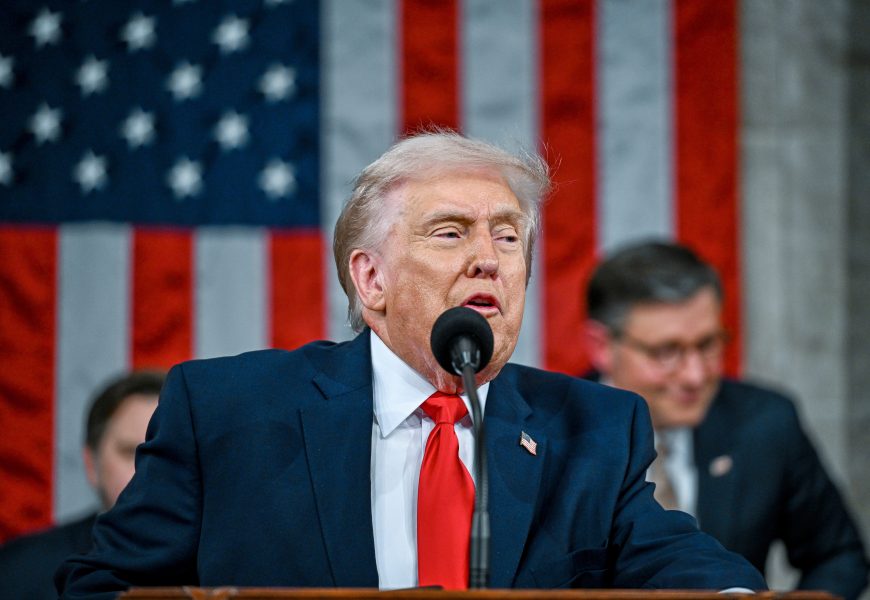
Their meeting will focus on trade and the challenges of China and North Korea. Japan and South Korea must also figure out how to deal with Trump's unpredictable diplomacy, and both countries are under U.S. pressure to increase their defense spending.
Lee, in an interview with Japan's NHK television Monday, said security is an important area where South Korea wants to cooperate with Japan, under the fundamental trilateral framework that includes the U.S., but "what's really important is the issue of deep mutual trust."
During Lee's meetings in China, Xi called on the two countries to join hands, noting their historical rivalry against Japan in World War II. Lee told reporters during his China visit that "relations with Japan are as important as those with China for us." He expressed hopes for swift resolutions of Japan-China disputes but admitted Seoul had limited capabilities to broker a reconciliation.
"Given the current strategic environment, strengthening Japan-South Korea relations and reinforcing the Japan-U.S.-South Korea cooperation is more important than ever," Foreign Minister Toshimitsu Motegi told reporters on Friday. "The Japanese and South Korean governments are on the same page about closely communicating to develop our relations stably and in a forward-looking manner."
Takaichi and Lee on Wednesday will visit Horyu Temple, which includes architecture from the late 7th or early 8th century, making them some of the world's oldest surviving wooden buildings and illustrating Japanese adaptation of Buddhism via the Korean Peninsula. Lee will also meet with South Korean residents in Japan before returning home in the afternoon.
Japan's cultural, religious and political ties to the Korean Peninsula are ancient, but their modern history has been repeatedly disrupted by disputes stemming from the brutal Japanese colonial rule of Korea from 1910-1945.
Under a 1965 normalization treaty, Japan provided $500 million in economic assistance to South Korea, saying all wartime compensation issues were settled. But historical issues including forced labor and sexual slavery during the war have disrupted ties for decades as Tokyo promoted revisionist views.
Relations have begun improving in recent years under shared challenges such as growing China-U.S. competition and North Korea's advancing nuclear program.
"While we face history squarely, we should cooperate on areas where we can, joining hands and moving forward into the future together. That is the message I'd like to convey to the Japanese people," Lee told NHK.
Takaichi's reputation as a security hawk and an assumption by some that Lee would tilt toward North Korea and China led to early worries over their ties. But both leaders have so far sought to improve their relationship.
Takaichi was a regular visitor at Tokyo's Yasukuni Shrine, which honors Japan's 2.5 million war dead, including convicted war criminals - an action seen by the Koreas and China as a lack of remorse about Japan's wartime past. But she sent a religious ornament instead of praying at Yasukuni for the Aug. 15 anniversary of Japan's defeat and the shrine's autumn festival.
While the two leaders are expected to stay away from the historical disputes, media reports say they may discuss possible humanitarian cooperation in the ongoing effort to recover the remains at a former undersea mining site in western Japan where 180 workers, including 136 Korean forced laborers, were killed in a 1942 accident.
Chief Cabinet Secretary Minoru Kihara said the two governments have been discussing a possible DNA analysis of some of the remains found at the site last year.
More Top Stories