°C
°C
 4
Min
4
Min
Daryl Hannah has issued a scathing response to the new TV series about John F. Kennedy Jr. and wife Carolyn Bessette, denouncing the way she’s been portrayed in the FX and Hulu show as false, damaging and misogynistic.
Daryl Hannah issues scathing response to portrayal of her on TV series about Kennedy and Bessette
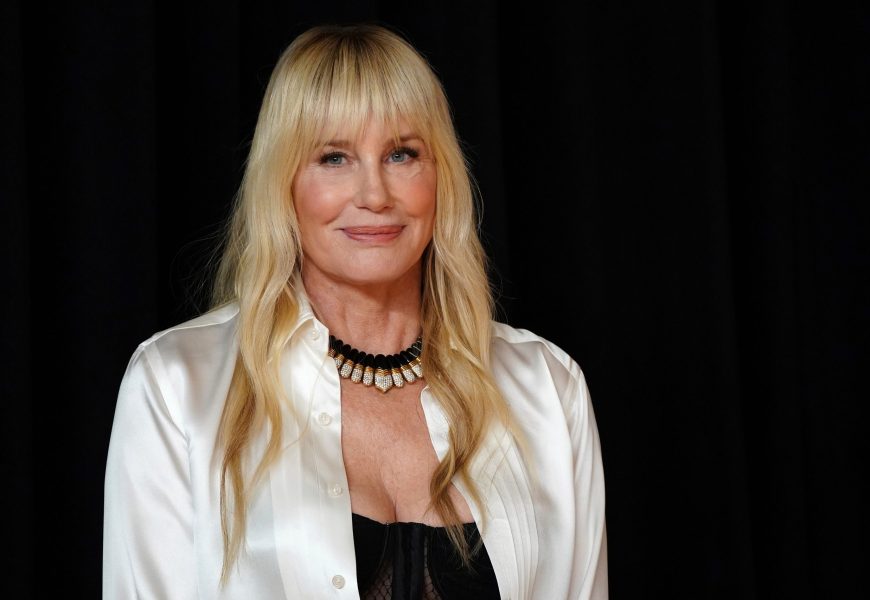
Daryl Hannah has issued a scathing response to the new TV series about John F. Kennedy Jr. and wife Carolyn Bessette, denouncing the way she's been portrayed in the FX and Hulu show as false, damaging and misogynistic.
"How Can 'Love Story' Get Away With This?" was the headline of the actor's guest essay Friday in the New York Times.
"Love Story: John F. Kennedy Jr. & Carolyn Bessette" is a romantic look at the love affair and marriage of the famously stylish couple, who died in 1999 along with Bessette's sister, Lauren, when a small plane piloted by Kennedy crashed into the Atlantic on a hazy night.
Hannah had dated Kennedy before he met and married Bessette, and is portrayed in what can only be described as a distinctly unflattering way in the series. The character is played by Dree Hemingway.
"The character 'Daryl Hannah' portrayed in the series is not even a remotely accurate representation of my life, my conduct or my relationship with John," Hannah, 65, wrote. "The actions and behaviors attributed to me are untrue."
She went on to refute specific actions attributed to her character, who appears in the first three episodes. "I have never used cocaine in my life or hosted cocaine-fueled parties," Hannah wrote. "I have never pressured anyone into marriage. I have never desecrated any family heirloom or intruded upon anyone's private memorial.
"I have never planted any story in the press," she continued. "I never compared Jacqueline Onassis' death to a dog's. It's appalling to me that I even have to defend myself against a television show."
FX said it had no immediate comment on Hannah's charges.
Hannah is not the first to bitterly criticize the show and accuse producers, especially executive producer Ryan Murphy, of profiting off the Kennedy family's tragic past in an unseemly way. Jack Schlossberg, Kennedy's nephew who is running for Congress in New York, has been particularly vocal.
But Hannah's criticisms were more personal, since she is a character on the show. She noted that producers had been clear already that they were positioning Hannah as an obstacle to the central love story. She said it was thus no accident she was portrayed as "irritating, self-absorbed, whiny and inappropriate."
Hannah quoted published comments from producer Nina Jacobson, saying: "Given how much we're rooting for John and Carolyn, Daryl Hannah occupies a space where she's an adversary to what you want narratively in the story."
Jacobson also said in the same interview that creators "always try to come from a place of compassion" when portraying real-life characters, and try to be "very mindful of giving people the dimension and complexity that they deserve as human beings."
Clearly, that is not how Hannah felt she was treated.
The former actor said she now works in environmental advocacy, documentary filmmaking and animal-assisted therapy for seniors living with dementia and Alzheimer's. "My professional life is built on compassion and responsibility.," she wrote. "Reputation is not about ego; it is about the ability to continue doing the meaningful work I love. Like any career, doing good work requires an intact reputation. This is why I am choosing to stand up for myself now."
She began her essay recalling words spoken to her by Kennedy's late mother.
"Jacqueline Onassis once gave me some wise advice: She told me that while tabloids, magazines and newspapers often sold ridiculous lies, they were nothing more than bird cage liner by the next day," Hannah wrote, saying that at the time, those words were comforting.
"But today they no longer hold true," Hannah added, noting that in the digital age, "lies live online forever."
She also said she saw misogyny in the focus on her as an unappealing rival to Bessette.
"Popular culture has long elevated certain women by portraying others as rivals, obstacles or villains," Hannah wrote. "Isn't it textbook misogyny to tear down one woman in order to build up another?"
More Top Stories