°C
°C
 5
Min
5
Min
WASHINGTON (AP) – President Donald Trump’s special envoy to Belarus recently revealed that he helped ingratiate himself with the country’s autocratic leader by echoing Alexander Lukashenko’s disdain for Europe with vulgar language and by negotiating his way through a boozy lunch during their first meeting.
Trump envoy credits colorful rhetoric and vodka shots in helping him build bond with Belarus leader
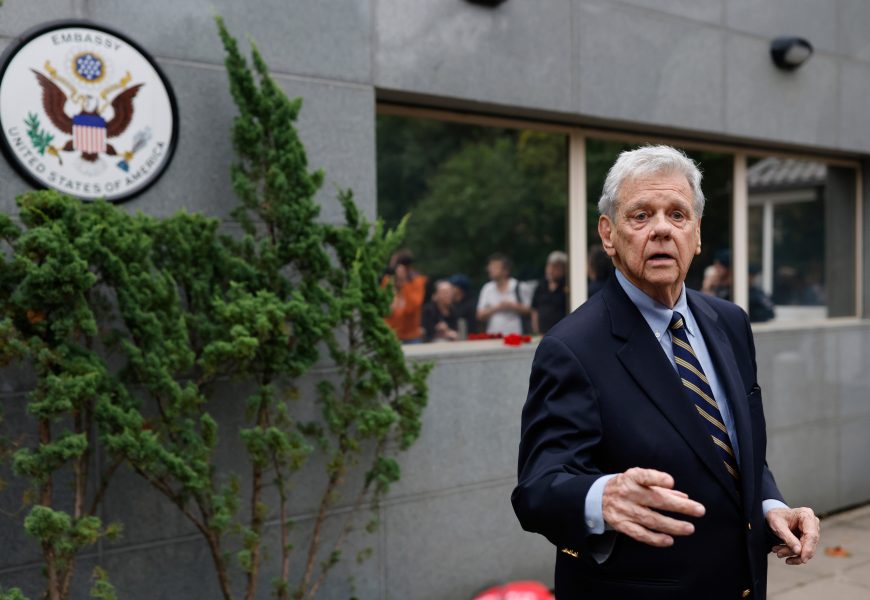

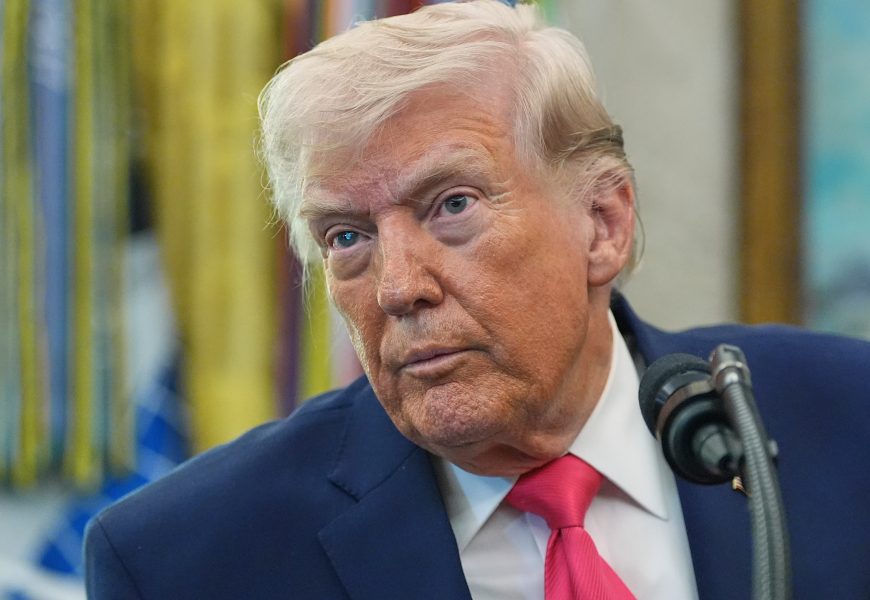
WASHINGTON (AP) - President Donald Trump's special envoy to Belarus recently revealed that he helped ingratiate himself with the country's autocratic leader by echoing Alexander Lukashenko's disdain for Europe with vulgar language and by negotiating his way through a boozy lunch during their first meeting.
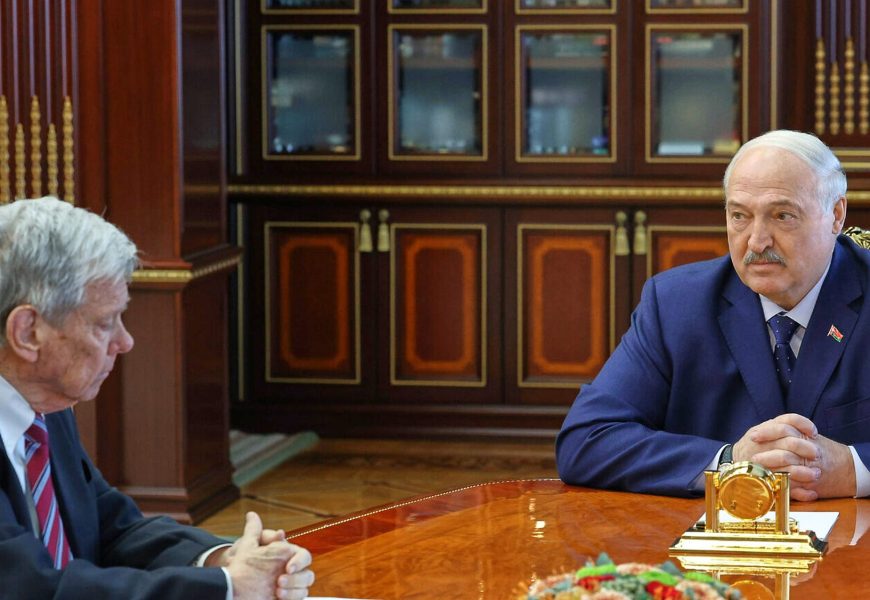
The envoy, John Coale, who has been charged with working to win the release of hundreds of political prisoners from the East European country, said State Department officials advised him before the initial meeting with Lukashenko that he likes to "yuck it up, so we yucked it up."
"About a half-hour, 45 minutes into it, I am trying to get the feel of who this guy is and how to communicate," Coale said at a recent appearance at Arizona State University's McCain Institute. "He starts complaining about the Europeans - Europeans this, Europeans that. So - and this is kind of crude and I'm sorry for the language - but I said to him, 'Yeah, they're a bunch of p-.' So, I had him in my hand from then on."
Coale offered the anecdote as a window into his efforts to build a relationship with the Belarusian leader, who is closely tied to Russian President Vladimir Putin and has sought to improve relations with the West since Trump's return to the White House.
Coale in an interview on Wednesday defended his rhetoric. "If I have to use locker room language to get 500 political prisoners released, I will do it every time," he told The Associated Press.
In 2016, a recording of Trump using the same vulgarity caused a major controversy during the president's first run for the White House, leading to a rare apology from Trump, who described it as private "locker room talk."
To be certain, Coale is not the first U.S. diplomat to use less than diplomatic language about Europeans.
In 2014, Victoria Nuland, at the time the top U.S. diplomat for European and Eurasian affairs, apologized after a recording of a snippet of private conversation leaked in which she used salty language to vent about Europe's hesitant policy over the pro-democracy protests in Ukraine. In 2003, State Department spokesman Richard Boucher faced heat in the early months of the Iraq War for dismissively referring to France, Germany, Belgium and Luxembourg - countries that opposed U.S. policy in Iraq - as the "chocolate makers."
And Trump has sparred with European leaders over a long list of issues, including tariffs, contributions to NATO and his desire to acquire Greenland.
Coale, a Maryland attorney, was appointed by Trump in March 2025 as his deputy special envoy to Ukraine. In June, he help win the release of 14 political prisoners from Belarus. Months later, Trump announced he was elevating Coale to serve as his special envoy to Belarus. He is married to TV journalist Greta Van Susteren.
The envoy, during a conference on hostage-taking and arbitrary detention hosted by the non-profit think tank named after the late Sen. John McCain, made the case that his "very direct" diplomacy is reaping benefits with Lukashenko.
Lukashenko has ruled the nation of 9.5 million with an iron fist for more than three decades, and the country has been sanctioned repeatedly by Western countries - both for its political oppression and for allowing Moscow to use its territory in the full-scale invasion of Ukraine in 2022.
Belarus has released hundreds of political prisoners in exchange for sanctions relief since Trump returned to the White House as Lukashenko has sought to build better relations with the U.S. under the Republican leader.
Coale said his first meeting with Lukashenko stretched into a two-hour lunch, during which he poured shots of vodka on to the floor when his host wasn't looking to avoid becoming intoxicated. Coale joked he managed to limit himself to two shots, but said that some of his State Department colleagues who joined him at the meeting drank many more.
"All these toasts started - I can't get hammered," Coale said. "Of course, there were a couple State Department guys who drank all eight toasts and they were hammered."
Lukashenko's rule was challenged after a 2020 presidential election, when tens of thousands poured into the streets to protest a vote they viewed as rigged. They were the largest demonstrations since Belarus became independent following the 1991 collapse of the Soviet Union.
In an ensuing crackdown, tens of thousands were detained, with many beaten by police. Prominent opposition figures either fled the country or were imprisoned.
Five years after the mass demonstrations, Lukashenko won a seventh term last year in an election that the opposition called a farce.
More recently, Belarus has freed some political prisoners to try to win favor with the West, including Nobel Peace Prize laureate Ales Bialiatski and prominent opposition figures Siarhei Tsikhanouski, Viktar Babaryka and Maria Kolesnikova.
Last week, Lukashenko ordered the release of 250 political prisoners as part of a deal with Washington that lifted some U.S. sanctions, the latest step in the isolated leader's effort to improve ties with the West. It was the largest one-time release of political prisoners in the country.
Lukashenko pardoned the prisoners after meeting with Coale in Minsk. Coale hailed the release as a "significant humanitarian milestone" and a testament to Trump's "commitment to direct, hard-nosed diplomacy."
The McCain Institute event took place days before the latest release of political prisoners. Coale predicted then that the Trump administration would be able to win the release of all of political prisoners by the end of the year.
"I'd be willing to bet on that," said Coale, who added he was planning additional trips to Belarus in the near future that he expected to result in the release of a "couple hundred" more political prisoners. "I think this type of diplomacy that Donald Trump has pushed forward does work."
More Top Stories