°C
°C
 3
Min
3
Min
LONDON (AP) – The Bank of England is expected to announce Thursday that it is keeping interest rates on hold as policymakers assess the economic impact of the Iran war and Tehran’s effective closure of the Strait of Hormuz, through which a fifth of the world’s crude passes in peacetime.
The Bank of England is expected to keep interest rates on hold as it weighs the impact of Iran war
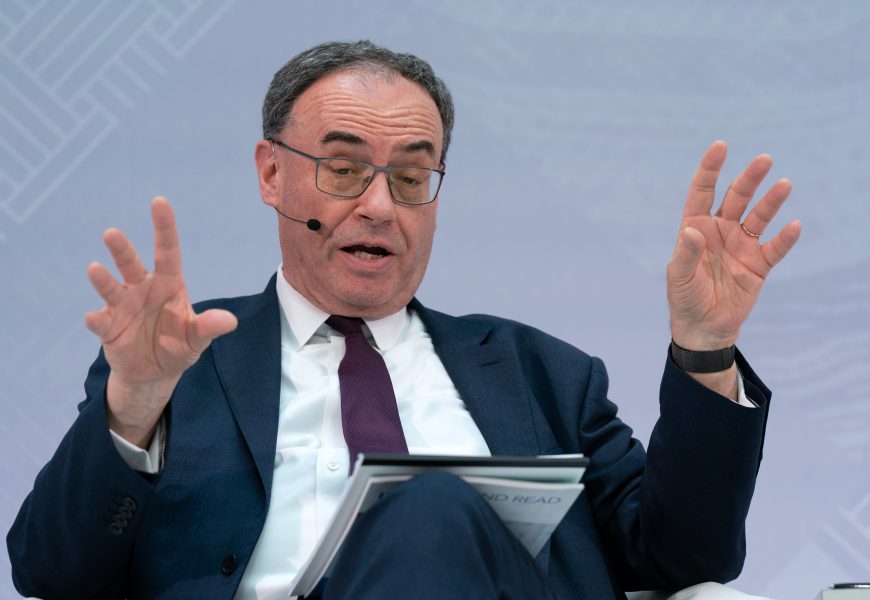

LONDON (AP) - The Bank of England is expected to announce Thursday that it is keeping interest rates on hold as policymakers assess the economic impact of the Iran war and Tehran's effective closure of the Strait of Hormuz, through which a fifth of the world's crude passes in peacetime.
Economists said the nine-member panel may hint that interest rates could increase in the months to come if the conflict in the Middle East - where a shaky ceasefire is for now holding - puts more upward pressure on U.K. inflation.
For now, the Monetary Policy Committee is expected to keep the bank's main rate at 3.75%, with one or two members possibly voting for a quarter-point hike as a preemptive measure against higher inflation.
Before the war, there had been an expectation in financial markets that the bank would cut rates given that inflation was predicted to fall back toward its 2% target during the spring. The war has since upended the bank's predictions as well as the wider global economic forecasts.
Sandra Horsfield, an economist at Investec, said the "repercussions of the conflict are still keenly felt and uncertainty about how the situation could evolve also remains high."
Likely more important than the decision, will be the bank's quarterly economic projections published at the same time and the subsequent news conference, led by Bank Gov. Andrew Bailey.
The forecasts will be the first since the United States and Israel launched the strikes on Iran that started the war on Feb. 28 - in general, inflation forecasts are likely to be raised and growth predictions lowered.
Last week, official figures showed inflation in the United Kingdom climbed in March after a sharp jump in prices at the pump in the wake of the disruption to energy supplies caused by the war. The annual consumer price inflation rate increased to a three-month high of 3.3%, from 3% the previous month.
Inflation is likely to rise further in the coming months, possibly to 4%, as higher energy prices impact household bills.
Economists do not expect inflation to get anywhere near the four-decade highs above 11% in the wake of Russia's invasion of Ukraine in February 2022, partly because oil and gas prices have not spiked as much and partly because interest rates are higher.
But Bank of England policymakers will be keeping an eye on whether the evident inflation spike starts to spread through the economy, by way of higher wages, for example. They will also be alert to any upcoming action from the Britain's Labour government to limit the inflation impact on households and businesses.
Treasury chief Rachel Reeves, whose hopes over the cost-of-living have been blown off course by the crisis in the Middle East, has said this is "not our war, but it is pushing up bills for families and businesses" as a result.
More Top Stories