°C
°C
 8
Min
8
Min
Minnesota’s investigations agency said Thursday that the U.S. attorney’s office has prevented it from taking part in the investigation into an Immigration and Customs Enforcement officer’s fatal shooting of Minneapolis woman Renee Good, a 37-year-old mother of three.
The Latest: State investigators say they can’t access ICE shooting evidence after FBI takes case
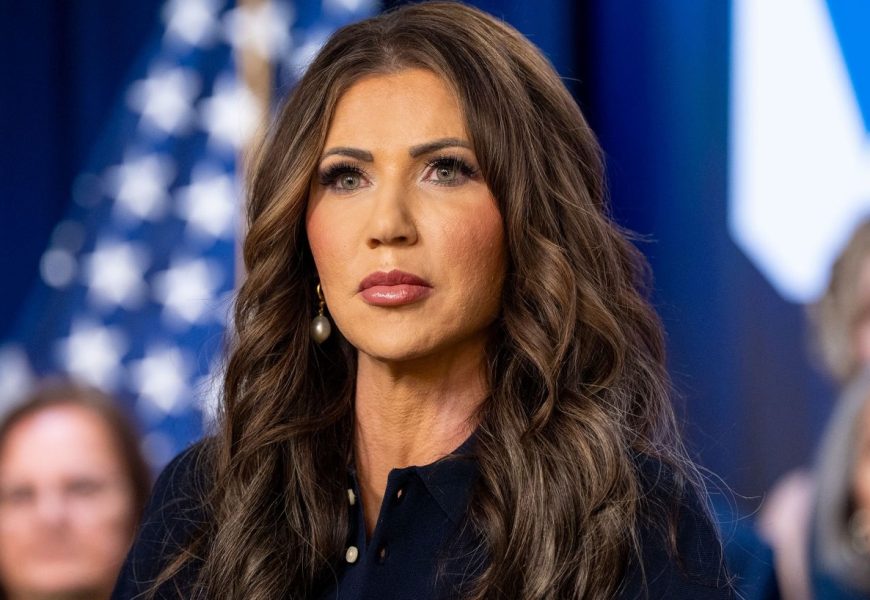
Minnesota's investigations agency said Thursday that the U.S. attorney's office has prevented it from taking part in the investigation into an Immigration and Customs Enforcement officer's fatal shooting of Minneapolis woman Renee Good, a 37-year-old mother of three.
"The investigation would now be led solely by the FBI, and the BCA would no longer have access to the case materials, scene evidence or investigative interviews necessary to complete a thorough and independent investigation," Minnesota Bureau of Criminal Apprehension Superintendent Drew Evans said in a statement.
It had been decided that the BCA would investigate Good's shooting death along with the FBI, but the U.S. attorney's office changed that, according to Evans.
The announcement came as protestors and law enforcement clashed Thursday morning outside a Minneapolis immigration court, with the governor urging restraint and schools canceling classes as a precaution. Asked about the development, Homeland Security Secretary Kristi Noem said Thursday that Minnesota authorities "don't have any jurisdiction in this investigation."
The Latest:
The racial and economic justice organization also is calling for a "full and transparent investigation" into Good's killing.
"For more than 50 years, law enforcement policy has explicitly prohibited shooting at moving vehicles-a principle established in 1972 and widely recognized as best practiced," reads a joint statement from National Urban League President Marc Morial and Urban League Twin Cities President Marquita Stephens.
"ICE agents' decision to ignore this standard represents a dangerous and unacceptable escalation of force, rooted in outdated and reckless tactics," the statement continued.
In an unrelated news conference in New York, she said that while there would be an investigation into the officer's use of force, she believed he followed his training and the shooting was justified. She again called the incident "domestic terrorism."
"This vehicle was used to hit this officer," Noem said. "It was used as a weapon, and the officer feels as though his life was in jeopardy. It was used to perpetuate a violent act, and this officer took action to protect himself and to protect his fellow law enforcement officers.
Noem also said that law enforcement authorities in Minnesota have not been shut out of the probe into the shooting.
"They don't have any jurisdiction in this investigation," she said.
- When can officers fire at a moving vehicle? There is no universal training standard for law enforcement. But most police departments and federal guidance bar shooting at a moving vehicle unless the driver poses an imminent threat of deadly force beyond the car itself.
- Why are shootings at vehicles restricted? Experts say firing at a moving car is one of the riskiest forms of lethal force, increasing the chance of stray gunfire or a loss of vehicle control that can endanger bystanders.
- Are officers expected to move out of the way? Yes. Justice Department policy says deadly force is allowed only when no reasonable alternative exists, including stepping out of the vehicle's path.
Outraged by Good's death, Democratic leaders in Congress pledged to conduct strong oversight of what happened in Minneapolis, but stopped short Thursday of immediate calls to defund ICE or impeach Noem.
House Democratic Leader Hakeem Jeffries called the killing of Good an "abomination, a disgrace."
"We all are outraged by what took place in Minneapolis, and we will respond decisively," said Jeffries of New York. "Blood is clearly on the hands of those individuals within the administration that have been pushing an extreme policy," he said.
"We support the removal of violent felons in this country who are here illegally - but that's not what this administration has been doing," he added.
Senate Democratic Leader Chuck Schumer said he watched the video and "you felt like your stomach was being punched."
Schumer said senators are discussing next steps as they consider funding in the annual Homeland Security bill, and he demanded a "full investigation."
The head of Minnesota's state investigations agency says the U.S. attorney's office has cut off its access in the fatal shooting of a Minneapolis woman by an ICE agent.
"The investigation would now be led solely by the FBI, and the BCA would no longer have access to the case materials, scene evidence or investigative interviews necessary to complete a thorough and independent investigation," Minnesota Bureau of Criminal Apprehension Superintendent Drew Evans said in a statement.
It had been decided that the Bureau of Criminal Apprehension would investigate Good's shooting death along with the FBI, but that later was changed by the U.S. Attorney's office, according to Evans.
The BCA "has reluctantly withdrawn from the investigation," Evans wrote.
Beyond Minneapolis, citizens also took to the streets or were expected to do so in New York City, Seattle, Detroit, Washington, D.C., Los Angeles, San Antonio, New Orleans and Chicago.
Protests are also scheduled in smaller cities later this week in Arizona, North Carolina, and New Hampshire.
Renee Nicole Macklin Good was a 37-year-old mother of three who had recently moved to Minnesota.
She was a U.S. citizen born in Colorado and appears to never have been charged with anything involving law enforcement beyond a traffic ticket.
In social media accounts, Macklin Good described herself as a "poet and writer and wife and mom." She said she was currently "experiencing Minneapolis," displaying a pride flag emoji on her Instagram account. A profile picture posted to Pinterest shows her smiling and holding a young child against her cheek, along with posts about tattoos, hairstyles and home decorating.
The fatal shooting of a woman by a federal immigration officer in Minneapolis on Wednesday has thrust a long-running and deeply contested question back into the national spotlight: When is a law enforcement officer justified in using lethal force against someone in a moving vehicle?
At the center of the debate are policies that for years have limited when officers may fire at vehicles, generally barring gunfire at fleeing cars unless the driver poses an imminent threat of deadly force beyond the vehicle itself. Those restrictions, embraced by many police departments and reflected in federal guidance, were intended to curb what experts long warned was among the most dangerous and unpredictable uses of lethal force.
Patrick Riley was one of the people who came out Thursday morning at the federal building to express outrage after the death of Macklin Good on Wednesday.
"We are peacefully demonstrating. We're trying to let this organization know that they're not welcome," said Riley.
Riley questioned why the Trump administration had made the Minneapolis area such a high priority.
"Why this big flood here now? This is our place. This is our country. This is our freedom to to protest," Riled added.
Police at one point threw devices releasing smoke to break up the crowd, which carried signs and shouted profanities at them.
The crowd was directed farther away from the entrance as the protest reached the two-hour mark on Thursday.
In a post on the Facebook pages of the Red Lake Band of Chippewa Indians tribal council and the tribe's embassy in Minneapolis, the council said tribal citizens should expect ICE agents to detain and harm them.
"We all need to be careful, and we must assume that ICE will not protect us," the post stated. "We realize that we will not receive compassionate treatment by anyone associated with the Trump administration."
In the warning to citizens, the tribal council said it sees the "obvious purpose of ICE is to terrorize Americans who do not agree with the administration's policies, and actions" and called for "an end to the president's blatant lies."
There are about 8,000 Red Lake Band of Chippewa Indians citizens in the Twin Cities and surrounding areas, according to the post. The council asked tribal members to document interactions with ICE by contacting the tribe directly. The tribe's embassy in Minneapolis has also been closed for the rest of the week.
Protesters are carrying signs and chanting, including some signs that say, "ICE Out Now," "We deserve to be safe in our community," and "Resist Fascism."
Chants include "We Keep Us Safe," "ICE Out Now," "ICE Go Home," "Quit Your Job" and "Justice Now!"
Scores of people bundled up in heavy coats gathered as dawn began to break Thursday in a parking lot near the Bishop Henry Whipple Federal Building at Fort Snelling. The building houses several federal agencies, including an immigration court.
The crowd was chanting and holding American flags and signs calling on ICE to leave Minnesota.
More Top Stories