°C
°C
 19
Min
19
Min
A tentative U.S.-Iran ceasefire is faltering after Israel pounded Beirut and as Iran maintains its grip on the Strait of Hormuz while truce talks remain uncertain. Both Tehran and Washington are claiming victory and exerting pressure.
The Latest: Netanyahu approves talks with Lebanon after Israeli strikes imperil Iran ceasefire

A tentative U.S.-Iran ceasefire is faltering after Israel pounded Beirut and as Iran maintains its grip on the Strait of Hormuz while truce talks remain uncertain.
Both Tehran and Washington are claiming victory and exerting pressure. Talks on a permanent deal could begin soon in Islamabad, with U.S. Vice President JD Vance set to lead the U.S. delegation.
Israeli strikes made Wednesday the deadliest day in Lebanon since the war began, with more than 300 people killed according to the Health Ministry. There are lingering disagreements over whether the ceasefire covers the Lebanese militant group Hezbollah. Iran is warning of "STRONG responses" if attacks on its militant ally don't stop.
Israel-Lebanon negotiations are expected next week in Washington, according to a person familiar with the matter. Israeli Prime Minister Benjamin Netanyahu said he had approved direct talks, while the Lebanese government did not immediately respond.
Although the Strait of Hormuz is closed, there were no reports of strikes inside Iran or attacks against Israel or neighboring Gulf Arab nations, leaving Lebanon as the only country where the conflict is still burning.
Here is the latest:
In a video statement, the Israeli leader says his country will keep striking Hezbollah until security is restored in northern Israel.
He confirmed that he is opening direct negotiations with Lebanon, the aim or which are Hezbollah's disarmament and a sustainable peace agreement.
Jean Arnault, the U.N. secretary-general's personal envoy for the Iran war, met Thursday with Iranian deputy foreign minister Majid Takht-Ravanchi in the capital as the diplomat makes his way through the countries impacted by the conflict.
Stephane Dujarric, the U.N. spokesperson, said Arnault heard the Iranian officials' "views on the way forward" as a shaky day-old ceasefire holds. He also met with representatives from the Iranian Red Crescent, who took him on a tour of some of the sites damaged by weeks of U.S.-Israeli strikes, including a university that was destroyed and an apartment block.
Asked if Arnault or any U.N. personnel will be playing a role in the upcoming negotiations in Pakistan, Dujarric said that world body is currently discussing with all parties "the structural role that we can play" in bringing an end to this conflict.
President Masoud Pezeshkian said the decision to accept a ceasefire was made unanimously by top officials and approved by the supreme leader.
In a statement posted Thursday on the Telegram messaging app, he said the ceasefire "is not a sign of weakness but a way to solidify Iran's proud victories," adding that the pause in fighting followed more than a month of Iranian public resilience and support.
House Democrats gathered at the U.S. Capitol and lambasted the Trump administration's ceasefire negotiations with Iran as chaotic and unworkable, and characterized the president's threats about wiping out a civilization as the musings of madness.
The lawmakers warned they would keep proposing resolutions to end the war, and use their votes to block any requests from the administration for more money to fund it.
"It's clear that their ability to negotiate with Iran is nonexistent," said Rep. Glenn Ivey of Maryland.
He called Trump's plans for tolls on the strait particularly outrageous.
"How did we end up at a point where he's talking about a joint venture with Iran with respect to charging tolls at the Strait of Hormuz?" he asked.
Rep. Madeleine Dean from Pennsylvania, who supports efforts to force Trump to step aside under the Constitution's 25th Amendment, pointed back to the president's days of escalatory rhetoric.
"The president brought the entire globe to watch his madness," she said.
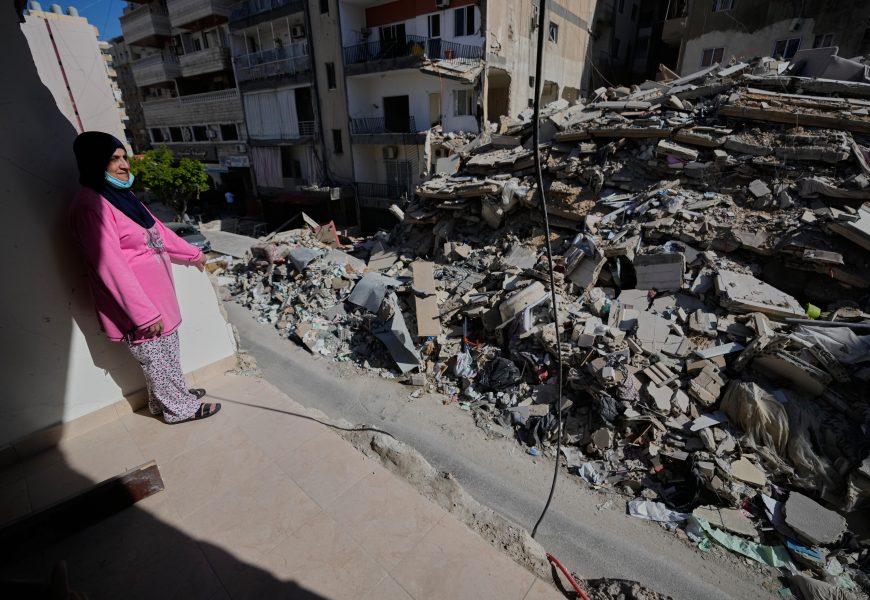
Israel said it launched 100 strikes in 10 minutes across Lebanon on Wednesday, targeting what they said were Hezbollah operatives and infrastructure. The strikes hit busy residential and commercial areas without warning.
The Lebanese Health Ministry said the death toll is likely to rise as search and rescue teams continue to find remains under the rubble, and as more people identify dozens of bodies at hospitals.
It was the deadliest day in over a month of war between Israel and the Hezbollah militant group. Around 1,150 people were wounded.
Israel-Lebanon negotiations are expected to begin next week at the State Department in Washington, according to a person familiar with the plans.
The talks are expected to be handled on the American side by U.S. Ambassador to Lebanon Michel Issa, and on the Israeli side by Israel's Ambassador to the U.S. Yechiel Leiter, according to the person, who spoke on condition of anonymity due to the delicacy of the situation.
It was not immediately clear whom Lebanon was sending.
Axios first reported the timing and location of the talks.
- By Matthew Lee
Democrats in the U.S. House of Representatives made a quick but unsuccessful effort Thursday to pass a bill that would force Trump to get congressional approval before carrying out any more attacks on Iran.
The effort had no chance of passage during a short, minutes-long "pro forma session" of the House during which legislative business is rarely conducted.
But that didn't stop Democrats from trying to make the point that they oppose the war in Iran.
Rep. Glenn Ivey, a Democrat from Maryland, tried to force a vote on the resolution, but Rep. Christopher Smith, a Republican from New Jersey, declared the House was adjourned.
"Let us vote!" yelled Rep. James Walkinshaw, a Democrat from Virginia.
"The time has come. The time has come," Ivey said.
Democrats will look to force a vote on the measure again next week, when the full House has returned from a two-week stint back in their congressional districts.
The NATO secretary-general said Tehran and Moscow have been working together on military technology, and alleged Iran has been sowing chaos in the region.
"Particularly when it comes to Iran and Russia, it is drone technology, it is other military technology," Rutte said while giving a talk at the Reagan Center in Washington. "And the Russians are returning with money. And the money is being spent for Iran to create utter chaos."
Foreign Minister Hakan Fidan said Turkey sees signs both sides are willing to compromise, including on Iran's nuclear program and uranium enrichment.
Speaking in Ankara, he said there had been "certain changes" in negotiating positions and cited a global consensus that attacks on Iran were a "mistake" as reason for cautious optimism.
He warned that Israeli "provocations," including its invasion of Lebanon, could threaten talks that are due to start Saturday in Pakistan.
Fidan said the region is "tired of occupations and wars," urged reconciliation between Iran and Gulf states and said "international players" should be ready to curb Israel's "expansionism."
He also suggested the two-week ceasefire could be extended to allow talks to continue.
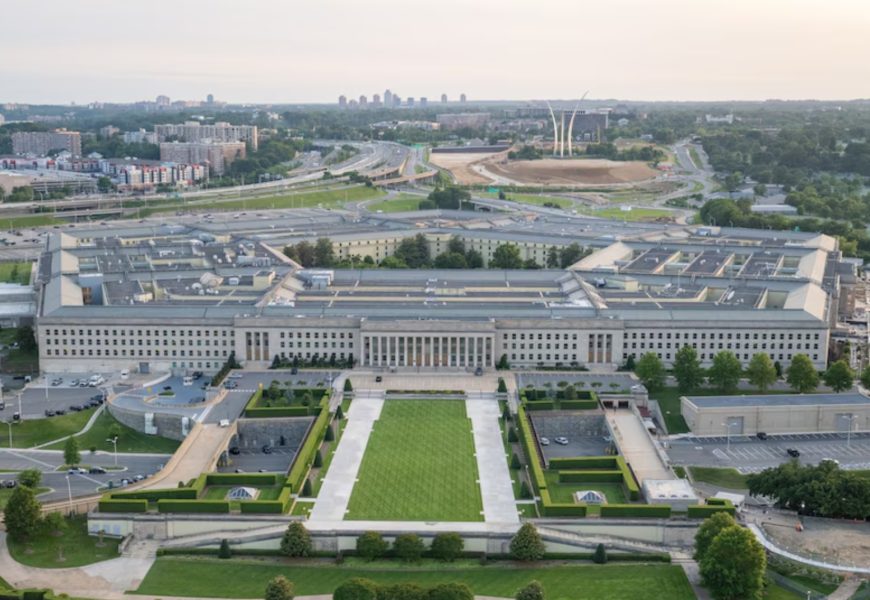
Prime Minister Shehbaz Sharif met Thursday with the army chief, Asim Munir, ahead of further talks in Islamabad.
Sharif's office said both men stressed the need for all parties to maintain the ceasefire.
In a joint statement, the countries also condemned "the unacceptable aggressive behavior" toward the soldiers and leaders of the U.N. force in Lebanon known as UNIFIL.
The statement was read by Indonesia's U.N. Ambassador Umar Hadi, whose country recently had three of its peacekeepers killed in southern Lebanon.
The statement said those responsible for attacks on peacekeepers must be held accountable, but did not identify any parties. A preliminary U.N. report blamed Israel for two of the killings and Hezbollah for one of them.
Noticeably missing from the list of signatories to the statement was the United States, Israel's closest ally, which pushed for the U.N. Security Council to end the UNIFIL mission at the end of 2026.
The signatories reaffirmed support for UNIFIL, said attacks against peacekeepers may constitute war crimes, and called on the parties to urgently return to the 2024 ceasefire,
The NATO secretary-general said his meeting with Trump a day earlier included a "frank" and "candid" exchange.
Rutte acknowledged that European allies "were a bit slow" to provide logistical support.
"In fairness, they were also a bit surprised," Rutte said. "To maintain the element of surprise for the initial strikes, President Trump opted not to inform allies ahead of time, and I understand that."
He said some European countries have since provided support, including bases and logistics, to assist the U.S. military.
NATO Secretary General Mark Rutte said allies are not "whistling past the graveyard" and understand the need for major changes demanded by Trump, amid his threats of a U.S. withdrawal from the alliance.
Rutte, speaking at the Reagan Center a day after meeting Trump, said Europe is taking on a greater share of defense and moving toward a more balanced partnership.
He also acknowledged some allies were slow to assist in the U.S.-Israeli war with Iran and said they were caught off guard because Trump did not notify them in advance.
The Israeli prime minister says he gave the order in response to requests from Lebanon and that talks would focus on disarming Hezbollah and establishing peaceful relations between the neighboring countries.
He welcomed a call by Lebanon's prime minister to demilitarize Beirut.
There was no immediate response from the Lebanese government to the announcement.
Russian Foreign Minister Sergey Lavrov spoke by phone with his Iranian counterpart, Abbas Araghchi, the ministry said.
Lavrov welcomed the news of the Iran-U.S. ceasefire and "emphasized that Moscow firmly believes that these agreements, as announced by Pakistani mediators, have a regional dimension and, in particular, extend to Lebanon," according to the ministry's readout of the call.
Lavrov also expressed hope for successful peace talks and reiterated "Russia's readiness to assist in finding solutions."
Araghchi "thanked the Russian Federation for its principled position in the U.N. Security Council during the discussion of the situation in the Persian Gulf," the readout said.
A day after Israel's deadliest strikes killed over 200 people in Lebanon, Abdul Rahman Mohammad, a Syrian who lost family members in the Hay al-Sellom neighborhood, waited at Rafic Hariri Hospital morgue to retrieve the bodies of his mother, two sisters, brother and brother-in-law.
"They were struck without any warning. This is Israeli brutality," he said. "I'm just waiting for the Syrian embassy procedures so I can take them back to Syria."
Dr. Mohamad El Zaatari, director of the public hospital, said the facility had treated 45 people, including 10 critical cases in intensive care.
"The situation is difficult and the numbers are large, but things are gradually taking the right path," he said.
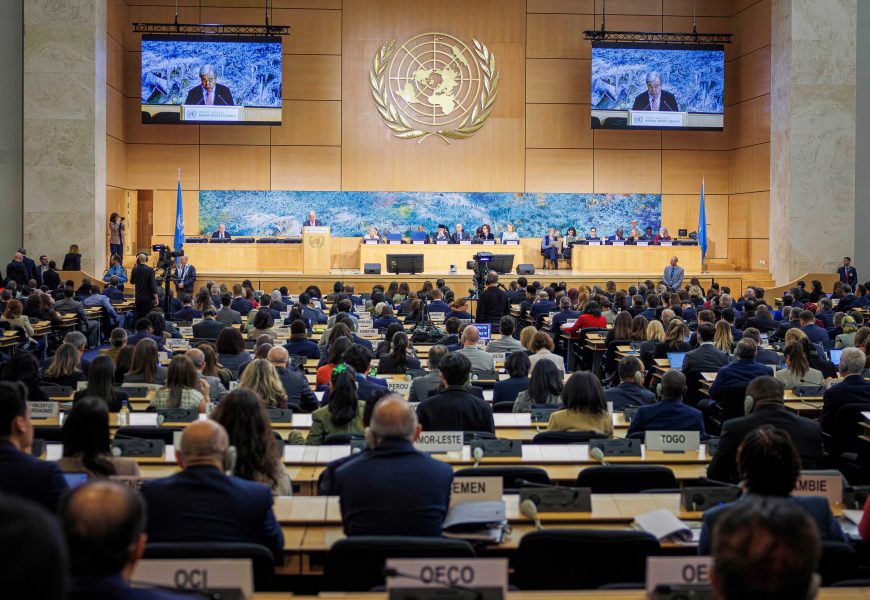
German Chancellor Friedrich Merz acknowledged that the Iran war has become a "stress test" for NATO and said he doesn't want it to burden trans-Atlantic relations further.
Merz said he and Trump discussed the alliance's future in a phone call Wednesday and that he offered to discuss it again before a NATO summit in Ankara, Turkey, in July.
Merz said that "it is my firm intention to do everything to preserve the protection of NATO, including the United States of America, for Europe."
He added that "this alliance, at least at present, cannot be replaced by anything, so I have a great interest in preserving it and developing it further with the American president."
Chancellor Friedrich Merz said that "the severity with which Israel is waging war there could cause the failure of the peace process as a whole, and that must not happen."
He said that he and others had asked Israel on Wednesday to "end its further intensified attacks" and that his foreign minister had spoken twice to his Israeli counterpart.
Merz also spoke to Trump on Wednesday. The chancellor said on Thursday that the German government would start talking to Iran again, in consultation with the U.S. and its European partners, in the interest of making "our own contribution" to the success of peace negotiations.
Merz didn't specify with whom Germany intends to speak or when.
Israeli Defense Minister Israel Katz claimed Hezbollah is seeking a ceasefire and said Israeli strikes killed more than 200 militants in the past day, bringing the total to over 1,400 in the current fighting.
The claims could not be independently verified.
Katz said Israel is prepared to respond forcefully if Iran launches attacks and will continue striking targets across Lebanon, including in the Litani area.
Abdul Malik al-Houthi, leader of the Iran-backed Houthi rebels in Yemen, described the announced ceasefire between the U.S. and Iran as a "big victory" for Iran.
In a video statement on Telegram on Thursday, he said Iran ultimately was able to "defeat the enemy."
He also praised the militant Hezbollah group, saying that they are leading one of their biggest battles in Lebanon.
Al-Houthi added that his group was able to prevent Israel and the U.S. from using the Red Sea to attack Iran and confirmed launching strikes at Israel.
He also said that Iran's decision to close the Strait of Hormuz was a major pressure tactic against the U.S. and its allies.
Lebanon reeled Thursday after the deadliest day in more than five weeks of renewed war between Israel and Hezbollah, as rescue workers in Beirut and elsewhere searched for survivors and bodies and Israel warned of escalation.
Israeli strikes on Wednesday killed at least 203 people and wounded more than 1,000, Lebanon's health ministry said. Israel's military said it targeted sites of the Iranian-backed Hezbollah militant group, but several strikes hit densely packed commercial and residential areas without warning during rush hour, leading to widespread civilian casualties.
Lebanese President Joseph Aoun called the attacks "barbaric." Israel said the ceasefire in the Iran war doesn't apply in its fight against Hezbollah.
Speaking in a video message, the head of the U.S. military's Central Command said Thursday his forces "remain present" in the Middle East as a two-week ceasefire has taken effect.
"Iran has suffered a generational military defeat," U.S. Navy Adm. Brad Cooper said. "The United States and Israel systematically destroyed Iran's ability to conduct large-scale military operations for years to come."
Lebanon's Prime Minister Nawaf Salam announced the decision on Thursday following Israeli strikes a day earlier that killed over 200 people.
He said the surge of attacks was a "blatant violation" of international and humanitarian law and undermines ongoing efforts to halt the war.
He added that the cabinet has also ordered security forces to tighten control over the capital by "enhancing the state's full authority across Beirut and restricting arms to legitimate forces."
The Israeli army on Wednesday accused Hezbollah members of moving north of the capital and blending into civilian areas.
Iran's parliament speaker warned Thursday on X that continued Israeli attacks on Hezbollah in Lebanon would bring "explicit costs and STRONG responses."
Like other Iranian officials, Mohammad Bagher Qalibaf insisted that the two-week ceasefire extended to Lebanon, something denied by both Israel and the U.S.
"Ceasefire violations carry explicit and STRONG responses," he wrote. "Extinguish the fire immediately."
Qalibaf has been discussed as a possible negotiator who could meet U.S. Vice President JD Vance this weekend for talks in Islamabad, the capital of Pakistan.
A day after intense Israeli strikes pounded Lebanon's capital, survivors recounted scenes of carnage as hospitals struggled to cope with a surge of casualties.
"I thought I was dead. What happened? A big flash of light was in my face and eyes, and I found someone flying over and landing next to me. He was dead," said Rabee Koshok from his bed at the Makassed hospital in Beirut, recalling the moment of impact. "Suddenly, while we are walking, a rocket could come and hit us," he added.
Wednesday marked the deadliest day in Lebanon in more than five weeks of renewed war between Israel and the Lebanese militant group Hezbollah.
Wael Jarrosh, a doctor, said the hospital received around 70 injured patients within 10 minutes of the blasts.
"This has destroyed us psychologically," Jarrosh said. "We have to stay prepared so that we can serve our families and the injuries that come in."
Lebanon's health ministry said Thursday that at least 203 people were killed in widespread Israeli strikes in central Beirut and other areas of Lebanon on Wednesday. It said more than 1,000 were wounded.
The death toll Wednesday was the highest for a single day in Lebanon during more than five weeks of renewed war between Israel and the Lebanese militant group Hezbollah.
The Israeli military said it targeted Hezbollah sites. However, several of the buildings that were struck without warning during the afternoon rush hour were in densely packed commercial and residential areas, leading to widespread civilian casualties. Lebanese President Joseph Aoun called the strikes "barbaric."
Israeli Prime Minister Benjamin Netanyahu said Thursday that his country will continue its strikes against the Iran-backed Hezbollah militant group in Lebanon "with force, precision and determination," as Israeli strikes continued across southern Lebanon on Thursday morning.
"Whoever acts against the citizens of Israel will be harmed," Netanyahu wrote on his social media.
Israel intensified its strikes in Lebanon on Wednesday, saying that its fight with Hezbollah is not part of the two-week ceasefire deal with Iran. Hundreds were killed and wounded.
China's Defense Ministry has denied reports that it offered support to Iran's military, including alleged intelligence on U.S. forces' location amid the war.
"We firmly oppose the dissemination of speculative and insinuating false information targeting China," Defense Ministry spokesman Zhang Xiaogang said during a briefing on Thursday.
The Washington Post recently reported that some Chinese private companies, including some with ties to the People's Liberation Army, had been marketing intelligence about the movements of U.S. forces during the war.
Reuters has reported that China's largest chipmaker had sent equipment used to make chips to Iran's military, citing U.S. sources.
"China has always been open and aboveboard on the Iran issue, maintaining an objective and impartial stance," Zhang said, adding that the country has never engaged "in any activities that could incite conflict."
The chief of Iran's nuclear agency said Thursday that protecting Tehran's right to enrich uranium is "necessary" for any ceasefire talks with the United States.
Mohammad Eslami, who leads the Atomic Energy Organization of Iran, made the remarks to journalists, including one from The Associated Press, in Tehran, Iran, during commemorations for the late Supreme Leader Ayatollah Ali Khamenei.
"It is a part of the necessary (things) that nobody speaks about," Eslami said, referring to the U.S. refusal to acknowledge enrichment as one part of Iran's 10-point plan for a permanent ceasefire.
The U.S. and Iran are due to meet in Islamabad, the capital of Pakistan, for talks this weekend.
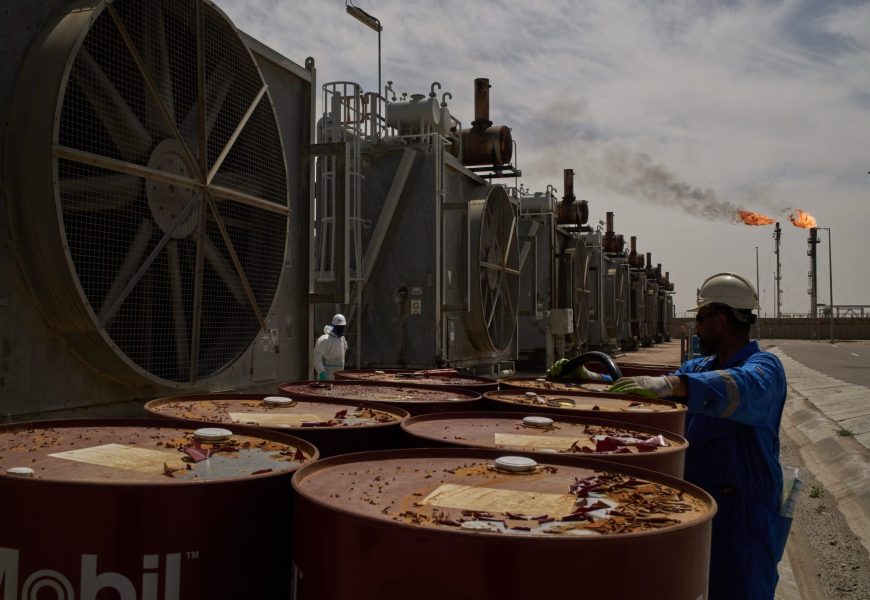
French Foreign Minister Jean-Noël Barrot said European and other partners are "finalizing" plans to set up a mission to escort ships in the Strait of Hormuz as soon as fighting effectively ends.
Barrot said Thursday "planning for this mission is currently being finalized between French military officials and countries that have volunteered," speaking on France Inter radio.
Shipping traffic will likely be able to cross the strait safely once an agreement is reached between the belligerents and "with an escort system," he said.
"Work is well advanced" for the mission to be deployed "once calm has been fully restored," he said.
On Wednesday, French President Emmanuel Macron said about 15 nations are ready to participate in such a mission.
In a speech to Parliament on Thursday, Italian Prime Minister Giorgia Meloni warned that any extra Iranian duties in the Strait of Hormuz would have "unpredictable economic consequences," stressing that a full restoration of freedom of movement is needed in the area.
Meloni indicated that as the most critical point of the agreement between the U.S. and Iran.
"Full restoration of freedom of movement in the Strait of Hormuz is needed, and it must not be subject to any restrictions, as appears to have happened in recent hours," she said.
The Italian prime minister also suggested that, if the crisis in Iran worsens, the European Union should consider suspending the stability and growth pact - a set of rules governing public finances within the EU.
Britain's foreign minister said Lebanon must be included in a Middle East ceasefire, adding Israel's continuing attacks on the country are causing mass displacement and dire humanitarian consequences.
Foreign Secretary Yvette Cooper told Sky News she is "deeply troubled about the escalating attacks that we saw from Israel in Lebanon yesterday."
She told the BBC the attacks are "completely wrong."
Britain and other European countries have called for Israel to stop its strikes on Lebanon and for Iran to reopen the Strait of Hormuz to commercial shipping.
Cooper said it's "crucial" that Iran is not allowed to apply tolls in the strait.
Israel said Thursday it killed an aide to Hezbollah leader Naim Kassem in its intense airstrikes that hit Lebanon's capital, Beirut, on Wednesday.
It identified the man killed as Ali Yusuf Harshi, a secretary and nephew to Kassem.
Hezbollah did not immediately respond to a request for comment.
Iran's deputy foreign minister said his country will allow ships to pass through the Strait of Hormuz in accordance with "international norms and international law" once the United States ends its "aggression" in the Middle East and Israel stops attacking Lebanon.
Saeed Khatibzadeh told the BBC on Thursday that Iran had closed the strait after U.S. ally Israel committed an "intentional grave violation of the ceasefire."
He said, "You cannot have a cake and eat it at the same time. That was the message that Iran sent quite clearly, crystal-clearly, to Washington and to the Oval Office last night."
Khatibzadeh added: "Definitely we are going to provide security for safe passage, and it is going to happen after the United States actually withdraws this aggression. Does it mean that Iran is going to control the Strait of Hormuz in terms of letting ship by ship to go through that?
"I think that we have shown to everybody that energy security is pivotal for Iran, is pivotal for this body of water in the Persian Gulf, and we are going to be abided by the international norms and international law."
Mourners across Iran began mourning ceremonies Thursday, marking the 40th day after the death of Supreme Leader Ayatollah Ali Khamenei, who was killed at the start of the Iran war.
In Iran's capital, Tehran, mourners wearing black began their rally from Jomhouri Eslami Square to the neighborhood of the office of Khamenei, 86.
Iranian state television aired similar commemorations in other cities. It said the ceremonies will continue into the night.
Khamenei's body has yet to be buried since his death Feb. 28.
His son, Ayatollah Mojtaba Khamenei, now serves as Iran's supreme leader.
More Top Stories