°C
°C
 17
Min
17
Min
U.S. forces are pressing ahead Tuesday with an effort to guide commercial ships through the Strait of Hormuz, but so far only two vessels, both of them American-flagged merchant ships, are known to have passed through. Joint Chiefs Chairman Dan Caine said the safety corridor in the key waterway for oil and gas transport.
The Latest: Hegseth and Caine say ceasefire between the US and Iran is not over


U.S. forces are pressing ahead Tuesday with an effort to guide commercial ships through the Strait of Hormuz, but so far only two vessels, both of them American-flagged merchant ships, are known to have passed through. Joint Chiefs Chairman Dan Caine said the safety corridor in the key waterway for oil and gas transport involves guided-missile destroyers, more than 100 aircraft and 15,000 service members.
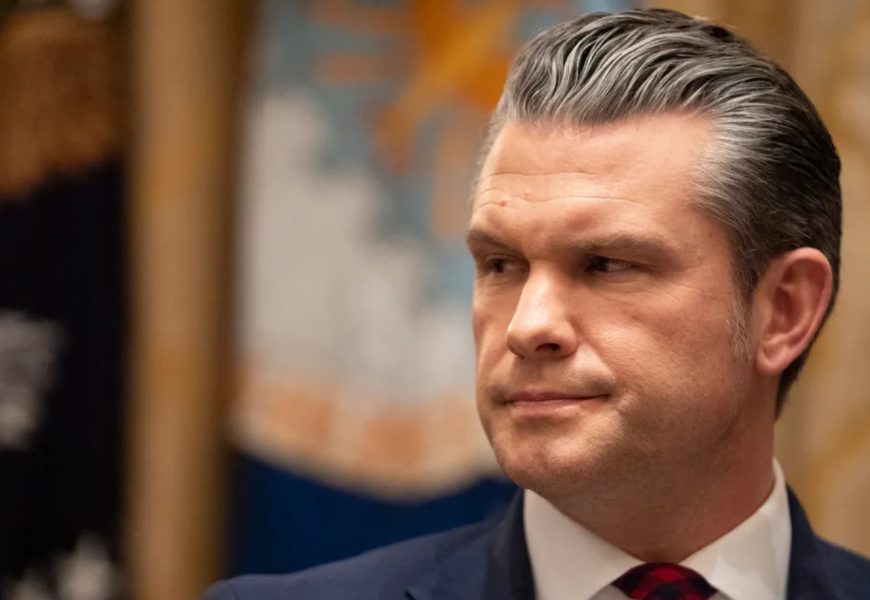
Defense Secretary Pete Hegseth said the forces prefer a peaceful effort to "guide" the more than 22,500 mariners stuck on more than 1,550 vessels out of the Persian Gulf, but are ready if needs change. "This is a temporary mission for us," Hegseth said. "We expect the world to step up."
It is unclear what will follow. The U.S. Central Command said Iran earlier launched multiple cruise missiles, drones and small boats at civilian ships under the U.S. military's protection, and that U.S. helicopters sank six small boats involved in the attacks. It denied Iranian reports that American vessels had been struck. Caine and Hegseth said the ceasefire is not over. Shortly thereafter, the United Arab Emirates said it was defending against more Iranian strikes.
Trump Secretary of State Marco Rubio will travel to Rome and Vatican City this week in a bid to ease rising tensions between President Donald Trump and Pope Leo XIV, Trump has lashed out at the pope again, misrepresenting the pontiff's laments about the Iran war and accusing him of "endangering a lot of Catholics."
Here is the latest:
Speaking to reporters Tuesday, Leo said the Catholic Church "for years has spoken out against all nuclear weapons, so there is no doubt there."
Trump again accused Leo in an interview Tuesday of being "OK for Iran to have a nuclear weapon." Leo has said no such thing and Catholic Church teaching says the mere possession of nuclear weapons is "immoral."
Leo doubled down on his insistence that his call for peace and dialogue in the U.S-Israeli war in Iran is Biblically inspired.
"I've spoken from the first moment of being elected, and we're near the anniversary: I said 'Peace be with you,'" Leo said as he left his country house in Castel Gandolfo.
"The mission of the church is to preach the Gospel, to preach peace. If someone wants to criticize me for announcing the Gospel, let him do it with the truth," Leo said. "And so I hope simply to be listened to about the value of the Word of God."
Italy is again defending Pope Leo XIV and his call for peace and dialogue in the Iran war against President Donald Trump's latest criticism.
Foreign Minister Antonio Tajani said in a social media post Thursday that
President Donald Trump's attacks "are neither acceptable nor helpful to the cause of peace."
"I reaffirm my support for every action and word of Pope Leo; his words are a testament to dialogue, the value of human life, and freedom. This is a vision shared by our government, which is committed through diplomacy to ensuring stability and peace in all areas where conflicts exist," Tajani wrote.
Trump on Tuesday renewed his criticism of Leo's peace message over the Iran war and warned Leo was "endangering a lot of Catholics and a lot of people."
Trump's criticism, in an interview with conservative commentator Hugh Hewitt, came even as his secretary of state, Marco Rubio, prepares to visit Italy and the Vatican ostensibly to ease tensions with Washington.
Rubio is due to meet with Leo on Thursday and is due to see Tajani and Premier Giorgia Meloni on Friday.
The president in an exchange with reporters said that China hasn't "challenged" him as he continues to press Iran even as Beijing has repeatedly criticized the U.S. and Israel military action against Iran.
"You know, in all fairness, he gets, like, 60% of his oil from (the Strait of) Hormuz," Trump said of President Xi Jinping.
China, in fact, imported about half of its crude oil and almost one-third of its liquefied natural gas from the Middle East, according to China's General Administration of Customs.
Trump offered a more measured take than Treasury Secretary Scott Bessent, who a day earlier said the administration wants to see Beijing "step up" and pressure Iran to open the strait. Bessent in an interview with Fox News said Iran would be high on Trump's agenda when he travels to Beijing next week for a summit with Xi.
Pakistan's top military leadership on Tuesday urged restraint to help ease rising tensions between the United States and Iran.
The call came during a Corps Commanders Conference chaired by army chief Field Marshal Asim Munir.
Munir since last month has been in contact between the U.S. and Iranian officials as part of Pakistan's efforts to end the conflict.
In a statement, the military said participants reviewed the evolving security environment amid Pakistan's outreach to Washington and Tehran, adding that lasting peace depends on collective restraint, responsibility and respect for sovereignty.
Europe and the United States have more important things to do, Emmanuel Macron said Tuesday, after Trump announced higher duties on European vehicles.
Trump said on Friday that he would increase the tariffs charged on cars and trucks from the European Union this week to 25%, a move that could further harm the global economy as it reels from war in the Middle East. EU and U.S. trade officials were due to meet in Paris on Tuesday to discuss the issue.
"Especially in the geopolitical period we are experiencing, allies like the United States of America and the European Union have much better things to do than to stir up threats of destabilization," Macron told reporters in Armenia, adding that he hopes "reason will prevail soon."
Vice President JD Vance heads to Iowa on Tuesday, his first visit since taking office to the state where Republicans in less than two years will cast the initial votes to pick their party's next presidential nominee.
Seen as one of the GOP's strongest potential candidates for president in 2028, Vance stopped first in Cincinnati to vote in the primary, saying he picked Vivek Ramaswamy for governor. He's also holding a fundraiser in Oklahoma City as finance chair of the Republican National Committee.
Higher prices for gas and fertilizer and Trump's tariffs have been hitting voters hard, and Vance's political prospects are complicated by the war in Iran. Vance has seemed a reluctant defender of the 9-week-old war, for which Trump has struggled to find an off-ramp.
Iowa's farmers have steadfastly supported the president, but they've been looking for assurances that the troubles won't last.
The secretary of state is putting on yet another Trump administration hat - White House spokesperson.
Rubio is scheduled to fill in Tuesday for White House press secretary Karoline Leavitt, who is on leave awaiting the birth of her second child. His briefing is scheduled for 3 p.m. EDT.
The nation's top diplomat already doubles as Trump's national security adviser and for a while was the acting archivist of the United States and the acting administrator of the U.S. Agency for International Development.
His last formal briefing for reporters was at the State Department briefing room in December.
Scuttlebutt around the White House has been that Rubio will be among a handful of high-level administration officials leading the press briefings while Leavitt is away.
The proposed Security Council resolution, co-sponsored by the United States and Gulf nations, threatens Iran with sanctions or other measures if it doesn't restore freedom of navigation and immediately disclose where sea mines have been placed in and around the vital waterway.
The draft, obtained Tuesday by The Associated Press, also demands that Iran "immediately participate in and enable the United Nations efforts to establish a humanitarian corridor in the strait" to enable vital aid, fertilizer and other goods to transit.
The proposed resolution was drafted under Chapter 7 of the U.N. Charter, which can be enforced militarily. It threatens "effective measures that are commensurate with the gravity of the situation, including sanctions" if Iran doesn't comply.
A previous resolution aimed at opening the Strait of Hormuz, where about 20% of the world's crude oil had transited, was vetoed by Russia and China.
Software behemoth Oracle really is among the tech firms providing artificial intelligence capabilities to the U.S. military over classified computer networks.
The Defense Department has been ramping up its use of AI to fight wars and to more efficiently perform other operations. The Pentagon announced Friday that it's contracting with seven companies to use their infrastructure. Oracle was not initially on the list. The others are Google, Microsoft, Amazon Web Services, Nvidia, OpenAI, Reflection and SpaceX.
Oracle, now based in Texas, said the military's use of its AI over classified systems will "enhance situational awareness and strengthen warfighter decision-making in complex operations."
The Pentagon did not immediately respond to an email seeking clarity on why Oracle was left off Friday's news release announcing the contracts. The news release was later updated to include Oracle.
Former military officers who have served on the Strait of Hormuz have said opening it would be dangerous and highly challenging, even with military escorts, which the U.S. isn't providing now.
There's little room to maneuver in the narrow waterway, and Iran can reach all of the strait and its approaches with anti-ship cruise missiles. It also can target vessels with longer-range missiles, drones, fast attack craft and naval mines.
Experts say reducing the threat would involve targeting offensive installations on the ground inside Iran and having constant surveillance and patrols.
Marcus Baker, global head of marine, cargo and logistics for insurance broker and risk adviser Marsh Risk, said it would take a few days to see how the insurance market reacts.
"We just have to see what happens, whether the Iranians keep the peace, whether the Americans keep the peace, and exactly what that's going mean for shipping," he said.
"There's rhetoric from both sides on this, and we've just got to be mindful of that," he added. But he said "anything that starts to increase certainty around safety has got to be a good thing."
"At this point in time our risk assessment remains unchanged," the Hamburg, Germany-based shipping company Hapag-Lloyd AG said in a statement. "Transits through the Strait of Hormuz are for the moment not possible for our ships."
The Trump administration's campaign of blowing up alleged drug-trafficking vessels in Latin American waters has persisted since early September.
Despite the Iran war, the strikes have ramped up again in recent weeks to stop what the administration calls "narcoterrorism" in the Western Hemisphere. The U.S. military has not provided evidence that any of the vessels were carrying drugs.
In the latest attack Monday, U.S. Southern Command repeated previous statements by saying it had targeted the alleged drug traffickers along known smuggling routes. It posted a video on X showing a boat moving along the water before a massive explosion engulfs the vessel in flames.
The United Arab Emirates is "actively engaging" with missile and drone attack from Iran, the country's defense ministry said on X Tuesday evening.
It said sounds heard in parts of the Gulf federation are related to the interception of ballistic missiles, cruise missiles and drones.
U.S. job openings were essentially unchanged at 6.9 million, another sign the American labor remained sluggish even before the full impact of the Iran war hit the economy.
The job market has been up and down so far this year after a dismal 2025. And the Iran war has clouded the outlook for the economy and hiring.
The Job Openings and Labor Turnover Survey showed that layoffs rose in March. But hiring improved, and more people quit their jobs - a sign of confidence in the economy.
White House economists estimate the deals with pharmaceutical companies to drop some U.S. prescription drug prices to what they charge in other countries could save $529 billion over the next 10 years.
The analysis obtained by The Associated Press includes the first economy-wide projections behind a policy at the core of Trump's pitch to voters going into November's elections for control of the House and Senate. Democratic lawmakers have doubted Trump's claims, and these new numbers are likely to trigger additional questions about the data.
Cost-of-living issues are at the forefront of voters' concerns and higher energy prices tied to the Iran war have deepened the public's anxiety. Few of the details of the deals struck by the Trump administration and 17 leading pharmaceutical companies have been made public, making it hard to independently verify the projected savings.
The Health Ministry in Beirut said Tuesday that 8,311 people were wounded during the same period.
The latest Israel-Hezbollah war started on March 2, when Hezbollah fired rockets into Israel following the U.S. and Israel's attacks on Iran.
A ceasefire has been in place since April 17 but both Israel and Hezbollah have been carrying out daily attacks since then.
That's because Iran still clearly intends to attack ships that try to transit without going through the Iran-approved route near the Iranian coastline, said Torbjorn Soltvedt, principal Middle East analyst at risk intelligence company Verisk Maplecroft.
"This initiative alone isn't something that looks like it's going to open the Strait of Hormuz," he said. Shipping and insurance companies "still have to wait and see how this plays out."
Taking the northern route involves going through vetting by the Islamic Revolutionary Guard Corps, and payment, in at least some cases. The U.S.-guided "Project Freedom" route goes through territorial waters of Oman to the south.
Reopening the strait "can really only be done through either an agreement between the United States or Iran," or if the U.S. significantly diminishes Iran's ability to attack using drones, missiles and small boats, he said.
"I will be speaking with the Iranian president shortly at his request," Emmanuel Macron said Tuesday.
″France has maintained a consistent position from the start. We call for the cessation of all hostilities, the return to diplomatic negotiations, and respect for all countries in the region," Macron said. "Tthe only possible option is the reopening of the Strait of Hormuz ... and the absence of any tolls or coercive measures."
"Any unilateral escalation against tankers, container ships, or third countries is a mistake that fuels war and leads to escalation," Macron said.
After the bombing of nuclear sites last summer, Hegseth says U.S. forces participated in new strikes this year alongside Israel because the Iranians' "will was still there to seek a nuclear bomb."
The secretary was asked about intelligence reports showing that, despite the initial bombing in Operation Midnight Hammer, the timeline for Iranian nuclear weapon development remained at 9 to 12 months.
"The obliteration of those facilities set back their program," Hegseth said. "Hopefully Iran chooses a deal that they give up those ambitions, give up those capabilities."
The defense secretary confirmed that the ceasefire remains in effect despite some Iran strikes and the ongoing U.S. blockade.
"No, the ceasefire is not over," Hegseth said, reaffirming Caine's earlier statements.
Saying that more than 100 U.S. military aircraft are patrolling the skies "24 hours a day," Gen. Dan Caine said Tuesday marked a "quieter" period in the Strait.
Caine added that there were 22,500 mariners on more than 1,550 vessels in the Persian Gulf, unable to transit.
He went on to commend the troops of the 82nd Airborne Division, who he said were using "next generation tactical networks" to "seamlessly synchronize" efforts in support of military activity.
Dan Caine told reporters at the Pentagon on Tuesday that Iran's recent acts of aggression are below the threshold of "major combat operations."
That means Tehran, in the Trump administration's view, has not violated the tenuous ceasefire between the U.S. and Iran.
"Since the ceasefire was announced, Iran has fired at commercial vessels nine times and seized two container ships, and they've attacked U.S. forces more than 10 times - all below the threshold of restarting major combat operations at this point," Caine said.
The administration has cited the ceasefire in asserting that the president does not have to give a formal update to Congress on the war under the War Powers Resolution. That law typically requires presidential updates on war activities 60 days after beginning military action.
Hegseth said in a Pentagon briefing Tuesday that U.S. military forces would prefer the new effort to "guide" stranded ships through the Strait of Hormuz to be peaceful - but are ready if needs change.
"This is a temporary mission for us," Hegseth said, adding that the intent remains to hand control of the strait back to countries that need the waterway "a lot more than we do. ... We expect the world to step up."
Iran has denounced the move as a ceasefire violation.
Trump is renewing his criticism of Pope Leo XIV even as Rubio prepares to visit Vatican City, ostensibly to ease tensions between Washington and the Holy See.
The president misrepresented the pontiff's laments about the Iran war in an interview with conservative commentator Hugh Hewitt, while saying Leo is aiding Tehran and making the world less safe.
"The pope would rather talk about the fact that it's OK for Iran to have a nuclear weapon," Trump said. "And I don't think that's very good. I think he's endangering a lot of Catholics and a lot of people."
Leo has not said Iran should obtain nuclear weapons. He's called for more peace talks, criticized war generally and lambasted Trump's specific threats of mass civilian strikes.
The pope also has emphasized that he's reflecting biblical and church teachings, not speaking as a political rival to Trump.
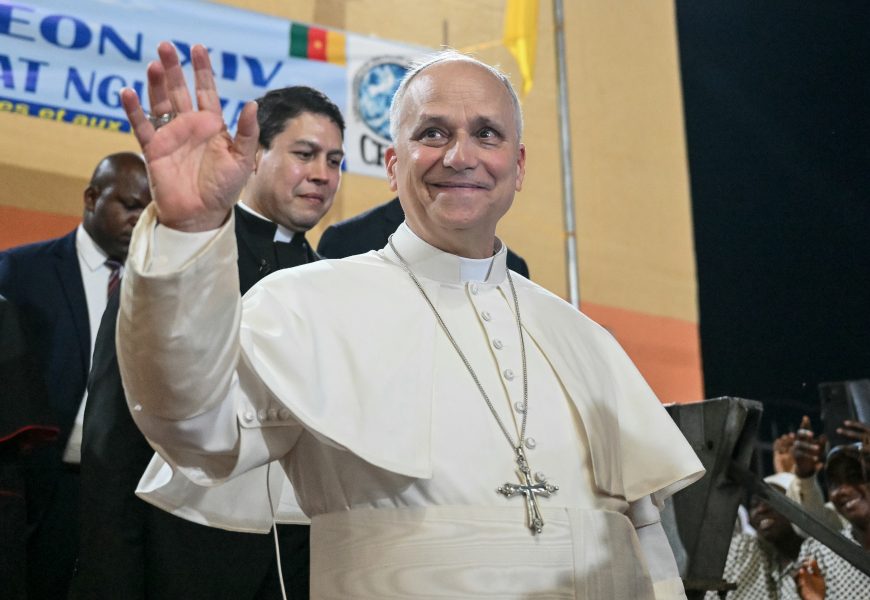
Pope Leo XIV holds his weekly general audience in St. Peter's Square at The Vatican, Wednesday, Wednesday, April 29, 2026. (AP Photo/Alessandra Tarantino)
Secretary of State Marco Rubio will travel to Rome and Vatican City this week in a bid to ease rising tensions between Trump and Pope Leo XIV over U.S. policies, particularly the Iran war.
The State Department said Monday that Rubio, a Catholic who with this trip will have visited Italy or the Vatican at least three times as the Republican president's top diplomat, would be in Italy on Thursday and Friday. The Vatican announced that Rubio would meet with Leo, the first American pontiff, on Thursday.
"Secretary Rubio will meet with Holy See leadership to discuss the situation in the Middle East and mutual interests in the Western Hemisphere," the department said. "Meetings with Italian counterparts will be focused on shared security interests and strategic alignment."
The trip comes as Trump has criticized Leo for his stances on the Middle East and elsewhere and as the president has drawn pushback for posting a social media image likening himself to Jesus Christ.
Iran's latest proposal for ending the war calls for the U.S. to lift sanctions, end the blockade, withdraw forces from the region and cease all hostilities including Israel's operations in Lebanon, according to the semiofficial Nour News and Tasnim agencies, which have close ties to Iran's security apparatus.
Iranian officials over the weekend said they were reviewing the U.S. response. Tehran has claimed its proposal does not include its nuclear program and enriched uranium, long a driving force in tensions with the U.S. and Israel.
Iran wants other issues resolved within 30 days and aims to end the war rather than extend the ceasefire. Trump expressed doubt over the weekend that the proposal would lead to a deal.
More Top Stories