°C
°C
 6
Min
6
Min
NEW YORK (AP) – It might be hard to imagine the Iran war weighing on stuffed toys with names like Snuggle Glove, Bizzikins and Wobblies, but even plush playthings are not immune when oil shipments from the Middle East are constrained.
Petroleum infuses a multitude of everyday items the Iran war could make more expensive


NEW YORK (AP) - It might be hard to imagine the Iran war weighing on stuffed toys with names like Snuggle Glove, Bizzikins and Wobblies, but even plush playthings are not immune when oil shipments from the Middle East are constrained.
Like many soft toys, the creatures developed by a manufacturer in Fort Lauderdale, Florida, are made with polyester and acrylic, synthetic fibers derived from petroleum. Three weeks after the war started, suppliers in China notified Aleni Brands that getting the materials already was costing them 10% to 15% more, CEO Ricardo Venegas said.
"I think this situation demonstrates how much oil permeates throughout our system, and we can't get away from it," said Venegas, who founded Aleni Brands last year and is in the process of adding product lines. "Who would have thought that the price of a toy would have a direct relationship with oil?"
It's not just toys. Petrochemicals derived from oil and natural gas go into making more than 6,000 consumer products, according to the U.S. Department of Energy. Computer keyboards, lipstick, tennis rackets, pajamas, soft contact lenses, detergent, chewing gum, shoes, crayons, shaving cream, pillows, aspirin, dentures, tape, umbrellas and nylon guitar strings are just a few of them.
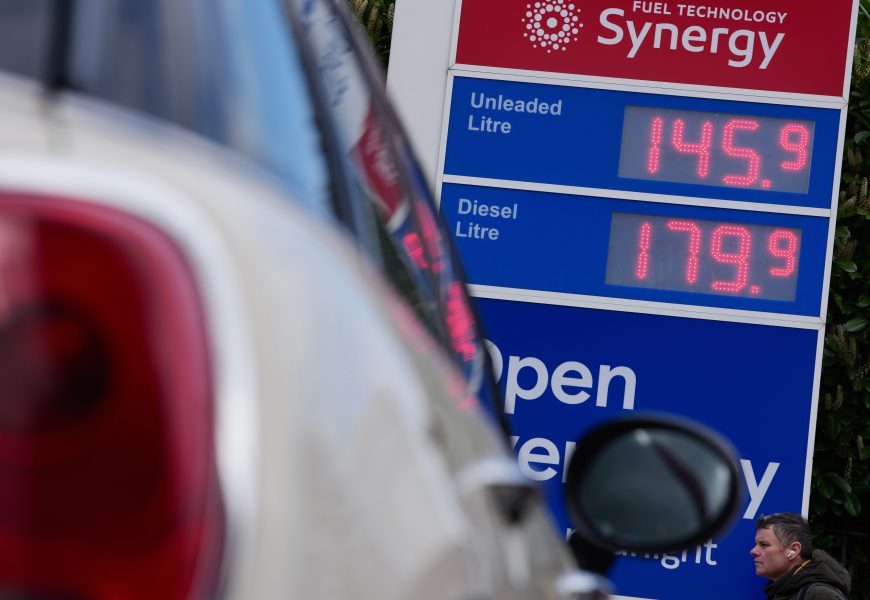
So far, the war's most tangible and immediate effect for many people outside the conflict zone has been spiking gasoline prices. Travelers also are seeing higher airfares and flight fees as airlines respond to the rising cost of jet fuel. Consumers may find themselves paying more for food, furniture or any of the myriad of goods transported by trucks that run on diesel.
But crude oil isn't just refined as fuel. It gets turned into chemicals, waxes, oils and other mixtures that appear in a vast array of everyday items, including most made with plastic and rubber. Petroleum derivatives also are used in a lot of packaging. With disruptions to global oil supplies now in their eighth week, higher production costs also could make things more expensive for shoppers, according to trade groups and some companies.
Venegas, a 30-year toy industry veteran, said he would absorb higher material costs for now but expects to increase prices for customers by early 2027, if the war goes on another three to six months.
While 85% of global oil consumption is in the form of fuel, the rest goes into a wide range of consumer products, according to Gernot Wagner, a climate economist at Columbia University's School of Business.
Crude oil is mostly a complex mixture of hydrocarbons, which are compounds made of carbon and hydrogen atoms. Refineries and chemical plants separate and break them down to convert them into smaller chemical building blocks known as petrochemicals.
Six petrochemicals - ethylene, propylene, butylene, benzene, toluene and xylenes - are the major foundations of plastics and synthetic materials like nylon and polyesters, which manufacturers in turn use to design and deliver products. More from the Department of Energy: Automobile parts, ballpoint pens, curtains, dice, eyeglasses, fertilizer, golf balls, hearing aids, insect repellant, kayaks, luggage, mops and nail polish.
Materials account for a big share of production costs for many manufacturers, including those that supply carpets, clothing and tires, according to Andrew Walberer, partner and global lead in the chemicals practice of global strategy and management consultancy Kearney.
Take a button-down shirt, for example. Walberer estimated that materials account for 27%-30% of how much it costs a manufacturer to make one. Labor costs contribute 10% to 30%. Business expenses tied to marketing, distribution and administration comprises the rest, he said.
Experts say if oil holds above $90 per barrel for the next several months, cost pressures will accelerate throughout the supply network.
Footwear Distributors and Retailers of America CEO Matt Priest said most of the trade organization's members keep a two- to three-month inventory of finished products, providing a temporary cushion against higher materials costs.
Roughly 70% of the materials in synthetic shoes are petrochemical-based, and 30% of the costs for those materials are directly tied to oil price rate swings, according to a report the organization published last month on the U.S. footwear industry's "exposure to oil prices & the impact on shoe costs."
The FDRA analysis estimated that between materials, factory energy and transportation, companies paying more for petroleum could translate into a 1.5% to 3% increase in the price shoppers pay for a pair of shoes by late summer and the fall.
By the end of April, U.S. shoe and clothing manufacturers need to start signing contracts with suppliers, mostly outside the U.S., for orders of polyester staple fiber and polyester filament yarn to get their designs on retail shelves and online for the holiday shopping season, according to Nate Herman, executive vice president of the American Apparel & Footwear Association.
One kilogram, or a little over two pounds, of the materials used in polyester textiles, has increased in price from an average of 90 cents before the U.S. and Israel attacked Iran to $1.33 per kilogram, Herman said. He estimated that each garment will cost 10 cents to 15 cents more to produce as a result.
Some businesses are looking for ways to offset rising costs.
Lisa Lane is the founder of Rinseroo, which sells portable shower head, bathtub and sink attachments for cleaning, pet grooming, and bathing. She recently tripled the number of the slip-on hoses she procures from China each month after her manufacturer said the cost would be 30% higher in another 30 days. She had a few days to decide whether to place a three-month advance order.
The components of Rinseroo's products include petroleum derivatives like polyvinyl chloride, Lane said. After purchasing 240,000 units instead of her usual 80,000, she is also evaluating cost-cutting options.
Lane said she wants to hold off on increasing prices for retailers that sell the attachments since Rinseroo did that last year to offset higher U.S. tariffs on imports from China. For example, a hose for washing pets in a bathtub went up to $33.95 from $29.95 on retail websites, she said.
"We want to stay at that sweet spot where people want to continue to buy from us and feel like they're getting a good value," Lane said.
Another company, which sells wound care products like bandages, dressings, pads and sponges to nursing homes and other medical facilities, plans to raise its prices by 15% in a matter of weeks. Gentell CEO David Navazio noted that adhesives in the products rely on several petrochemicals.
Including energy for production and materials, Navazio estimated the company's costs are going up by 20%.
Gentell, which is based in Yardley, Pennsylvania but has its main manufacturing location in Toronto, also makes private label products for other companies, including a medical technology firm that supplies retail stores like CVS.
Because bandages and dressings are necessities, Navazio said he doesn't think his business will suffer if it raises customer prices. Less certain is whether prices will come down once the war ends and oil shipments stabilize.
"In the past, I've seen transportation costs come down, but I've never seen prices of raw material come down," he said.
More Top Stories