°C
°C
 6
Min
6
Min
MEXICO CITY (AP) – Montserrat Fuentes stands on the same street corner where she has worked for 20 years. But the sex worker’s normal rush of clients every Friday night is nowhere to be seen.
World Cup means slashed wages and displacement for some workers in Mexico City
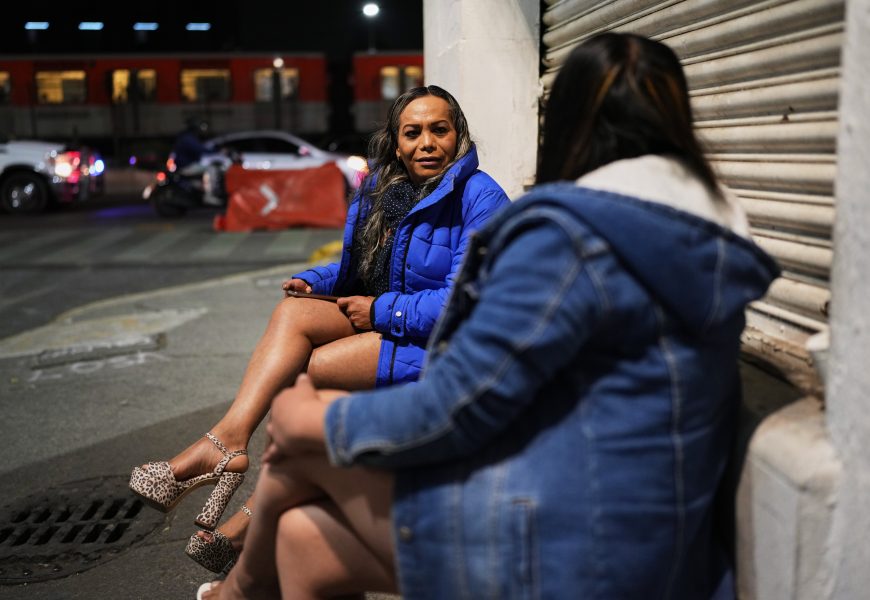
MEXICO CITY (AP) - Montserrat Fuentes stands on the same street corner where she has worked for 20 years. But the sex worker's normal rush of clients every Friday night is nowhere to be seen.
Instead, the busy Mexico City throughway where some 2,500 sex workers make their living is lined with construction, part of larger preparations in the Mexican capital leading up to the 2026 FIFA World Cup over the summer.
Fuentes, 42, and others say they have seen their earnings slashed by government projects meant to clean up swaths of the city before welcoming sports fans from across the world. Street vendors also say they are being pushed out and don't know what will be left for them after the competition.
"What we're seeing in Mexico is something that so much of the world has faced when there's an event of this scale. They always want to fix up their city, make it look nice," she said. "But the ones that are hurt are always us at the bottom of the ladder."
The soccer World Cup, which will be hosted simultaneously by Mexico, the United States and Canada, is expected to be a $3 billion economic engine in Mexico as visitors flood airports, hotels, restaurants and sports venues, according to the Mexican Soccer Federation.
But in a country where more than half the workforce is informal, many Mexicans working under precarious conditions worry they will be left behind.
Mexico City's government said it was taking actions to offset impacts to sex workers and vendors, and has been in ongoing talks with workers.
Tension started building in recent months in Mexico City, where the opening ceremony will be hosted, as the local government rapidly renovated its iconic Azteca Stadium, enhanced public transportation and built up public works in historically working class neighborhoods.
Fuentes and many of the sex workers along the Calzada de Tlalpan avenue that passes the stadium said construction of a bike lane beginning in late 2025 has cut their earnings by more than half. Large dividers block cars from pulling to the curb to negotiate. The city later announced nighttime closures of the metro stations running along the road for Cup construction, leaving many women stranded.
"The only thing the government sees is how much money (the World Cup) is going to make them," said Elvira Madrid Romero, president of the sex worker advocacy organization Street Brigade. "Tourists are coming to celebrate at the expense of the poor."
Sex work is not criminalized in Mexico, and in the capital it remains an economic lifeline for around 15,000 people, including transgender women who struggle to find fair pay in other sectors.
Many single mothers in Madrid's coalition worry about how they are going to put food on the table or pay rent. Her organization has negotiated with local authorities, which promised small monthly payments and food deliveries that are a fraction of what the women need to get by, she said.
In September, Mexico City Mayor Clara Brugada also announced 58 points along the roadway where sex workers would be able to meet with clients.
"We want a World Cup ... with fair play and a just society," Brugada said in September.
But women haven't seen any such points or aid from local authorities and refuse to be moved from the areas where they work, Madrid said.
Fuentes had to get a second job selling food in the mornings after working all night to pay rent, leaving her exhausted. She began sex work 20 years ago when she was displaced from selling food downtown during another government cleanup effort.
Despite the coalition's insistence that they won't budge, Fuentes worries the same could happen to her again, especially as she sees local authorities move street vendors from the main thoroughfare to sleepy side streets.
"Even if we raise our voices, we can't really do anything," she said. "All we can do is hope that when the World Cup ends, things go back to normal. ... We don't want to be forced to move."
Such pushes by local governments are common ahead of global sporting events, which often sit at the intersection of wider social and political strains and are widely criticized by activist groups as "social cleansing."
During the 2024 Paris Olympics, the city government rounded up African migrants and homeless people and bused them out of the city. When Brazil hosted the World Cup in 2014, advocacy organizations reported tens of thousands of people were evicted from their homes.
Mexico City already is experiencing simmering tension as an influx of foreigners, mainly from the U.S., has increasingly priced people out of some neighborhoods. Critics say authorities have done little to offset the housing shortage and mounting prices that come with a tourism boom once promoted by the government.
For others working along the avenue, like 68-year-old smoothie vendor Esperanza Toribio Rojas, the prospect of displacement is no longer hypothetical. She said it's an impending inevitability hanging over her head.
Toribio is among hundreds of vendors selling food, clothes, tools and other wares in the tunnels crossing beneath the avenue that provide access to metro stations serving the World Cup stadium.
For decades, merchants worked in stalls offered by the local government when the passages were rife with crime and filled with trash. Now shoppers stroll by families sharing meals and asking the prices of hanging clothes.
"We're the ones that gave life to this passage," Toribio said. "Back when there was a ton of crime, they never cared to do anything here."
Vendors said they were surprised early last year when local officials descended on the area and said they needed to make way for a city project announced by the mayor in November.
The "Steps to Utopia" initiative, according to Brugada's office, will "prepare the area" for the competition, turning the underpasses into "safe spaces with more than 300 cultural, sports, educational, health and wellness activities."
Local merchants' leader Jaír Torruco said between 100 to 200 merchants were pushed out, while around 250 others like Toribio have refused the government's offer, which they said was not enough to support themselves.
They are still negotiating with authorities in an effort to stay in their stalls, Torruco said.
Mexico City's government said it has provided support to those it has displaced, and said vendors would be able to return to their stalls later. Toribio and others say they don't believe officials, and said they were offered three months in a temporary space, which had to be rented, and that those who moved to a downtown plaza have struggled to make ends meet.
Surrounded by her children and grandchildren, Toribio said she doesn't know how she would afford to move the business that has become her life's work.
"Today the government sees this place, they see that there is life, and they want to take it for themselves," Toribio said. "This is our heritage."
More Top Stories