°C
°C
 15
Min
15
Min
Excerpts from recent editorials in the United States and abroad:
Editorials from The New York Times, The Washington Post, The Guardian and others
Excerpts from recent editorials in the United States and abroad:
___
March 30 - The Washington Post on DEI, says colorblindness won't enforce itself
The Trump administration has ruthlessly targeted diversity, equity and inclusion (DEI) programs that classify Americans based on a progressive racial hierarchy. But the federal bureaucracy is vast, and the White House apparently didn't catch them all. Hence a new lawsuit challenging a medical scholarship administered by the Department of Health and Human Services that bars applicants who don't have Native Hawaiian ancestry.
The lawsuit, filed Monday by the medical group "Do No Harm" and first reported here, argues that this racial requirement for a federal government benefit is unconstitutional. It's close to a legal no-brainer. The Native Hawaiian Health Scholarship Program pays tuition and other expenses for students studying to work in the medical field, including as doctors, dentists, nurses or social workers. After their studies, recipients of the scholarship agree to work in underserved parts of Hawaii. Some members of Do No Harm want to participate in the program, but are excluded because of their race.
To be considered for the scholarship, students need to document their Native Hawaiian identity. The applicant's birth certificate suffices, but an ancestor's - no matter how distant - will also do. "If Member A had just one family member of Hawaiian descent hundreds of years ago," Do No Harm's lawsuit says, "she would have the requisite blood-quantum to be the 'right' race and she would be eligible."
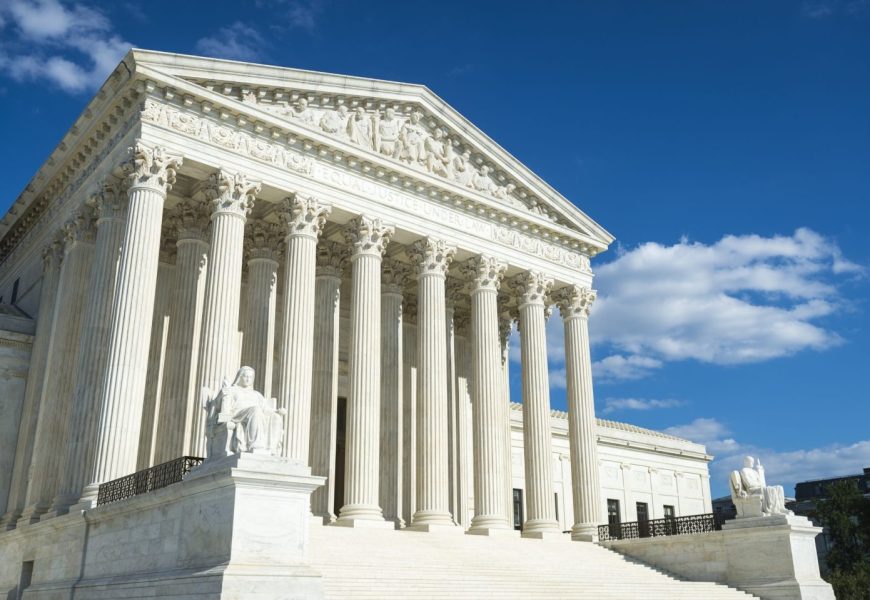
The authority for this racial criterion comes from 1992 legislation directing HHS to offer health scholarships for Native Hawaiians. But the Constitution doesn't allow the government to foreclose benefits to certain racial groups. The Supreme Court ruled in 2000 that a voting restriction for non-Native Hawaiians was an unconstitutional racial policy, and in 2023 it barred racial preferences in higher education.
The only rationale for this scholarship's racial preference would be that Native Hawaiians are better suited to providing medical care to other Native Hawaiians. But the idea that government should disfavor people of different races being one another's doctors or patients echoes segregation.
It also doesn't make sense in the context of the scholarship. After all, the program excludes those who are "not Native Hawaiian but spent their entire life living in Hawaii," while potentially including "someone who is 1/200th Native Hawaiian but never even visited the island," as the complaint puts it.
The government can still encourage young clinicians to work in underserved parts of Hawaii without a racial litmus test. The fact that this program is apparently still up and running after the Trump administration's assault on DEI shows how widespread the practice has become. Colorblindness won't enforce itself.
ONLINE: https://www.washingtonpost.com/opinions/2026/03/30/hhs-race-scholarship-dei/
___
March 31 - The New York Times says the people Trump pardoned are on a crime spree
The Constitution grants sweeping pardon powers to the president, which means that public opinion has historically been the only check on that power. The risk of a backlash is the reason that presidents have waited until their last days in office to issue many pardons and commutations, especially dubious ones to family members (like Hunter Biden ) or political allies (like Caspar W. Weinberger, whom George H.W. Bush pardoned). The potential for a backlash also made presidents cautious about the number of pardons they issued. They understood that there could be an outcry if somebody who received a pardon later committed a new crime. The pardon system has also relied on the decency of American presidents.
President Trump has abandoned this approach. His self-serving pardons are so numerous that public attention cannot keep up with them. It is a version of the strategy that his former adviser Steve Bannon has described as " flood the zone ": Do so much so fast that people cannot follow the consequences.
He has created a veritable pardon industry, in which people with White House connections accept payments from wealthy convicts. Among those on whom he has bestowed freedom are dozens of people convicted of fraud. He has also pardoned Juan Orlando Hernández, a former president of Honduras, who helped traffic hundreds of tons of cocaine into the United States, and Ross Ulbricht, who was serving a life sentence for running Silk Road, a sprawling criminal enterprise that sold drugs. There seems to be no crime too ugly for a Trump pardon.
Worst of all, Mr. Trump issued pardons on the first day of his second term to everyone who stormed the Capitol on Jan. 6, 2021. He did not distinguish between rioters who were relatively peaceful and those who attacked police officers, as Vice President JD Vance said should be the case. All 1,500 or so Jan. 6 rioters received a clean slate.
The results have been disastrous. At least 12 of the pardoned rioters have since been charged with other serious crimes, including child molestation, assault, harassment, murder plots and charges related to a vicious dog attack. The outcome was predictable. Critics, including this board, had warned that Mr. Trump's pardons would embolden the rioters by signaling that crime has no consequences. One does not have to be a criminologist to predict that people who commit a violent act and are absolved of any punishment might become repeat offenders.
The American public deserves to understand the mayhem that the Jan. 6 pardons have unleashed. Among the 12 serious recidivists whom we are aware of, four were in jail or prison at the time of the pardon, and they quickly went on to commit more crimes:
This list does not include at least 27 rioters who committed other crimes before they received their pardons. That group includes one woman who was sentenced to 10 years in prison for killing someone while driving drunk and a man who livestreamed a bomb threat while driving around Barack Obama's neighborhood in Washington.
How can the nation hold Mr. Trump accountable for the lawlessness that he has made possible? The only answer is public opinion and its most tangible manifestation: election results.
In this year's midterms, he and the Republican Party he leads deserve to pay a political price for the pardons. Mr. Trump continues to lionize a violent attack on Congress carried out in his name - an attack that included threats to kill the vice president of the United States and physical assaults against police officers guarding the Capitol. In the aftermath of the attacks, one officer suffered a series of strokes and died, and four other officers died by suicide.
Yet Mr. Trump still supports the rioters and lies about what happened that day. Congressional Republicans, for the most part, back him up. Speaker of the House Mike Johnson said, referring to the blanket pardon, "I stand with him on it." Representative Jim Jordan of Ohio has complained about the unpleasant nature of life in prison for the rioters before the pardons. Representative Lauren Boebert of Colorado said she wanted to give the rioters a guided tour of the Capitol. Other Republicans, including the Senate majority leader, John Thune, have avoided answering questions about the pardons and said they involve "looking backward."
The violence that the pardoned rioters continue to commit puts the lie to that weak excuse. The Jan. 6 pardons undermined the law, and they undermined public order. They were an affront to police officers everywhere. Mr. Trump has a constitutional right to pardon whom he chooses. The rest of us have a right to hold him and his enablers responsible for their actions.
ONLINE: https://www.nytimes.com/2026/03/31/opinion/trump-jan-6-pardons-crimes-recidivism.html
___
March 27 - The Philadelphia Inquirer says SAVE America Act is an attempt at voter suppression
Donald Trump knows about elections and fraud.
After all, he did try to cheat more than 81 million people out of their vote in the 2020 presidential election, engaging in a conspiracy to overturn the results. In a bid to cling to power, federal prosecutors found he "resorted to crimes" - a heinous scheme that culminated in the deadly insurrection at the U.S. Capitol on Jan. 6, 2021.
Special counsel Jack Smith said prosecutors had enough evidence to convict Trump for his attempt to steal the race. But he beat the rap - as well as a state election fraud indictment - when the charges were dropped after he was reelected in 2024.
The FBI recently seized voting records in Georgia - more than five years after the election - as Trump still searches for elusive votes to change the outcome.
More alarmingly, he is working hard to rig elections in 2026 and beyond.
Trump's latest scheme is called the SAVE America Act, which is really an effort to suppress votes.
The measure would require voters to provide physical proof of U.S. citizenship. It would limit mail-in voting to those with specific excuses, such as illness, disability, or military service, and allow the U.S. Department of Homeland Security to verify citizenship data.
In short, the bill will make it harder to vote. It could disenfranchise 21 million eligible voters, including many elderly, low-income, and rural citizens, who lack easy access to birth certificates or passports.
It will also make it difficult for married women who take their spouse's name to register if their surname doesn't match their birth certificate.
Supporters argue the bill is a "commonsense" measure to ensure only citizens vote and restore confidence in elections. But restricting the right for millions to cast ballots will sow chaos at the polls and actually undermine faith in voting results.
Much of the electorate questions the legitimacy of vote tallies because Trump and his supporters in the right-wing media echo chamber have been spewing lies about election integrity for years.
This was not a serious concern for many voters until Trump came on the political scene.
He claimed he lost the popular vote to Hillary Clinton in 2016 because as many as five million immigrants voted illegally. That is false.
Stephen Miller, who is overseeing Trump's mass deportation efforts, claimed 14% of noncitizens are registered to vote. That is a lie.
Trump repeated bogus claims about election fraud after he lost the 2020 election to Joe Biden. His claims were repeatedly debunked.
Trump's own advisers, including former Attorney General Bill Barr, told him he lost. Trump challenged the election results in court anyway and lost 60 times.
Trump's own Department of Homeland Security called the 2020 election "the most secure in American history."
Yes, some people who are not citizens have voted, but multiple studies reveal it is exceedingly rare. One report found the incident rates of noncitizens voting were between 0.0003% and 0.0025%.
It is beyond exhausting and irresponsible that Trump continues to peddle election lies. But even worse, many other elected GOP and administration officials continue to engage in the charade. Even recent Trump-nominated judges won't admit he lost the 2020 election.
U.S. Sen. Dave McCormick (R., Pa.), who supports the SAVE America Act, has been gaslighting and parroting Trump's election paranoia.
The House passed the legislation in February. All the Republicans in Pennsylvania, including U.S. Rep. Brian Fitzpatrick (R., Bucks), voted for the measure.
The Committee of Seventy said the SAVE America Act would make it harder for women, veterans, and rural voters in Pennsylvania to exercise their fundamental right, while placing added burdens on local election officials.
The Philadelphia-based, nonpartisan, good government group called the proposal a "harmful solution in search of a problem."
That makes sense, since Trump creates more problems than he solves.
The best way to stop the madness and really save America is to vote out Trump's shameless sycophants.
___
March 27 - The Dallas Morning News says Feds are keeping Texans in the dark after measles outbreak
For the second time in two years, Texas is experiencing a significant measles outbreak. But unlike last year's outbreak in the South Plains, there's little information available about the new surge because it erupted at a privately operated federal detention center - and company officials aren't talking.
What has blunted the effect of this outbreak is that the West Texas Detention Facility is in Hudspeth County. That expansive county is even more sparsely populated than Gaines County, where last year's outbreak was centered. Still, there are already dozens of cases at the detention center in Sierra Blanca, the seat of Hudspeth County. Related infections have turned up in El Paso, the closest big city, according to The Texas Tribune.
The Tribune's reporting solves a mystery this newspaper described in a previous editorial: Why did federal officials report many more cases of measles in Texas than the Department of State Health Services did? At the time, the state tallied 18 infections while the U.S. Centers for Disease Control and Prevention reported 93.
News stories showed there had been scattered cases at Immigration and Customs Enforcement facilities in Dilley and at Camp East Montana near El Paso. But dozens of cases were unaccounted for, and neither ICE nor the CDC explained them.
Now we know: Most of those mystery cases were affiliated with a third federal facility, the one in Sierra Blanca, which is operated by Louisiana-based LaSalle Corrections for the U.S. Marshals Service.
It's a serious outbreak. As of Wednesday, Hudspeth County had 130 confirmed cases of measles in a county of only 3,500 residents. That's more cases than the whole state had between 2015 and 2024. Yet The Tribune reported that facility managers declined to provide El Paso public health officials with information about detainees' vaccination history or their close contacts at the facility, which hampered health workers' ability to track the disease.
Imagine if ICE had been able to buy that enormous warehouse in Hutchins it had wanted to use as a detention center. A measles outbreak there would have spread almost immediately to the surrounding population, and hundreds of local residents could have caught the virus before the facility's operators alerted Dallas County public health workers or medical facilities.
As measles vaccination rates have declined, local communities are even more vulnerable to the disease. Public health officials need time to prepare.
"You really want to make sure they (residents) are aware it's in the community and they get vaccinated," said Dr. Philip Huang, director of Dallas County Health and Human Services. "You want clinicians to have it on their radar."
The job of the state's top political leaders is to protect Texans' interests. That means pressing federal officials to quickly and consistently provide the information public health workers need to keep Texans safe.
___
March 30 - The Guardian says Trump's Iran war is escalation without end
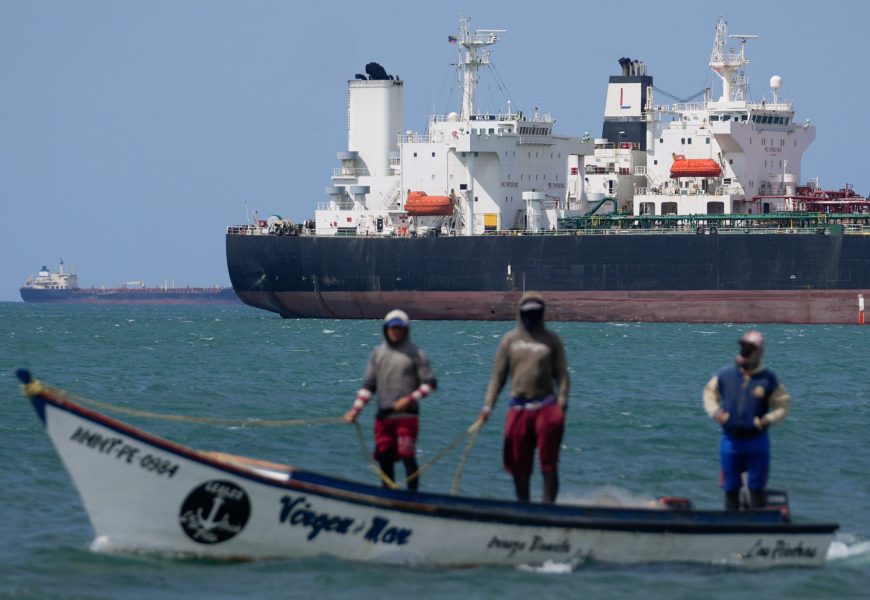
The fifth week of Donald Trump's illegal war on Iran has confirmed the absence of any overarching strategy. The US continues to hit Iranian targets while building up forces in the region. Iran continues to launch missile and drone attacks on Israel and neighbouring Gulf states. Tehran's proxies in the region have entered the fray. Its closure of the strait of Hormuz has seen oil prices shoot up and had knock-on effects already visible across fuel, fertiliser and supply chains. No amount of contradictory social media posts from Mr Trump can negate the shortages felt across the world, from Asian factories to European diesel markets. The pain is likely to get worse. There is no sign of imminent US victory or Iranian collapse.
This instead looks like a war of attrition. Each side can point to successes and their opponents can highlight failures. That is what sustains the conflict. The stakes extend far beyond the battlefield. The war is embedding itself in the global economy, shaping what is produced, moved and ultimately affordable. Even European ministers now admit they are losing sleep over what comes next - not just the war but its economic consequences.
This war should never have been started. The threat was not imminent, the objectives unclear and the justification fell apart under scrutiny. Responsibility rests with Mr Trump and Israel's Benjamin Netanyahu. The delusion that force can impose a more compliant regime in Tehran has predictably given rise to a conflict that sustains itself. The only plausible exit is negotiation without preconditions. The question is whether the political conditions exist to make that possible.
Mr Trump mixes threats of escalation and claims that negotiations are progressing. There is little evidence of a meaningful diplomatic track while military deployments continue. Mr Trump wants Iran to become a different kind of state. Tehran wants the US to accept it as it is. This looks unbridgeable. Meanwhile the US searches for leverage, openly threatening attacks on energy and water systems - war crimes by another name. Mr Trump's dilemma is whether to accept a lesser peace, or risk a greater war.
The conflict cannot be separated from Gaza. Mr Netanyahu is gambling that war with Iran will restore his standing after the 7 October attacks happened on his watch and shield him from political and legal peril. Left unresolved, Gaza offers Iran and its allies a narrative for resistance. That does not justify Tehran's actions but it explains their persistence. Mr Trump's backing of Israel despite its war crimes in Palestinian territory, in Lebanon and in Iran is both appalling and shrinks the space for diplomacy. The path to peace with Iran may run not just through Tehran but through Gaza too.
If US ground forces are committed, the dynamic shifts. American casualties will harden resolve among those who backed the intervention, making withdrawal politically harder even as costs rise. This would be a disaster. World powers can shift the incentives away from a US ground war - by working together to ensure that they insulate themselves from economic pain, withhold operational support, and coordinate diplomatic messaging, as well as support for international criminal court and UN scrutiny. A face-saving deal - partial reopening of the strait of Hormuz for limited sanctions relief - might be enough. The message is to make escalation harder than retreat. Or the war will make the choice for Mr Trump.
Related Stories

More Top Stories