°C
°C
 3
Min
3
Min
PANAMA CITY (AP) – The U.S. State Department accused China of violating Panama’s sovereignty over a port dispute in the Central American nation, triggering another fierce back-and-forth on Wednesday as the Chinese government called the Trump administration hypocritical.
China calls US hypocritical for expressing concern over Panama’s sovereignty
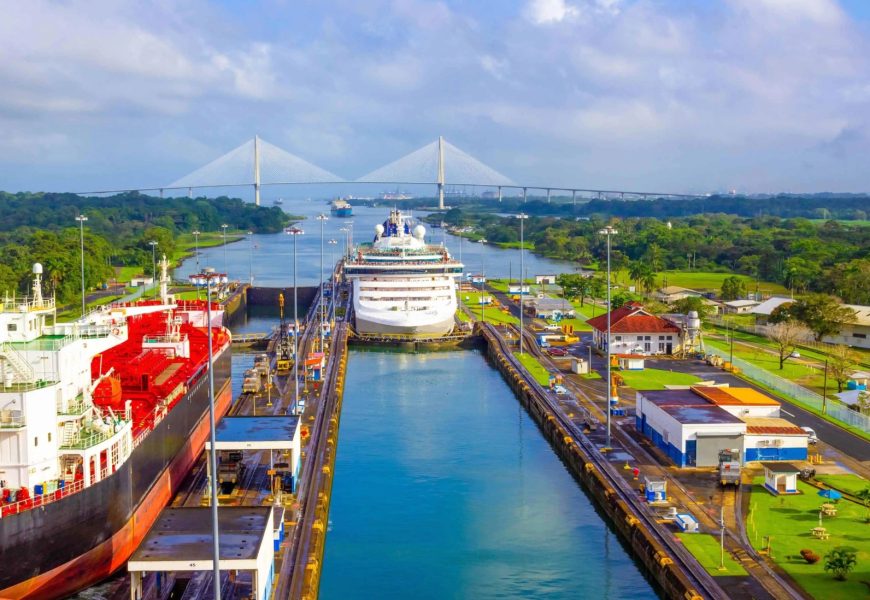

PANAMA CITY (AP) - The U.S. State Department accused China of violating Panama's sovereignty over a port dispute in the Central American nation, triggering another fierce back-and-forth on Wednesday as the Chinese government called the Trump administration hypocritical.
The most recent spat was triggered in early April when Rubio accused China of "bullying" by detaining or holding up dozens of Panama-flagged ships - though for a short period of time - after the Central American country seized control of two critical ports on the canal earlier this year from a subsidiary of a Hong Kong-based company. China denied the allegations.
On Tuesday, the U.S. State Department released a joint statement with a handful of smaller U.S. allies in the region - Bolivia, Costa Rica, Guyana, Paraguay, and Trinidad and Tobago - saying that the action was a "blatant attempt to politicize maritime trade" and that they "stand in solidarity with Panama."
The comments come as U.S. President Donald Trump has taken a more aggressive stance on Latin America than administrations in past decades, capturing Venezuela's president in an overnight raid and pushing massive reforms in Venezuela, imposing an oil blockade on Cuba, meddling in elections and threatening military action on Mexican cartels.
"The sovereignty of our hemisphere is non-negotiable," wrote U.S. Secretary of State Marco Rubio in a social media post on Tuesday night.
Lin Jian, a spokesperson for China's Foreign Ministry in a news conference Wednesday said the statements "are completely unfounded and distort reality."
"Who occupied the Panama Canal for a long time, invaded Panama with its military, and arbitrarily trampled on its sovereignty and dignity? Who covets the Panama Canal, seeks to turn this international waterway - meant to remain permanently neutral - into its own territory, and disregards the sovereignty of regional countries? The answer is self-evident," Jian said.
"The one who has politicized and securitized the issue of ports is the United States," he added.
Shortly after, Panamanian President José Raúl Mulino wrote in a statement that he appreciated the "solidarity of friendly countries" over the Panamanian-flagged vessels in Chinese ports, but appeared to try and diffuse mounting tensions.
"We do not wish to engage in controversy, as we value respectful relations with all nations," he said.
The U.S. has long sought to offset China's growing presence in Latin America. Panama, in part due to its crucial role in international trade with the Panama Canal, has been particularly caught in a broader rivalry between the two superpowers after Trump accused Beijing last year of running the international waterway.
More Top Stories