°C
°C
 18
Min
18
Min
The Supreme Court has weakened a key tool of the Voting Rights Act that has helped root out racial discrimination in voting for more than half a century in a case concerning a Black majority congressional district in Louisiana. The court’s conservative majority found that the district, represented by Democrat Cleo Fields, relied too heavily on race.
The Latest: Supreme Court weakens a key tool of the Voting Rights Act
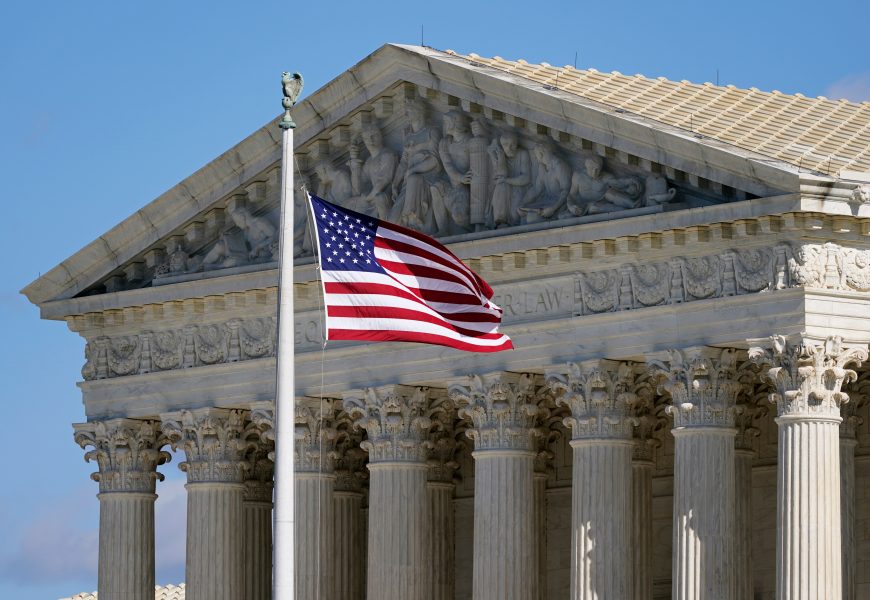

The Supreme Court has weakened a key tool of the Voting Rights Act that has helped root out racial discrimination in voting for more than half a century in a case concerning a Black majority congressional district in Louisiana.
The court's conservative majority found that the district, represented by Democrat Cleo Fields, relied too heavily on race. Chief Justice John Roberts had described the district as a "snake" that stretches more than 200 miles (320 kilometers) to link parts of the Shreveport, Alexandria, Lafayette and Baton Rouge areas.
The Rev. Al Sharpton said the Supreme Court "has humiliated and dismantled the life's work of Dr. Martin Luther King Jr., John Lewis, and every man and woman who marched, bled, and died for Black Americans to have an equal voice at the ballot box."
The plaintiffs argued that Louisiana's second Black-majority congressional district, drawn to correct a previously discriminatory map, has an unconstitutional racial basis and did not follow the standards for drawing a district, including compactness.
The 1965 Voting Rights Act, the centerpiece legislation of the Civil Rights Movement, succeeded in opening the ballot box to Black Americans and reducing persistent discrimination in voting. Nearly 70 of the 435 congressional districts are protected by Section 2, election law experts estimate.
It's unclear how much is left of Section 2, but the ruling could open the door for Republican-led states to eliminate Black and Latino electoral districts that tend to favor Democrats and affect the balance of power in Congress. President Donald Trump has already touched off a nationwide redistricting battle to boost Republican chances.
Here's the latest:
Janai Nelson, president and director-counsel of the NAACP Legal Defense Fund, said the decision is a blow to American democracy and one that will further erode trust in the Supreme Court among diverse populations.
"It's a day of loss of any remnant or modicum of credibility of this Supreme Court to rise above partisan politics," Nelson said. "It has elevated the principle of partisanship and politics over the right to vote."
Wednesday's decision is a "profound betrayal of the civil rights movement," said Sophia Lin Lakin, deputy director of the ACLU's Voting Rights Project. Minority communities won't just potentially lose a seat in Congress, she said, they'll lose a voice on issues like healthcare, education and infrastructure.
"States can now point to partisan objectives to justify maps that strip voters of color of representation, and federal courts will have little basis to intervene," she said.
David Becker, the founder and executive director of the Center for Election Innovation and Research, said the ruling will allow lawmakers to reduce the power of minority voters - at least eventually.
"How it will affect 2026, I don't know," Becker said Wednesday on a call with reporters. "It could be open season now, but we're also running out of time."
Eric Holder, the former Obama-era U.S. attorney general whose administration lost a crucial voting rights battle in 2013, said Wednesday's ruling amounted to "Supreme Court sanctioned racial and partisan gerrymandering."
"The Court today ensures that it will be remembered as one of the most destructive and deeply irresponsible Courts in the history of our nation," Holder said in a statement.
"It should not be lost on anyone," he added, "that the Roberts court makes this decision at a time when Republican leaders across the country are foaming at the mouth to draw the American people out of a meaningful say in our elections."
After leaving public service, Holder formed the National Redistricting Foundation to protect voting rights and challenge gerrymandered congressional and state legislative districts.
Republican U.S. Sen. Marsha Blackburn, who is running for governor this year, called on social media for the GOP-supermajority state Legislature to reconvene and draw Tennessee's only Democratic congressional seat to favor a pickup for Republicans.
The district centers on the majority-Black city of Memphis.
Redrawing Georgia's maps for the 2026 elections would be difficult because early voting is already underway for the May 19 party primaries, in advance of the November election.
A spokesperson for Republican Gov. Brian Kemp and state Republican Party Chairman Josh McKoon didn't immediately respond Wednesday to queries about immediate redistricting. State Senate Minority Harold Jones II, an Augusta Democrat, said he's unsure of the prospects of quick action.
But one leading GOP candidate to replace Kemp urged the governor to act immediately, which could protect Republican power even if Georgia Democrats make gains this fall.
"Democrats nationally are trying to redistrict their way back to power, and what happened in Virginia is just the tip of the spear," businessman Rick Jackson said in a statement. "There is no time to waste. Georgia must act now to ensure secure elections in Georgia and counter the Democrats' national assault on our elections."
House minority leader Hakeem Jeffries accused the Supreme Court of being "far right extremists" and of voter suppression being "a way of life" for Trump and Republicans, in a strongly worded statement on social media.
"Republicans know they cannot win a free and fair election in November and so they are desperate to rig it. We will never let them succeed," the Democrat wrote.
Jeffries has previously claimed Trump makes power grabs when it comes to voting.
When Trump signed an executive order in March to create a nationwide list of verified eligible voters and to restrict mail-in voting, Jeffries said it would make voting unnecessarily difficult of communities of color, people with disabilities and other key demographics.
Martin Luther King III, the eldest son of the late civil rights leader Martin Luther King Jr., and his wife Arndrea Waters King said in a statement that the Supreme Court decision "further weakened the Voting Rights Act."
"This decision silences the voices of millions of voters of color by undermining the purpose of the VRA - securing and protecting the political rights of Black and Brown communities across the country," they said. "Dr. Martin Luther King Jr. understood that voting rights are the foundation of our entire democratic system. Without them, we are a democracy in name only. "
The couple are the founders of a civil rights organization called the Drum Major Institute.
The 60 members of the Congressional Black Caucus, which is currently made up of all Democrats, said the ruling erased "decades of Black progress."
"Republicans now have the ability to move forward with a nationwide scheme to rig congressional maps in their favor - to manufacture more districts for themselves by eliminating majority-Black districts, while stripping away the ability to challenge those racist, anti-Black maps in court," the group said.
The caucus added this could open the door for huge redistricting changes in the South and vowed to initiate "any measure necessary" to find a legislative remedy, and called for a vote on the John Lewis Voting Rights Act.
The already quiet courtroom went silent when Chief Justice John Roberts said Justice Samuel Alito would be reading the majority opinion.
Members of the audience listened raptly as he read, waiting to hear the depths of the Section 2 decision. Some in the audience nodded as Justice Elena Kagan read the dissent and said the majority had effectively finished a yearslong pursuit of the Voting Rights Act.
Shalela Dowdy in Mobile, Alabama, said she's worried the decision will lead to the rollback of an Alabama congressional district created in 2023, which she said gave previously ignored voters a seat at the table.
"It's a setback. Putting it in the hands of the states on this level is dangerous," Dowdy said. "There's just been a history of the states not doing the right thing based off their state population."
Dowdy, who is Black, was a plaintiff in a lawsuit that resulted in the creation of the new district, now represented by Rep. Shomari Figures.
She added that they are going to have to battle in court, and at the ballot box, to maintain representation: "The fight continues. You can't get comfortable."
"The Supreme Court has not just weakened a law, it has humiliated and dismantled the life's work of Dr. Martin Luther King Jr., John Lewis, and every man and woman who marched, bled, and died for Black Americans to have an equal voice at the ballot box," Sharpton, the president of the National Action Network, said in a statement.
"This ruling does not just dishonor the generation that marched, it steals from the generation that hasn't voted yet," Sharpton added in the statement. "Black children growing up in this country deserve the same protections their grandparents bled for."
He called on Congress to restore the Voting Rights Act through federal legislation, a task that has proved elusive while Capitol Hill has been narrowly split between Democrats and Republicans.
A growing number of civil rights and racial justice leaders denounced the Supreme Court's decision in Louisiana v Callais.
Marc Morial, president of the National Urban League and a former New Orleans mayor, said the court had issued a "profound setback for American democracy and a direct blow to the voting power of Black communities in Louisiana and across the nation."
"At its core, this case was never about fairness or constitutional principle-it was about whether a multiracial democracy will be permitted to function as intended, or whether the voices of Black voters can once again be weakened, diluted, and silenced," Morial said in a statement.
Lawmakers are currently in the midst of their 2026 legislative session, which is set to conclude June 1.
Louisiana state Rep. Beau Beaullieu, a Republican who chairs the House committee tasked with drawing any new congressional map, said in a text message to the AP on Wednesday morning that lawmakers are currently reviewing the Supreme Court's decision and "will know more once we know the particulars" of the ruling.
Louisiana Attorney General Liz Murrill said she will work with fellow Republican Gov. Jeff Landry and the GOP-dominated Legislature to "provide guidance as we move forward to adopt a constitutionally compliant map."
"The Supreme Court has ended Louisiana's long-running nightmare of federal courts coercing the state to draw a racially discriminatory map," Murrill wrote. "That was always unconstitutional-and this is a seismic decision reaffirming equal protection under our nation's laws."
The ruling is expected to be an enormous boost for Republican efforts to expand their number of winnable seats in the House of Representatives and state legislatures.
The GOP has long complained that Democrats turned the Voting Rights Act's protections into a partisan weapon to gain seats.
"For decades the left has spent hundreds of millions of dollars seeking to divide Americans along racial lines in a cynical pursuit of partisan power masquerading as civil rights," said Adam Kincaid, the National Republican Redistricting Trust's executive director, in a statement. "Today's decision rebukes that divisive and unconstitutional effort."
A federal court in 2023 ordered the creation of a new near-majority Black district which led to the election of Alabama's second Black congressional representative.
Alabama is under a court order to use the new map through the rest of the decade, but the state appealed to the Supreme Court. Alabama has argued the court-drawn map is an illegal racial gerrymander.
Alabama House Speaker Pro Tempore Chris Pringle, a Republican, said he is hopeful that the Louisiana ruling means justices will rule in favor of Alabama in that appeal, eventually clearing the way for Alabama to draw its own map.
"I do believe the ruling today vindicates the state's argument that the court illegally racially gerrymandered the state in its ruling," Pringle said.
The head of an organization that works to elect Democrats to state legislatures says it's an "all-hands-on-deck moment."
Heather Williams, who leads the Democratic Legislative Campaign Committee, says Democrats need to strengthen their numbers at statehouses to fight GOP gerrymanders. She says the ruling gives Republican-led legislatures greater ability to "rig maps to protect their own power."
"State legislatures play a role in drawing over 300 congressional districts, and we must charge into the 2026 elections clear-eyed about the urgency and stakes," she said.
In most of the states where Republicans could benefit from eliminating Democratic districts that have majority Black or Hispanic populations, filing deadlines for congressional elections have already passed. In some, primaries have already occurred.
Barring extraordinary action, that means the most likely impact of Wednesday's decision will come in 2028, when the GOP can potentially replace more than a dozen Democratic-held House districts that were previously protected under the Voting Rights Act.
"The Voting Rights Act as a means to protect minority voters from vote dilution is essentially dead," said Jonathan Cervas, a political scientist at Carnegie-Mellon University who's served as a special master in multiple Voting Rights Act cases.
Over time, the decision could result in a sweeping rollback to Black political power at the state and local level.
There are hundreds of Black state legislators in the South. There are many more Black officials on county and parish governing bodies, school boards and city councils that make decisions about policing, road paving and school districting that touch everyday lives.
In many cases, Black-majority districts that those officials represent have been carved out through decades of repeated Section 2 litigation. In states like Alabama and Mississippi, the racial cleavage is so deep that there are few Democratic state legislators who aren't Black.
Wednesday's ruling could let white majorities wipe out districts where Black voters exercise power, particularly where they are numerous but in the minority. That would be a change from today, where Black officials often exercise real influence, even on governing bodies where they are in the minority.
Rep. Richard Hudson of North Carolina is the chairman of the House GOP campaign arm.
"The Supreme Court made clear that our elections should be decided by voters, not engineered through unconstitutional mandates," he said.
"For too long, activists have manipulated the redistricting process to achieve political outcomes, dividing Americans instead of bringing them together," he said. "This ruling restores fairness, strengthens confidence in our elections, and ensures every voter is treated equally under the law."
"This ruling is about far more than lines on a map - it's about whether Black Louisianians will have a meaningful opportunity to make their voices heard," U.S. Rep. Troy Carter, whose predominately Black congressional district encompasses New Orleans, said in a written statement.
Carter said the consequences of the high court's decision will be "immediate and severe" and that Louisiana's two majority-Black congressional districts are now at risk of being dismantled.
"Without the protections of the Voting Rights Act, there is no evidence to suggest that Black voters in our state will be able to elect candidates of their choice," Carter wrote.
"The Civil War Amendments were forged at tremendous human cost to secure a constitutional order grounded in equality before the law-not racial classifications," Roberts said. "Today's decision restores that understanding and reaffirms that the Constitution does not permit sorting Americans by race in the exercise of political power."
"Today's appalling decision by the Supreme Court is the latest in a long line of attacks by the conservative Court, congressional Republicans, and President Trump against the fundamental right of every American citizen to vote," said Rep. Suzan DelBene, who leads Democrats' campaign efforts for the U.S. House.
She said "Democrats remain poised to retake the House Majority in November."
Derrick Johnson, president of the NAACP, the nation's oldest civil rights group, said the high court's decision delivers "a devastating blow to what remains of the Voting Rights Act."
The ruling is "a license for corrupt politicians who want to rig the system by silencing entire communities," Johnson said Wednesday. "The Supreme Court betrayed Black voters, they betrayed America, and they betrayed our democracy."
The ruling comes a month and a half after foot soldiers of the Civil Rights Movement marked 61 years to the day that voting rights marchers were brutally beaten by Alabama state troopers on the Edmund Pettus Bridge in Selma. The violence that became known as Bloody Sunday shocked the nation and helped spur passage of the landmark legislation that the Supreme Court has now weakened.
"This ruling is a major setback for our nation and threatens to erode the hard-won victories we've fought, bled, and died for. But the people still can fight back," Johnson said. "Our democracy is crying for help."
The decision "guts" voting rights protection while "pretending to uphold it," said Lauren Groh-Wargo, executive director of Fair Fight Action, a Georgia-based voting rights group founded by Democrat Stacey Abrams.
She said the court rewrote the law to require a showing of intentional discrimination.
That's after Congress in the early 1980s specifically rewrote the Voting Rights Act to overturn an earlier Supreme Court decision in an Alabama case that tried to do the same thing. At the time, Roberts was a Justice Department attorney advocating for a showing of intentional discrimination.
"It allows states, counties and cities to shield their discriminatory maps by claiming they are advancing their own partisan interests, ignoring that race and party are highly correlated in places across the country, particularly the South," Groh-Wargo wrote in a text message to the AP.
"This is a complete and total victory for American voters," White House spokesperson Abigail Jackson said.
"The color of one's skin should not dictate which congressional district you belong in. We commend the court for putting an end to the unconstitutional abuse of the Voting Rights Act and protecting civil rights," she said.
More than a half-dozens states have already adopted new U.S. House districts since Trump urged Texas Republicans to redraw their districts last year in a bid to win more seats and maintain a slim House majority in the midterm elections.
The battle has been pretty even thus far. Republicans think they could gain up to nine more seats from new districts in Texas, Missouri, North Carolina and Ohio - and perhaps four more if Florida lawmakers pass a new map. Democrats, meanwhile, think they could win 10 additional seats from new districts in California, Utah and Virginia.
Mayor Helena Moreno, a Democrat who represents the largest city in Louisiana's other predominantly Black congressional district, said the Supreme Court's ruling was "a step backward."
"For decades, the Voting Rights Act has served as a critical safeguard to ensure every voice, especially those historically marginalized, has a meaningful opportunity to be heard," Moreno said.
"Striking down a district that reflected diversity suppresses voices and weakens our democracy. We should be working to expand representation, not roll it back," she said.
AP took a closer look at the history of the act, which the NAACP's Demetria McCain said last year was at "a critical juncture."
The Florida Senate reversed itself and took a brief break so senators could review the decision and talk with attorneys. But the Republican-dominated chamber is still expected to vote later Wednesday to approve a GOP gerrymander of the state's congressional districts.
House Republicans have not broken to consider implications of the Louisiana case in their arguments, despite the Democratic majority's urging.
The current Florida congressional map gave Republicans a 20-8 advantage in the 2024 election. Gov. Ron DeSantis' proposal is designed to push that to as much as 24-4 in November.
The 1965 voting rights law was the centerpiece legislation of the Civil Rights Movement. It succeeded in opening the ballot box to Black Americans and reducing persistent discrimination in voting.
Nearly 70 of the 435 congressional districts are protected by Section 2, election law expert Nicholas Stephanopoulos has estimated.
"The consequences are likely to be far-reaching and grave. Today's decision renders Section 2 all but a dead letter," Kagan stated in dissent.
Justice Samuel Alito, writing for the six conservatives, said the Louisiana district at the heart of the case "is an unconstitutional gerrymander."
Roberts, the chief justice, described the district as a "snake" that stretches more than 200 miles (320 kilometers) to link parts of the Shreveport, Alexandria, Lafayette and Baton Rouge areas.
The court's decision was released as Florida legislators debated a proposed redraw of the state's congressional lines, submitted by Republican Gov. Ron DeSantis and intended to give the GOP a chance at as much as a 24-4 advantage in the state's U.S. House delegation.
Senate Democrats urged the Republican supermajority to delay debate to at least offer lawmakers a chance to read the decision and consult attorneys on how it might affect DeSantis' proposal. Florida Senate Republicans refused.
The AP contacted multiple law professors and redistricting attorneys in the minutes after the decision came out who said they were still reading the decision so did not yet know its full implications.
More Top Stories