Home Top Politics Business Sports Technology Entertainment Life/Style Health/Science Photos Videos Travel

Estimated reading time 6 minutes 6 Min

NASCAR chairman refuses to budge on team charters in testimony during Michael Jordan’s lawsuit
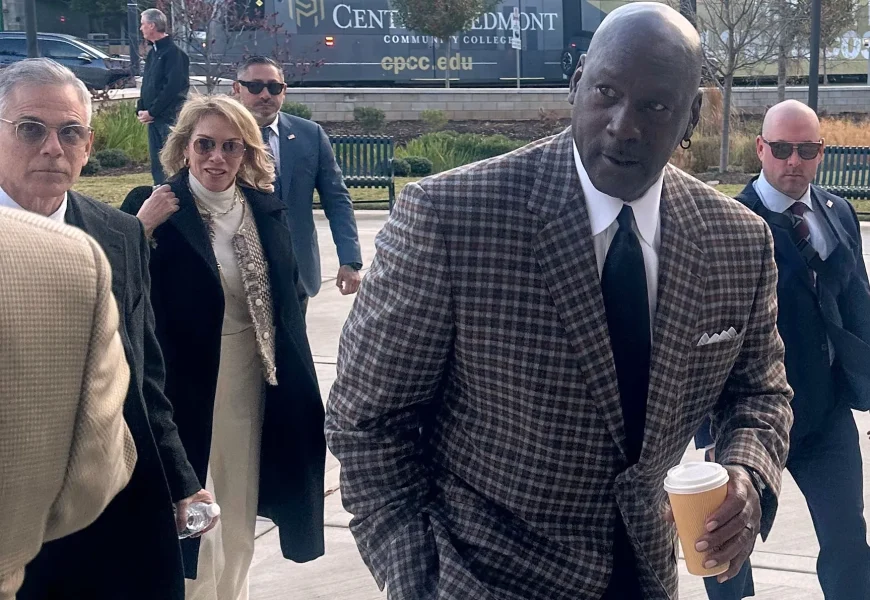
CHARLOTTE, N.C. (AP) – NASCAR Chairman Jim France testified Tuesday in Michael Jordan’s federal antitrust lawsuit against his family that he still has not changed his mind on granting teams permanent charters, and evidence showed he entered negotiations on a new revenue-sharing agreement determined to thwart teams’ efforts for a better deal from the stock car series.

December 10, 2025
10 December 2025

CHARLOTTE, N.C. (AP) – NASCAR Chairman Jim France testified Tuesday in Michael Jordan’s federal antitrust lawsuit against his family that he still has not changed his mind on granting teams permanent charters, and evidence showed he entered negotiations on a new revenue-sharing agreement determined to thwart teams’ efforts for a better deal from the stock car series.

France was the final witness called by attorneys for Jordan’s 23XI Racing and Front Row Motorsports on the seventh day of the trial. Those race teams have accused NASCAR of being a monopolistic bully that engages in anticompetitive business practices.

Also called Tuesday was Hall of Fame team owner Richard Childress, who testified that he only signed the 2025 revenue-sharing agreement because refusing to do so would have put Richard Childress Racing out of business.

NASCAR Commissioner Steve Phelps testified to the frustrating two-plus years of negotiations between the top motorsports series in the United States and its race teams. The plaintiffs introduced several documents detailing communication between NASCAR executives that showed France was stubbornly opposed to granting teams permanent charters throughout the process.
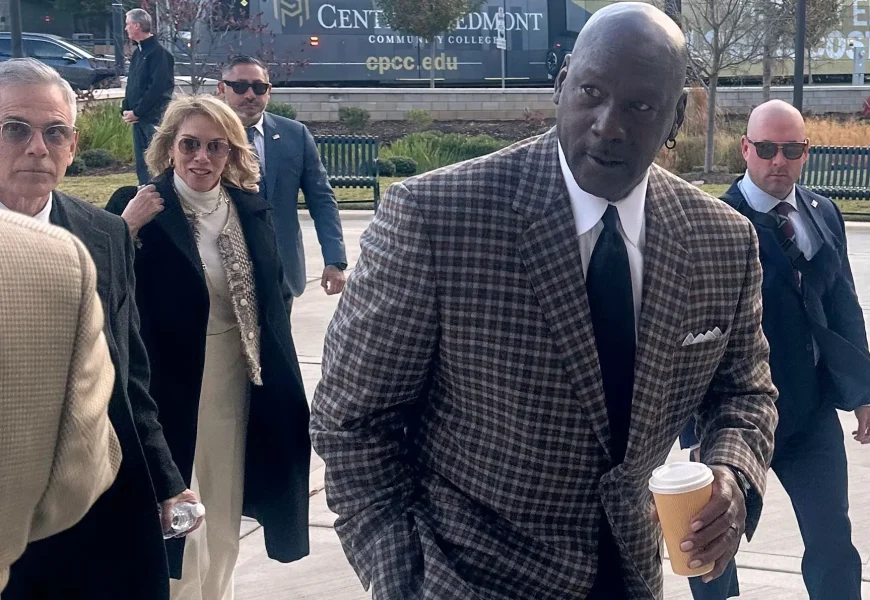
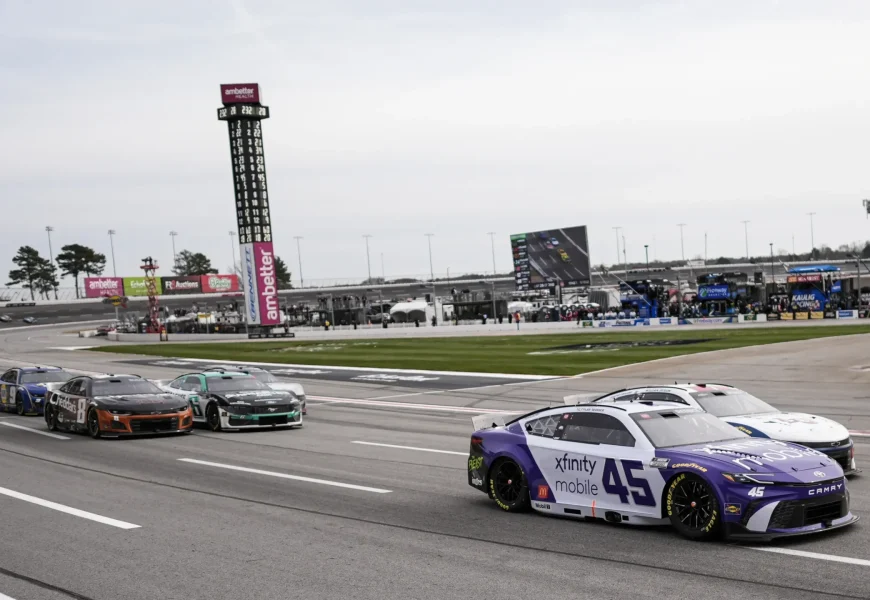
The charter system is equivalent to the franchise model used in other sports. In NASCAR, a charter guarantees cars a spot in the 40-car field each week, as well as specified financial terms.

Asked by plaintiffs’ attorney Jeffrey Kessler if he has changed his stance on making charters permanent, France said, “No, I have not.”

Kessler later introduced a summary of notes from the first meeting of NASCAR executives on how they would approach negotiations with the teams over the new agreements. Steve O’Donnell, now the president of NASCAR, wrote in those notes, “Jim’s overarching comments – we are in a competition. We are going to win.”

France’s position never changed, even though – as evidence showed – he received pleas from Hall of Fame team owners Joe Gibbs, Rick Hendrick, Jack Roush and Roger Penske. All four are close personal friends, France said on the stand Tuesday.

France became chairman of the series his father founded in 1948 following the 2019 resignation of his nephew, Brian. NASCAR has always been privately owned by the Florida-based family, and Brian France negotiated the initial charter system that began in 2016 as a response to teams complaining they were bleeding money at an unsustainable rate.

Jim France, who is 81, was soft-spoken on the stand and needed many questions repeated, and he said on numerous topics that he was either unable to recall, did not remember or was not sure – even in response to evidence introduced that the France Family Trust received $400 million in distributions from 2021 through 2024 and that NASCAR is valued at $5 billion.

He wasn’t sure of the title his niece, Lesa France Kennedy, holds with NASCAR, or the ownership percentages between the two. Evidence showed Jim France owns 54% of NASCAR, while France Kennedy, the vice chair, owns 36%. France also testified he believes he is paid in “the $3.5 million range” as chairman.

Childress spoke to the pressure he felt to sign the charter agreement.

“I would not have signed those charters if I was financially able to do what I do,” the six-time championship winning owner testified. “We are a blue-collar operation.”

Childress has participated in NASCAR for 60 years and has a longtime personal relationship with the Frances. He testified that he pleaded with Jim France for the charters to be made permanent instead of renewable, and France refused.

Childress testified he supports the charter system because before its implementation race teams “were worth 10 cents on the dollar at most. We didn’t have nothing.”

He admitted that the charters added value to his team, but said the equity falls short of its financial potential if the charters were permanent. An economist testified that NASCAR owes 23XI and Front Row $364.7 million in damages, and that NASCAR shorted 36 chartered teams $1.06 billion from 2021-24.

When Childress’ October declaration of his support for charters was introduced, Childress insisted NASCAR attorney Christopher Yates also show the jury language added to the statement in which Childress pushes for the charters to be permanent.

Childress said he added those sentences to the declaration, which had been pre-written for him to sign.

NASCAR commissioner Phelps noted that Jordan’s financial advisor would not compromise on key issues in the negotiations.

Phelps, who was president of NASCAR during the negotiations, said Jordan right-hand man Curtis Polk was the lead representative for the teams and held firm in their demand for increased revenue, permanent charters, a voice in governance and one-third of any new revenue streams.

The deal finally presented to the teams in September 2024 did not include permanent charters or a voice in governance, but NASCAR gave the teams a firm deadline to accept its final offer or forfeit their charters. 23XI Racing, owned by Jordan, Polk and three-time Daytona 500 winner Denny Hamlin, and Front Row Motorsports, owned by Bob Jenkins, were the only two teams out of 15 organizations that refused to sign. They sued instead.

Phelps, promoted to become NASCAR’s first commissioner earlier this year, testified that he worked hard to get the teams the best deal possible. But he said the teams’ initial request for $720 million in guaranteed revenue would have put NASCAR out of business.
At the same time, Polk would not budge, either.

“It was one of the most challenging and longest negotiations I’ve ever been part of,” said Phelps, who admitted he didn’t particularly enjoy negotiating with Polk, who was at the time the representative for the “Team Negotiating Council.”

“The TNC never wavered off their four pillars. It was just the same thing, the same thing, and that was very frustrating,” Phelps said.
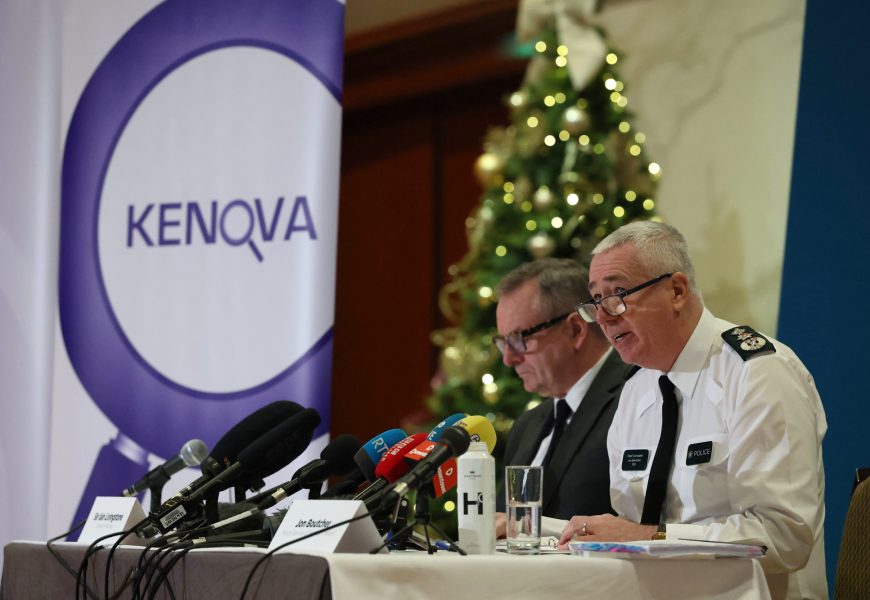
Phelps testified at one point that NASCAR believed it had landed on a new charter agreement that satisfied the teams but it was contingent on NASCAR finalizing its new media rights deal.

“I thought we’d just plug in the numbers,” said Phelps, who testified NASCAR was hoping to land a media deal worth $1.2 billion. When it became clear the media rights deal wouldn’t net that much money, Phelps said the teams asked to set a floor in negotiations.

NASCAR ultimately got a media deal worth $1.05 billion – still an increase of $33 million a year from the previous deal – and Phelps said “every dollar” went to the race teams when it began this year.

However, the ultimate revenue payout to teams is $431 million annually, the charters are not permanent and the teams did not get a voice in rules and regulations.

Even so, Phelps testified he believed the charter agreement was “a fair deal.”

U.S. District Judge Kenneth Bell has repeatedly admonished both sides to pick up the pace of the trial, and once France’s testimony concludes Wednesday, NASCAR will begin to present its defense.

NASCAR has said it has a witness list of 16 people, but Yates informed Bell he can trim “four or five” names from it and is hopeful to wrap his defense by Friday.

More Top Stories