°C
°C
 4
Min
4
Min
COPENHAGEN, Denmark (AP) – Danish voters went to the polls Tuesday in a general election, with Prime Minister Mette Frederiksen seeking a third term at the helm of the Scandinavian country after a standoff with U.S. President Donald Trump over the future of the kingdom’s semiautonomous territory of Greenland.
Denmark votes in an early election that follows a crisis over US designs on Greenland
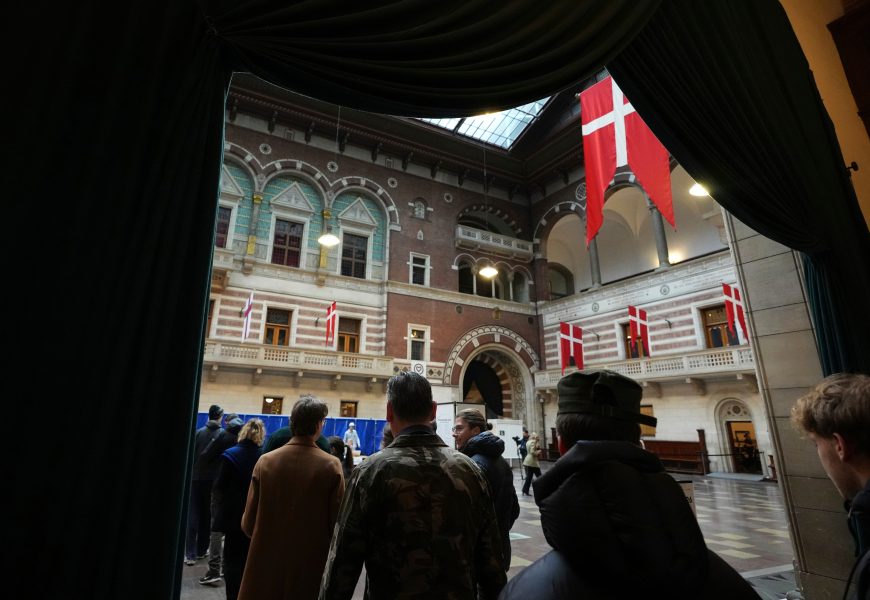
COPENHAGEN, Denmark (AP) - Danish voters went to the polls Tuesday in a general election, with Prime Minister Mette Frederiksen seeking a third term at the helm of the Scandinavian country after a standoff with U.S. President Donald Trump over the future of the kingdom's semiautonomous territory of Greenland.
More than 4.3 million people are eligible to have their say in the vote for the new Folketing, or parliament, in Copenhagen, which is elected for a four-year term.
Frederiksen called the election in February, several months before she had to in apparent hopes that her resolute image in the crisis over Greenland would help her with voters in the European Union and NATO member country.
In her second term, her support had waned as the cost of living rose - something that, along with pensions and a potential wealth tax, has been a prominent campaign issue.
The 48-year-old center-left Social Democrat is known for strong support of Ukraine in its defense against Russia's invasion and for a restrictive approach to migration - continuing a tradition in Danish politics that now goes back two decades.
Seeking to counter pressure from the right and pointing to a possible surge in migration because of the Iran war, Frederiksen announced proposals this month that include a potential "emergency brake" on asylum and tighter controls on criminals who lack legal residence. Her government had already unveiled a plan to allow the deportation of foreigners who have been sentenced to at least one year in prison for serious crimes.
Two center-right challengers hope to oust Frederiksen as prime minister. One is in her current government - Defense Minister Troels Lund Poulsen of the Liberal, or Venstre, party, which headed several recent administrations.
The other is Alex Vanopslagh, 34, of the opposition Liberal Alliance, which calls for lower taxes and less bureaucracy, and for Denmark to abandon its refusal to use nuclear power. But a recent admission from Vanopslagh to taking cocaine earlier in his time as party leader may have dented his chances.
Further to the right, the anti-immigration Danish People's Party looks well-placed to bounce back from a very weak showing at the last election in 2022.
No single party is expected to come anywhere near winning a majority. Denmark's system of proportional representation typically produces coalition governments, traditionally made up of several parties from either the "red bloc" on the left or the "blue bloc" on the right, after weeks of negotiations.
Frederiksen's outgoing three-party administration was the first in decades to straddle the political divide. It remains to be seen whether this election will result in a repeat, with the centrist Moderate party of Foreign Minister Lars Løkke Rasmussen possibly acting as the kingmaker.
Speaking to reporters after he had voted, Rasmussen said that "this is basically about Denmark preparing itself to a world which is absolutely more uncertain than we were used to in the past."
Greenland, which took up much of the government's energy in recent months, hasn't been a significant issue in the campaign because there is broad agreement on its place in the kingdom.
Frederiksen warned in January that an American takeover of Greenland would amount to the end of NATO. But the crisis has simmered down, at least for now.
After Trump backed down on threats to impose tariffs on Denmark and other European countries that opposed the U.S. taking control of the vast Arctic island, the U.S., Denmark and Greenland started technical talks on an Arctic security deal.
Peter Mortensen, a lawyer, speaking just after he had voted, told The Associated Press that, "I would like some politicians who have a vision for our country."
"What are we supposed to do in this world with war and our neighbors and perhaps our allies are threatening us instead of being allies?" he added. "I don't have the answers, but the politicians don't have it either."
Denmark's single-chamber parliament has 179 seats. Of those, 175 go to lawmakers from Denmark itself and two each for representatives from thinly populated Greenland and the kingdom's other semiautonomous territory, the Faroe Islands.
More Top Stories