°C
°C
 5
Min
5
Min
BARCELONA, Spain (AP) – Hikers navigating rugged terrain may have noticed more people speeding along the same trail while leaping over rocks and roots like two-legged mountain goats.
Trail running legend Kilian Jornet advises beginners to enjoy the view and go easy
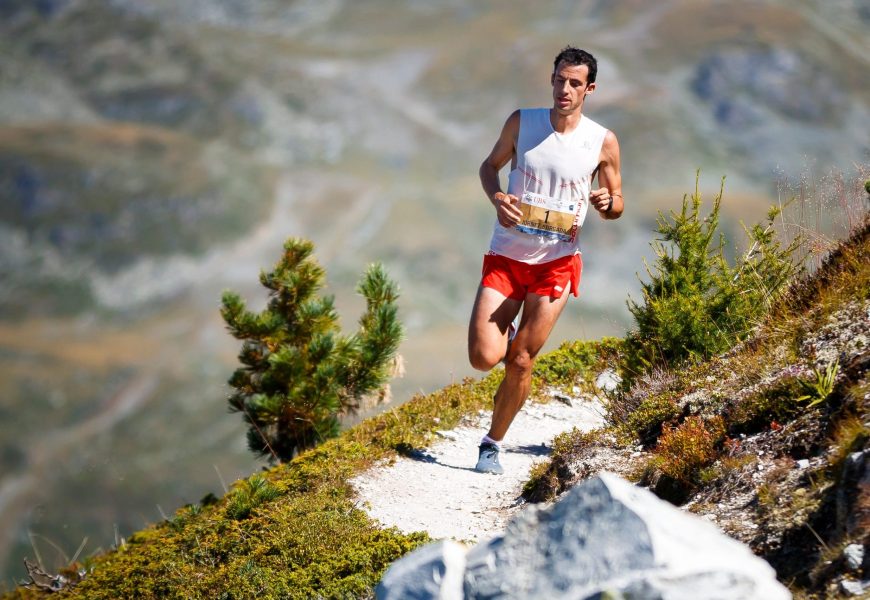

BARCELONA, Spain (AP) - Hikers navigating rugged terrain may have noticed more people speeding along the same trail while leaping over rocks and roots like two-legged mountain goats.
Trail running has exploded in popularity in recent years. The sport encompasses everything from off-road jogs on unpaved coastal paths to alpine ultra-marathons. Extreme versions are known as mountain running, which involves moving and sometimes scrambling uphill on varied surfaces, and sky running, which is done with even steeper inclines at altitudes above 2,000 meters (6,562 feet).
Few elite athletes have done more to bring long-distance running in the wilderness to the mainstream than Kilian Jornet. The star Spanish mountain athlete from the Catalan Pyrenees holds numerous world records in both trail running and ski mountaineering. He is a four-time winner of Europe's Ultra-Trail du Mont-Blanc, an ultramarathon that includes a 10,000-meter (32,808-foot) elevation gain over 170 kilometers (105 miles), and a five-time winner of the Hardrock Hundred, a similarly grueling endurance race in Colorado.
Jornet, 38, completed his most recent feat in early October: climbing 72 of the 4,200-meter (14,000-foot) mountains in the American West in 31 days while traveling from peak to peak only by foot or bicycle. But he says anyone can start trail running as long as they respect their natural surroundings and use common sense to stay safe.
Jornet shared his tips for beginners in an interview with The Associated Press. The interview was conducted via email because he and his wife were caring for a new baby at their home in Norway. Answers were edited for length.
Jornet: Don't rush and enjoy it. Enjoy nature and the landscape, and gradually adapt your body to the terrain, the effort and the environment. You might start walking, then add short running sections. Choose easy trails, and focus on feeling good and safe.
Jornet: Trying to go too far or too fast too early. The body needs time to adjust to elevation, technical terrain and impact. People also often underestimate weather changes or overestimate their energy. Don't take athletes like me as an example! I've been trying every day for more than 30 years so my body is adapted to it, but if you're starting it might be completely different.
Jornet: A 3-5-kilometer (1.8-3.1-mile) loop with gentle elevation and wide, non-technical trails. If you finish feeling you could continue, that's a great sign of healthy progression. Two or three times a week is enough at the beginning. Mix walking and running. Focus on enjoyment more than volume.
Jornet: No. Road running can help, but it's not a prerequisite. Trail running also requires other things like balance, coordination, and terrain awareness, all of which you can learn once you start.
Jornet: The terrain is more unpredictable (rocks, roots, mud) so you need more attention and stability. Weather changes faster in the mountains and help can be farther away, so you need to be prepared.
Jornet: It's for everyone, but it requires responsibility. You can choose routes that match your ability, from very easy to very technical. Always follow some basic safety (Let your loved ones know where you go, etc.), respect your limits and progress gradually. And don't forget to enjoy!
Jornet: Not critical, but helpful for beginners. Running alone can be wonderful, if you're prepared. Whether alone or not, always tell someone your route and estimated return time.
Jornet: Plan your route, check the weather, tell someone where you're going, and know how to contact local emergency services. In many mountain regions, specialized rescue teams exist, and knowing how to reach them is important. You can also consider using apps that have tracking so your loved ones know where you are.
Jornet: Try to carry only what you need: proper shoes, a light jacket, water, food, and basic safety gear. I always carry my phone with enough battery, and if I plan a longer activity I would carry a jacket to protect me from the weather. For beginners, it might also be interesting to get a small first-aid kit and a thermal blanket. Hydration depends on heat and distance. I usually carry water and simple, quick-energy foods like gels, nuts, dried fruits or bars. Eat and drink consistently, small amounts often.
Jornet: Hiking, skiing, cycling, climbing - anything that builds endurance or strength with low impact. Cross-training helps prevent injuries. You can also add some gym exercises to improve strength, flexibility and balance.
Jornet: When running feels natural and you can complete your usual routes comfortably. A short 5-10 km race is a great first step. It should feel exciting, not stressful.
Jornet: Not really. Kids can start by hiking and exploring trails. Adults can start at almost any age, if they adjust intensity. In any case, the important part is to enjoy the process.
Jornet: The growth has been huge. When I was younger, it was rare to meet people in the mountains - they told me I was crazy! Now it's way more common, and the sport has boomed. To me, it's great to see more people out there enjoying the mountains, but it must be with respect for the environment and taking care of it.
Jornet: Some trails can get crowded, especially near popular spots and in the summer. I prefer solitude and being alone in the mountains, so I tend to choose places more remote.
Jornet: Yes, unfortunately: litter, noise or damage to fragile areas. New runners should remember that nature is a living place and we need to take care of it. Stay on marked trails if you can, leave no trace, respect wildlife and be nice to other people you encounter in the mountains.
The beauty of trail running isn't in speed but in discovering landscapes, learning about yourself, and feeling connected to nature.
More Top Stories