°C
°C
 3
Min
3
Min
ISLAMABAD (AP) – Pakistan’s newly appointed armed forces chief called on Afghanistan’s Taliban government on Monday to choose between maintaining ties with Islamabad or supporting the Pakistani Taliban, the militant group blamed for a surge in deadly attacks in recent years.
Pakistan’s top general calls on Afghanistan to pick between ties with Islamabad or Pakistani Taliban
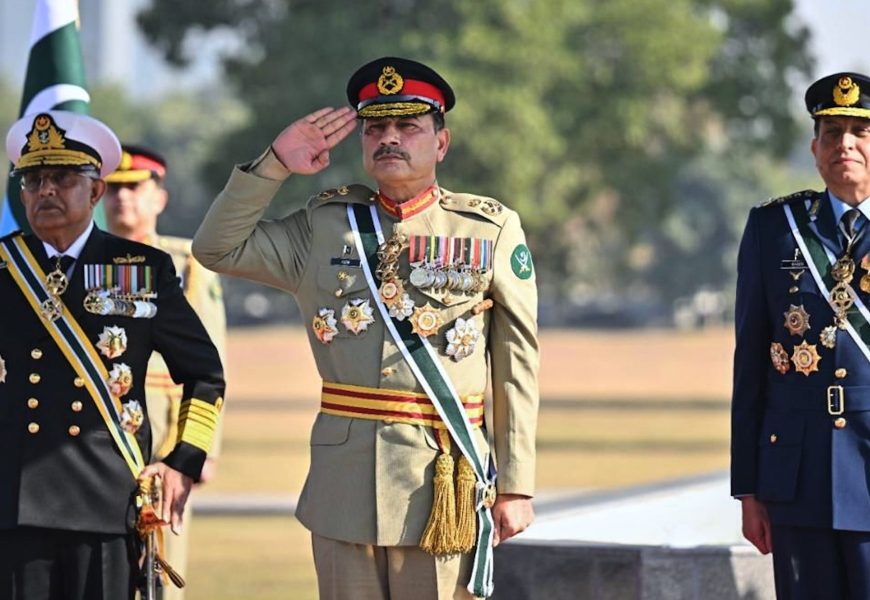

ISLAMABAD (AP) - Pakistan's newly appointed armed forces chief called on Afghanistan's Taliban government on Monday to choose between maintaining ties with Islamabad or supporting the Pakistani Taliban, the militant group blamed for a surge in deadly attacks in recent years.
Gen. Asim Munir made his remarks at his headquarters in the garrison city of Rawalpindi, where he received a guard of honor from all three branches of the military, marking the launch of Pakistan's new joint military command.
His appointment was confirmed last week in what officials said would improve coordination among the army, navy and air force, amid shifting regional security dynamics.
Munir said that the new Defence Forces Headquarters marks a historic step, creating a unified tri-services command to boost coordination across land, air, sea, cybersecurity and information domains amid rising security threats, according to a military statement.
Munir told officers that a "clear message" had been delivered to the Taliban government in Kabul: it must decide between Pakistan and "Fitna al-Khawarij," a term authorities use for the outlawed Pakistani Taliban, known a s Tehrik-e-Taliban Pakistan, or TTP.
The TTP, though separate, is closely aligned with the Afghan Taliban and has been emboldened since the Taliban takeover of Afghanistan in 2021.
There was no immediate comment from Kabul.
Relations between the two neighbors have deteriorated since October, when several days of border clashes killed dozens of soldiers, civilians and suspected militants and wounded hundreds more. The violence followed Oct. 9 explosions in Kabul that Taliban authorities blamed on Pakistan. A Qatar-mediated ceasefire has largely held since October, though they failed to reach an agreement in November, despite holding three rounds of talks in Istanbul.
Munir has risen to prominence since earlier this year, when Pakistan said it repelled India in a four-day conflict. The two nuclear-armed rivals exchanged tit-for-tat strikes in May after India targeted militants inside Pakistan, accusing them of involvement in the massacre of 26 tourists in India-controlled Kashmir.
The confrontation eased only after U.S. President Donald Trump announced that India and Pakistan had agreed to a "full and immediate ceasefire."
Munir said the operations during the conflict have become a "textbook example" of future warfare. He also presented awards to Pakistan navy and air force personnel for their roles in the fighting.
Munir said that "India must remain under no illusion that Pakistan's next response will be even swifter and more severe." He said that Pakistan is a peace-loving country, "but no one will be allowed to test its resolve regarding sovereignty, territorial integrity, peace or stability."
Pakistan and India have a long history of bitter relations and have fought three of their wars over the disputed Himalayan region of Kashmir since gaining independence from British rule in 1947.
More Top Stories