°C
°C
 4
Min
4
Min
BANGKOK (AP) – The military government of Myanmar, long noted as one of the world’s biggest producers of heroin and methamphetamine, has announced what it describes as the country’s largest-ever seizures of illicit drugs and equipment used to produce them, state media reported Thursday.
Myanmar’s military government claims a record seizure of illicit drugs at production sites
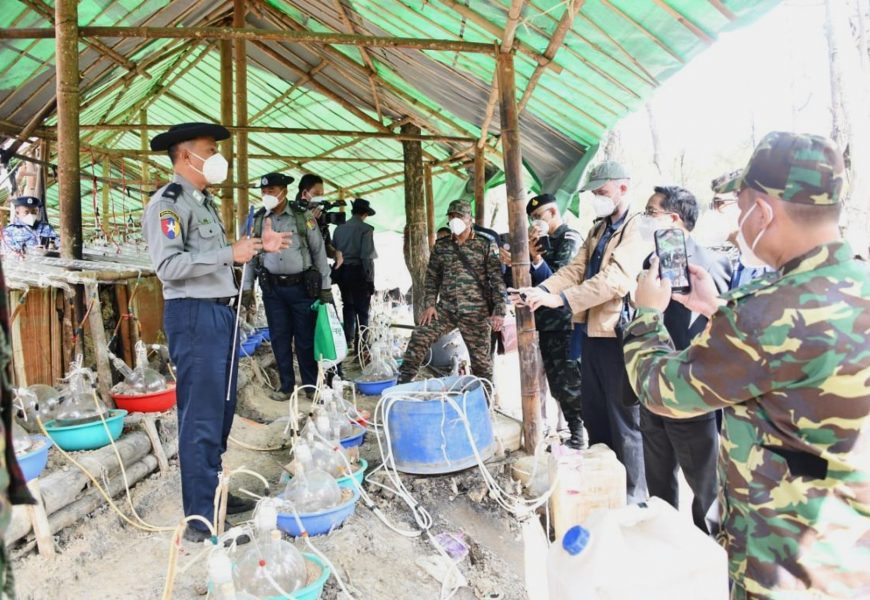

BANGKOK (AP) - The military government of Myanmar, long noted as one of the world's biggest producers of heroin and methamphetamine, has announced what it describes as the country's largest-ever seizures of illicit drugs and equipment used to produce them, state media reported Thursday.
The seizures were the result of a large-scale operation carried out on Jan. 8-12 targeting drug production and online scam centers in northern Shan state, state-run newspapers including Myanma Alinn reported.
The newspaper reports cited Home Affairs Minister Lt. Gen. Tun Tun Naung as saying at a Wednesday news conference that drugs and equipment were seized when three major drug manufacturing facilities in Mongyai township, each just a few kilometers (miles) apart, were raided on Jan. 10-11.
Mongyai is located about 200 kilometers (125 miles) northeast of Mandalay, the country's second-largest city.
Tun Tun Naung said at a news conference that the three sites had produced heroin, methamphetamine and crystal methamphetamine, better known as "ice."
Photos released by the military showed large facilities with dozens of blue plastic barrels filled with powdery substances, gas cylinders, large mixing vats and glass flasks linked by tubing in makeshift structures that the report said were used in drug production.
"The currently seized drug manufacturing bases are the largest-ever drug production sites in our country's drug history," he was quoted saying.
Maj. Gen. Zaw Min Tun, the military government's spokesperson, was reported to have said at the same news conference that the three sites might be the country's main drug-production hubs.
He said drug trafficking routes from that region ran to neighboring countries including Bangladesh, Thailand and Malaysia, and through conflict areas, particularly in west, northwest and southeast parts of Myanmar, with the involvement of ethnic armed groups and local armed resistance groups fighting the army.
State broadcaster MRTV reported Thursday evening that security forces raided a fourth narcotics production site located a few kilometers (miles) from the other three.
Myanmar's drug trade, carried out mainly in remote frontier areas, has long been attributed to various ethnic minority groups to fund their armed struggles for more autonomy. Members of the army, especially at the regional level, have also been accused of involvement.
In the past five years, the authorities have seized drugs worth over 5,900 billion Myanmar kyats (about $2.8 billion), destroyed more than 10,000 hectares of opium poppy fields and arrested more than 43,900 people for drug-related crimes, said Tun Tun Naung.
A survey by the United Nations Office on Drugs and Crime released in December said opium poppy cultivation in Myanmar surged to its highest level in a decade in 2025. Opium is used to make heroin.
Myanmar has also been described by the U.N. as the world's largest methamphetamine producer. It is easier to produce on an industrial scale than labor-intensive opium and heroin and is distributed as tablets and crystal methamphetamine by land, sea and air around the Asia-Pacific region.
The U.N.'s drug experts say Myanmar's civil war, which broke out after the army seized power from Aung San Suu Kyi's elected government in 2021, facilitated the illicit drug trade by destabilizing the country.
Tun Tun Naung said six people linked to the Shan State Progress Party, one of several ethnic armed groups operating in the region, were arrested at one of the sites. He claimed drug sales were a major source of income for insurgent groups, according to the newspaper report.
The Shan State Progress Party, which has been involved in longstanding conflict with Myanmar's military, announced in a statement released on Saturday that it has no connection with any illegal groups operating in the regions where the army was carrying out its anti-drug operations.
More Top Stories