°C
°C
 6
Min
6
Min
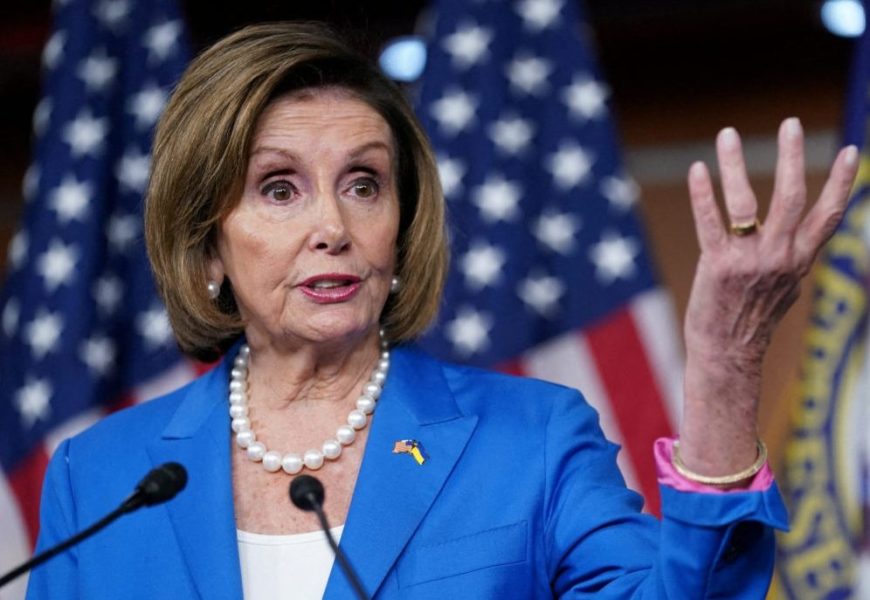
DALTON, Ga. (AP) – President Donald Trump says Rep. Marjorie Taylor Greene is a traitor. But for Jackie Harling, who chairs the local Republican Party in Greene’s northwestern corner of Georgia, she’s still “mama bear.”
Marjorie Taylor Greene made waves. Her constituents don’t agree on whether it was worth it


DALTON, Ga. (AP) – President Donald Trump says Rep. Marjorie Taylor Greene is a traitor. But for Jackie Harling, who chairs the local Republican Party in Greene’s northwestern corner of Georgia, she’s still “mama bear.”
“Every thought that we had in our minds, she seemed to be very good at verbalizing,” Harling said.
Saying things that no one else would say may be Greene’s most durable legacy as she steps down on Monday, resigning halfway through her third term in Congress. First, it was her embrace of conspiracy theories and incendiary rhetoric, turning her into a national symbol of a political culture without guardrails. Then it was her willingness to criticize Trump, a schism that made her position in Washington untenable.
In interviews in Greene’s district, constituents described her over and over as a “fighter.” For Republicans like Harling, that was enough.
“We got a lot of satisfaction,” Harling said. “She was our voice.”
It was less satisfying for an independent like Heath Patterson, who struggled to think of ways that Greene’s fame and notoriety made a difference for her district during her time in the U.S. Capitol.
“I don’t know of anything that she did do here except, certainly, got her voice heard. But where did we, how did we benefit from that?” he said. “I don’t think we did.”
Greene began clashing with Trump last year, criticizing his focus on foreign policy and his reluctance to release documents involving the Jeffrey Epstein case. The president eventually had enough, saying he would support a primary challenge against her. Greene announced a week later that she would resign.
She has kept up the criticism since then, including over Trump’s decision to strike Venezuela this weekend.
“This is what many in MAGA thought they voted to end,” Greene wrote on social media on Saturday. “Boy were we wrong.”
The split was surprising because, until that point, Greene’s trajectory had mirrored Trump’s own rise to power. She didn’t become politically involved until his presidential campaign in 2016 and first ran for Congress in 2020. Greene considered trying to represent Georgia’s 6th congressional district, which includes the Atlanta suburbs, before relocating to the 14th, where the Republican incumbent was retiring.
She remained loyal to Trump after he lost to President Joe Biden, promoting his falsehoods about a stolen election. When Trump ran again in 2024, she toured the country with him and spoke at his rallies while wearing a red “Make America Great Again” hat.
Her Georgia district is one of the most Republican-leaning in the state, although it wasn’t always that way. The region once backed Democrats like Zell Miller, a governor and U.S. senator who spearheaded Georgia’s lottery program that still bankrolls college scholarships and early childhood education programs.
But residents have felt left behind by years of change, said Jan Pourquoi, a Belgian native who emigrated in 1987, became a U.S. citizen and later won local office in Whitfield County.
His county’s population has grown by roughly by 32% since 1990, which pales in comparison to statewide growth of 74%. As the U.S. becomes more urban, secular, and diverse, Pourquoi said residents believe they’re “culturally oppressed.”
“They see themselves as great Americans, proud Americans, Christian Americans, and that doesn’t fit the American model anymore as they see it,” said Pourquoi, who said he left the Republican Party because of Trump. Greene exemplified the political backlash, which he summarized as “stick it to them – any possible way you can.”
Georgia leaders, like those in many other states, have spent years drawing congressional districts to pack like-minded voters together. That means in red areas, whoever wins the Republican primary is virtually guaranteed to come out on top in the general election, incentivizing candidates like Greene with more hardline views.
The political landscape means former Republicans like Pourquoi or independents like Patterson say they have no shot at helping a centrist win.
“I’m kind of square in the middle,” said Patterson, adding that it sometimes feels like he’s “the only one around here who’s that way.”
Whitfield County Republicans gathered at a local restaurant last month for their annual Christmas party, where seasonal decor and a visit from Santa Claus were intermingled with the red, white and blue regalia and a smattering of MAGA paraphernalia.
There was still deep affection for Greene and plenty of talk about the cultural issues she championed.
“I think it’s just the fact that she was unwavering in ‘America First,'” said Gavin Swafford, who worked on Greene’s initial campaign.
Swafford called her “an accountability representative” because of her clashes with Republican leaders.
Lisa Adams, a party volunteer, called Greene “our stand-up person.”
“Look at her stance on transgenderism. That’s a big one,” she said. “Abortion. That’s a big one.”
None of Greene’s inconsistencies – real or perceived – were a problem, they said.
For example, Greene has praised the Korean-owned solar panel factories in the district even after voting against Biden-era policies intended to boost production. She broke with Republicans, Trump included, and sided with Democrats who wanted to extend premium subsidies for Affordable Care Act health insurance customers.
None of the Republicans at the Christmas party expressed any interest in taking sides between Trump and Greene.
“I think it’s inevitable when you have two firebrands that are both stubborn,” Swafford said.
Asked whether the district missed having a more traditional lawmaker, the kind who might cut bipartisan deals and bring as much federal money as possible back home, Swafford was unconcerned.
“The biggest thing that Marjorie contributed wasn’t even in legislation,” he said.
Still, there was also a sense among some that Greene, for all her bare-knuckle politics, could have gone further.
Star Black, a Republican who is running to replace Greene, was already planning a primary challenge before she announced her resignation.
“You had a great representative who was a fighter. Well, you know what? I want to take it one step further,” Black said.
“Not only do you need a fighter,” Black said, “you need someone who is going to listen. You need someone who is going to represent you.”
More Top Stories