°C
°C
 6
Min
6
Min
NEW YORK (AP) – It is one of the most surprising music stories of the year. While streams of new music – releases from the last 18 months – were down from last year, one genre is on the rise: Christian and gospel music, according to industry data and analytics company Luminate’s 2025 Midyear Report.
How Christian artists are winning over listeners and entering pop’s mainstream
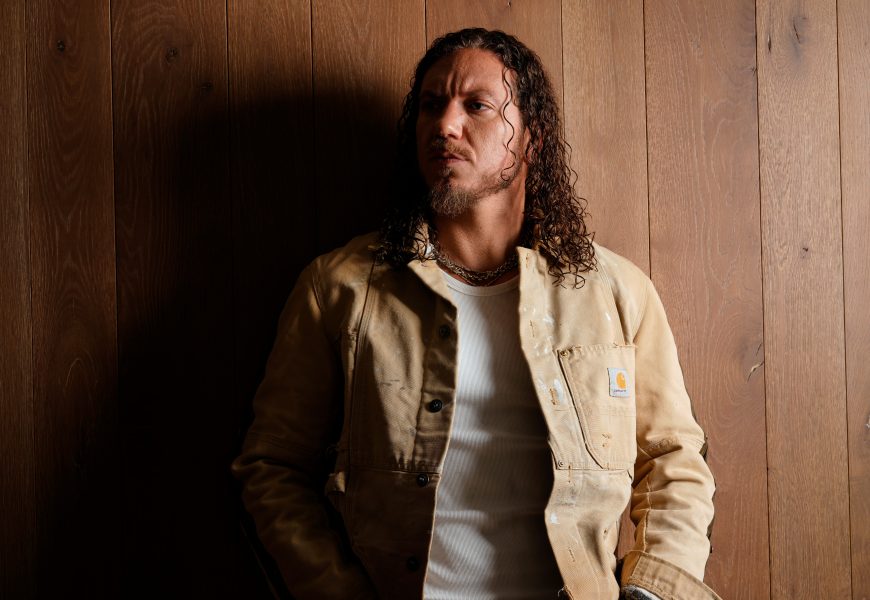

NEW YORK (AP) – It is one of the most surprising music stories of the year. While streams of new music – releases from the last 18 months – were down from last year, one genre is on the rise: Christian and gospel music, according to industry data and analytics company Luminate’s 2025 Midyear Report.
Jaime Marconette, Luminate’s vice president of music insights and industry relations, said the shift is led by acts like Forrest Frank, Brandon Lake and Elevation Worship, who are connecting with a “younger, streaming-forward fan base” that’s 60% female and 30% millennial. In fact, for the first time in 11 years, two contemporary Christian music songs – Frank’s “Your Way’s Better” and Lake’s “Hard Fought Hallelujah” with Jelly Roll – broke through the Billboard Hot 100’s all-genre Top 40, placing them in direct competition with mainstream artists.
It’s also why traditionally secular artists like Jelly Roll, Killer Mike and T.I. are nominated in Christian music categories at the forthcoming 2026 Grammys – the lines are blurring.
“Christian music (is) unlike any other genre that’s defined by a sonic component. Christian music is defined by its lyrical component,” says Holly Zabka, the president of Provident Entertainment, a Sony Christian music subsidiary. “It’s not limited to a narrow definition. It’s a lyrical component that can appeal to anyone’s musical preference.”
From a label perspective, she’s interested in pursuing artists that “don’t have to fit within that narrow lane of Christian bookstore and Christian radio. It can be rap, hip-hop, it can be rock, it can be country, and that’s appealing to a broader audience because it’s what they’re already listening to,” she says. “Very few people listen in a vacuum and only listen to one genre.”
But for many years, CCM jas held a reputation for being unimaginative – what writer John Jeremiah Sullivan infamously referred to as “excellence-proof” – for its tendency to mimic and water down popular, contemporary mainstream sounds for a religious audience.
“Absolutely there’s been an improvement in quality,” says Zabka. “When all the music has to live side by side on these streaming platforms, we can’t just be the cheap alternative. ‘Oh, you like Taylor Swift? You will like this lesser version offering in the Christian genre.’ We want to be the greatest art.”
“You have to imitate before you innovate,” Chris Brown, singer and worship leader at Elevation Worship, jokes. “There’s not as many rigid lines stylistically within Christian music as maybe there was 10 years ago or certainly like 20, 30 years ago.”
“There was a period of time where people idealized Christian music as like, ‘OK, we’re going to have this look, we’re going to sound like this,'” says two-time Grammy-winning Christian and pop musician Lauren Daigle. “There’s so much more artistry now. People are very expressive. They’re able to share their creativity. And that also comes with different types of people represented.”
Zabka says her genre is experiencing “a special moment and … a perfect storm.” Streaming and the ability to connect on social media have democratized music discovery, she says, allowing CCM to compete with secular music. That, partnered with what she views as “a resurgence of faith” in young people, is responsible for the interest.
The number of Americans who identify as Christian has declined steadily for years, but that drop shows signs of slowing, according to a 2025 survey from the Pew Research Center. A new class of millennial and Gen Z Christian influencers, too, are aiming to connect with young people.
“Christian music has also shifted in its authenticity of the lyrics,” Zabka adds, making the music more relatable than previous iterations of the genre, which often featured a neat message of “everything is going to be OK, just follow Jesus” in 3 ½ minutes. Now, she says, “their songs are much more authentic and real and honest. ‘Life is hard. Breakups are hard. Bad things happen,’ and that provides a level of hope that other music doesn’t provide for the listener.”
Daigle points out that artists like Lake are performing in huge stadiums – categorical proof that Christian artists are growing in popularity.
“I think a lot of people are looking at the world and … they find fortitude in this music, and they find a sense of strength in this music, and they find truth in this music,” she says.
Daigle also theorizes that because “Christian music points to something else” – to God – instead of focusing on individual issues or the ego of the performer on stage, it evens the playing field between listener and artist, while giving both a sense of purpose.
“In a world that has become so self-focused and self-centered, the freedom of saying ‘Wow, I can actually lean on someone else for a while,’ or ‘There’s something that is actually greater than me,'” she says. “And the purpose of Christian music, for me, is to bring hope to people.”
Brown theorizes that people relate to his Charlotte, North Carolina-based CCM collective because of “how fundamentally we’re rooted” in their local church.
“It’s easy to connect because we’re just church people,” he says.
Lake, who is nominated for three Grammys in 2026, including “Hard Fought Hallelujah,” believes people are connecting with Christian music now because that’s simply the purpose of religious music.
“The reason why people are turning their ear toward those kinds of songs right now is because that’s what they were made for,” Lake says. “People are finding in these songs – they’re finding themselves, their spirit, connecting with the spirit of God. … Those songs aren’t just entertainment; they tee up an encounter.”
“I love all kinds of music,” he continues, “but if you have a song that carries that kind of message, it’s just super charged, you know? It does something deeper.”
He also believes this may be the start of a crossover moment, where more Christian artists will be welcomed into other genres and mainstream spaces. “I pray it’s just the beginning,” he says. “And I pray that it takes over.”
Jelly Roll agrees. “I think there really is a revival happening in America right now where people are being re-presented the Gospel in a digestible way. And it doesn’t seem as finger-waggy and ‘You’re all going to hell,’ you know?” he says.
“I really don’t care when the organized religions wave their finger at me,” he continues. “I’m just glad to see the message, the Gospel getting presented.”
More Top Stories