°C
°C
 5
Min
5
Min
It’s been called an “epidemic” of loneliness and isolation. The “bowling alone” phenomenon. By any name, it refers to Americans’ growing social disconnection by many measures. Americans are less likely to join civic groups, unions and churches than in recent generations.
Efforts to reconnect Americans face challenges in a lonely time
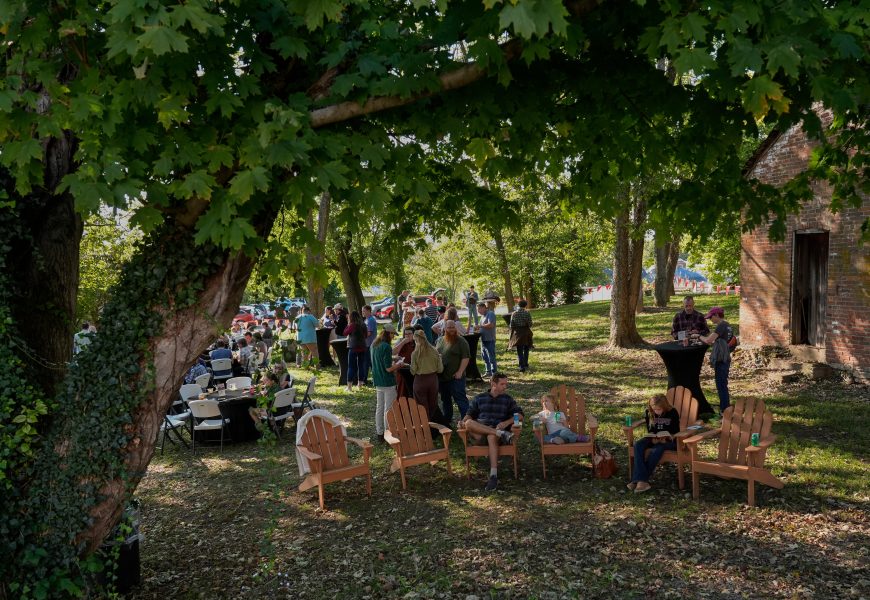

It's been called an "epidemic" of loneliness and isolation. The "bowling alone" phenomenon.
By any name, it refers to Americans' growing social disconnection by many measures.
Americans are less likely to join civic groups, unions and churches than in recent generations. They have fewer friends, are less trusting of each other and less likely to hang out in a local bar or coffee shop, recent polling indicates. Given all that, it's not surprising that many feel lonely or isolated much of the time.
Such trends form the backdrop to this Associated Press report on small groups working to restore community connections.
They include a ministry pursuing "trauma-informed community development" in Pittsburgh; a cooperative helping small farmers and their communities in Kentucky; an "intentional" community of Baltimore neighbors; and organizations seeking to restore neighborhoods and neighborliness in Akron, Ohio.
In 2023, then Surgeon General Vivek Murthy reported on an " epidemic of loneliness and isolation," similar to his predecessors' advisories on smoking and obesity.
Isolation and loneliness aren't identical - isolation is being socially disconnected, loneliness the distress of lacking human connection. One can be alone but not lonely, or lonely in a crowd.
But overall, isolation and loneliness are "risk factors for several major health conditions, including cardiovascular disease, dementia, depression, and premature mortality," the report said.
Murthy says he's encouraged by groups working toward social connection through local initiatives ranging from potluck dinners to service projects. His new Together Project, supported by the Knight Foundation, aims to support such efforts.
"What we have to do now is accelerate that movement," he said.
The pandemic temporarily exacerbated social isolation. There's been some rebound, but often not back to where it was before.
Scholars and activists have cited various potential causes - and effects - of disconnection. They range from worsening political polarization to destructive economic forces to rat-race schedules to pervasive social media.
Murthy said for many users, social media has become an endless scroll of performance, provocation and unattainably perfect body types.
"What began perhaps as an effort to build community has rapidly transformed into something that I worry is actually now actively contributing to loneliness," he said.
Harvard's Robert Putnam, 25 years ago, described the decline in civic engagement in a widely cited 2000 book "Bowling Alone." It was so named because the decline even affected bowling leagues. The bowling wasn't the point. It was people spending time together regularly, making friends, finding romantic partners, helping each other in times of need.
Memberships in many organizations - including service, veterans, scouting, fraternal, religious, parental and civic - have continued their long decline into the 21st century, according to a follow-up analysis in "The Upswing," a 2020 book by Putnam and Shaylyn Romney Garrett.
While some organizations have grown in recent years, the authors argue that member participation often tend to be looser - making a contribution, getting a newsletter - than the more intensive groups of the past, with their regular meetings and activities.
Certainly, some forms of social bonds have earned their mistrust. People have been betrayed by organizations, families and religious groups, which can be harshest on their dissenters.
But disconnection has its own costs.
"There's been such a drive for personal autonomy, but I think we've moved so far past wanting not to have any limits on what we can do, what we can believe, that we've become allergic to institutions," said Daniel Cox, the director of the Survey Center on American Life and a senior fellow in polling and public opinion at the American Enterprise Institute.
"I'm hoping we're beginning to recognize that unbounded personal autonomy does not make us happier and creates a wealth of social problems," said Cox, co-author of the 2024 report, " Disconnected: The Growing Class Divide in American Civic Life."
Some argue that Putnam and others are using too limited a measurement - that people are finding new ways of connecting to replace the old ones, whether online or other newer forms of networking.
Still, many numbers depict an overall decline in connection.
This hits hardest on those who are already struggling - who could most use a friend, a job referral or a casserole at the door in hard times.
Those with lower educations, which generally translates to lower incomes, tend to report having fewer close friends, fewer civic gathering places in their communities and fewer people who could help out in a pinch, according to "Disconnected."
Across the country, small organizations and informal groups of people have worked to build community, whether through formal programs or less structured events like potluck dinners.
Murthy will continue to be visiting such local groups in his "Together Project," supporting such efforts.
Another group, Weave: The Social Fabric Project at the Aspen Institute, has a searchable database of volunteer opportunities and an online forum for connecting community builders, which it calls "weavers." It aims to support and train them in community-building skills.
"Where people are trusting less, where people are getting to know each other less, where people are joining groups less, there are people still in every community who have decided that it's up to them to bring people together," said its executive director, Frederick J. Riley.
___
Associated Press religion coverage receives support through the AP's collaboration with The Conversation US, with funding from Lilly Endowment Inc. The AP is solely responsible for this content.
More Top Stories