°C
°C
 6
Min
6
Min
WASHINGTON (AP) – Guan Heng, who exposed human rights abuses in his native China, has been in U.S. custody since being swept up in an immigration enforcement operation in August. He says he dares not even think about what would happen to him if he were sent back.
Chinese asylum seeker who exposed rights abuses fights to stay in the US
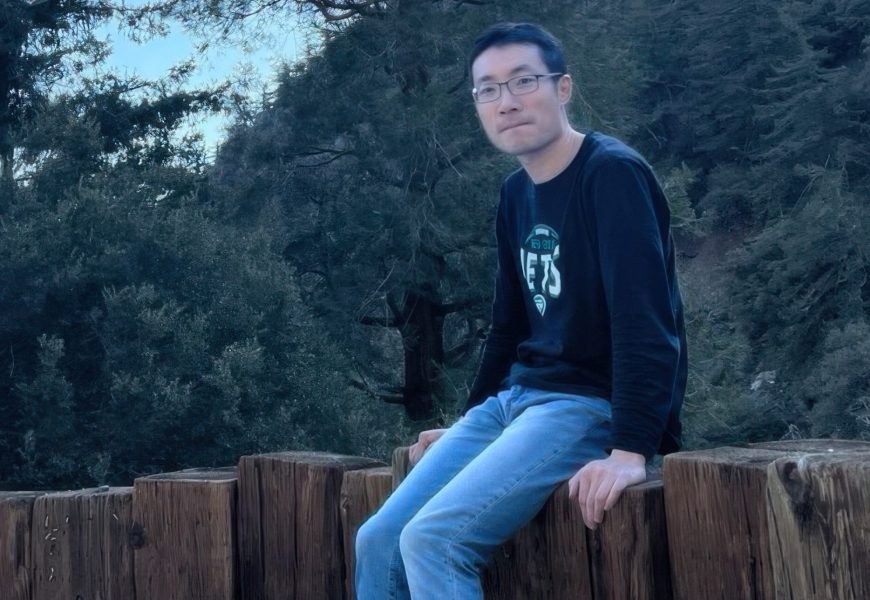

WASHINGTON (AP) - Guan Heng, who exposed human rights abuses in his native China, has been in U.S. custody since being swept up in an immigration enforcement operation in August. He says he dares not even think about what would happen to him if he were sent back.
"I would be prosecuted, I would be jailed, I would be tortured. All of that could happen," Guan, 38, told The Associated Press in a recent call from the Broome County Correctional Facility in New York.
A judge on Monday is to consider his appeal to remain in the United States, where he sought asylum after fleeing his homeland more than four years ago to publish video footage of detention facilities in China's Xinjiang region.
The Department of Homeland Security initially sought to deport him to Uganda, but dropped the plan in December after his plight raised public concerns and attracted attention on Capitol Hill. But his future remains unclear.
Guan said the public attention has given him hope. During his first months in Immigration and Customs Enforcement detention, he said "there was no help from the outside world" and stories from fellow detainees and reports of the Trump administration's anti-immigration campaign left him extremely pessimistic.
He is among tens of thousands of asylum seekers who have been swept up in mass deportation efforts in the past year despite having what they believed to be legitimate claims to stay in the U.S.
"We are very worried about the number of asylum seekers that will be sent back to extremely dangerous conditions," said Vanessa Dojaquez-Torres of the American Immigration Lawyers Association. "It's worrying to see that an institution like asylum is being so eroded."
Guan said ICE agents stumbled upon him during an operation targeting his housemates in the small town where he was living outside of Albany.
Tricia McLaughlin, a DHS spokesperson, said ICE encountered Guan when assisting the FBI in executing a criminal search warrant.
"This illegal alien from China entered the U.S. illegally at an unknown date and time," she said in a written response to a request for comment. "All of his claims will be heard before an immigration judge."
Rep. Raja Krishnamoorthi, a member of the House Select Committee on the Chinese Communist Party, has urged Homeland Security Secretary Kristi Noem to release Guan and approve his asylum request.
In a statement to the AP on Friday in reference to Guan's case, the Illinois Democrat called for "careful adherence to due process and America's long-standing commitment to protecting human rights whistleblowers."
Immigrants can apply for asylum when there's a fear of harm back home because of their race, religion, nationality, political opinion or membership in a particular social group.
Kathleen Bush-Joseph, a policy analyst at the Migration Policy Institute, said the Trump administration is making a concerted effort to remove asylum seekers. Rather than allowing them to stay in the country while their cases are pending, immigration authorities are closing out cases and giving people removal orders so they can be rapidly deported, she said.
Federal data by Mobile Pathways, a California-based nonprofit that helps immigrants navigate the U.S. legal system, shows that 170,626 asylum seekers were ordered deported in 2025. That's about one-third of the half million people the Trump administration ordered deported last year.
The data also show that 31% of asylum applications were abandoned in 2025, up from 11% between 2010 and 2024. Usually, a case gets marked "abandoned" when the applicant misses an appointment, said Bartlomiej Skorupa, the group's chief operating officer. He said it's not yet clear what caused the rise.
In cities across the country, some immigrants have stopped showing up for routine hearings after agents began making arrests right in the courtrooms, turning them into deportation traps.
Guan in 2020 secretly filmed detention facilities in Xinjiang, adding to a body of evidence of what activists say are widespread rights abuses in the region, where as many as 1 million members of ethnic minorities, especially the Uyghurs, have been locked up.
The Chinese government has denied the allegations, saying it runs vocational training programs to help local residents learn employable skills while rooting out radical thoughts.
Beijing tolerates little dissent, especially on issues such as Xinjiang, Tibet, Taiwan and Communist Party rule, and has largely silenced dissent through a range of coercive means, including detention and "forced disappearances."
Liu Pengyu, spokesperson for the Chinese Embassy, said he was unfamiliar with the specifics of Guan's case but defended China's policy toward Xinjiang.
"The Chinese government has consistently worked to promote and protect human rights, and the development and progress in Xinjiang are plain to see and should not be smeared," Liu said in a statement.
With the footage in hand, Guan knew he had to leave the country if he was to publish it. He went first to Hong Kong without a further plan. "I played it by ear," he said.
From Hong Kong, he flew to Ecuador, where Chinese tourists could then travel without a visa, and then on to the Bahamas before sailing to Florida in October 2021. By the time he arrived, he had released most of his video footage on YouTube.
Guan settled in Queens, a borough in New York City, and said he tried to live a "stable" life. Once he had a work permit, he worked as an Uber driver and did deliveries. He cut off contact with nearly all of his relatives back in China so they would not be harassed by the police.
He said he cherished the freedom from fear he enjoyed in the U.S. Then Donald Trump returned to the White House and launched his mass deportation campaign.
Guan said he understands why Trump has taken such a radical approach.
"It's because the past immigration policy was too lax and caused resentment from many people," Guan said, adding that he considers such fluctuations to be "normal" in a democratic society.
"No matter what it is, any issue gets both support and opposition," he said. "I also have come to know that people in all parts of the country are protesting the government's too aggressive behavior."
Local residents who don't know him personally have shown their support, Guan said. "So these things, in total, have allowed me to experience the social atmosphere under the U.S. democratic system," he said. "At the same time, I've felt the warmth of the U.S. society."
Should he be released, he said he would cherish the opportunity to stay in the United States.
"I would like to do meaningful things," Guan said. "I hope to establish some connections with others so that I can help others."
More Top Stories