°C
°C
 4
Min
4
Min
DHAKA, Bangladesh (AP) – Bangladesh’s next national elections will be held on Feb. 12, the chief election commissioner said Thursday, setting the timetable for a vote to be held 18 months after former Prime Minister Sheikh Hasina was ousted.
Bangladesh to hold national elections in February, the first since 2024 mass uprising
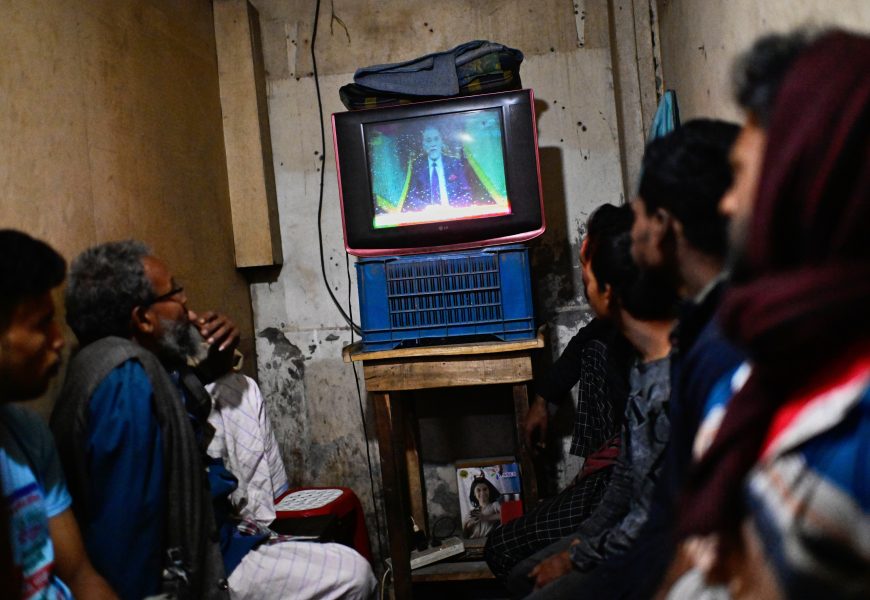

DHAKA, Bangladesh (AP) - Bangladesh's next national elections will be held on Feb. 12, the chief election commissioner said Thursday, setting the timetable for a vote to be held 18 months after former Prime Minister Sheikh Hasina was ousted.
In a televised address to the nation, chief election commissioner A.M.M. Nasir Uddin confirmed the date and said a national referendum on political reforms would also be held on the same day as voting to elect 300 lawmakers.
The process begins with the filing of nominations Dec. 12-29, which will then be reviewed over the following six days. The last date for withdrawing nominations is Jan. 20, he said.
The last elections were held in January 2024, when Hasina returned to office for a fourth consecutive term. That vote was boycotted by her main rivals, who accused her administration of rigging the result.
In July and August 2024, huge protests broke out, leading to Hasina's removal from office. She fled to India, where she is now in exile. A court in Bangladesh sentenced her to death in November for crimes against humanity.
An interim government headed by Nobel Peace Prize laureate Muhammad Yunus has been running the country since Aug. 8, 2024. The Yunus-led administration has banned all activities of Hasina's Awami League party, which means the former ruling party would not be able to join the race.
The new elections would be the 13th since the country gained independence from Pakistan after a war in 1971.
A senior leader of the country's major Bangladesh Nationalist Party, or BNP, welcomed the announcement of the election schedule.
"Today is a day of joy," BNP's Secretary General Mirza Fakhrul Islam Alamgir was quoted as saying by the country's Daily Star newspaper.
"The election schedule announcement by the Election Commission has reassured us. Through this announcement today, it has been proven that the Election Commission, the government and political parties want to hold the election. They want to implement the people's right to vote," he said.
Other parties, including the country's largest Islamist party, Jamaat-e-Islami, and a newly formed party by the uprising leaders, National Citizen Party, also welcomed the move.
But Hasina's party rejected the decision as the announcement excluded the former ruling party.
"Attempting to hold an election while excluding the Bangladesh Awami League - the party that led the Liberation War (independence war) - along with other political parties and the majority of the population, is a scheme to push the country and the nation into a deep crisis," Hasina's party said in a statement.
Yunus in a statement congratulated the Election Commission, which is a constitutional body with a special status as a state institution.
"After the historic mass uprising (last year), the country is now moving toward a new path. This election and referendum will consolidate that trajectory, prioritize the will of the people and further strengthen the foundation of a new Bangladesh," Yunus said.
Hasina's party demanded the withdrawal of the ban, and her son, in an interview with The Associated Press, had said earlier that Bangladesh could be stabilized if an inclusive election is held.
Bangladesh is at a crossroads as it struggles to return to democracy amid allegations of violations of human and political rights under Yunus. Human Rights Watch and Amnesty International have voiced their concerns at the rule of law situation in the country. Both groups have raised questions about the trial which sentenced Hasina to death on charges of crimes against humanity related to the uprising.
The country has more than 50 registered political parties, and almost half of them have remained away from a process of dialogue with the interim government.
Efforts are underway to break the dominance of two dynastic political camps, one headed by Hasina and another by her now ailing arch rival, the former Prime Minister Khaleda Zia, who leads the Bangladesh Nationalist Party.
Zia's party is now the main contender while the rise of Islamist politicians has been a major concern for liberals.
Political parties have been demanding that the interim government hold a referendum on political reforms contained in the "July National Charter," named after the uprising that began in July 2024.
The charter is currently nonbinding, and the parties say a referendum is needed to make it legally binding and a part of the constitution. Only Parliament can amend the constitution in Bangladesh, a parliamentary democracy of 170 million people.
The chief election commissioner said the referendum would be held along with the next voting in which more than 127.6 million voters are eligible.
More Top Stories