°C
°C
 3
Min
3
Min
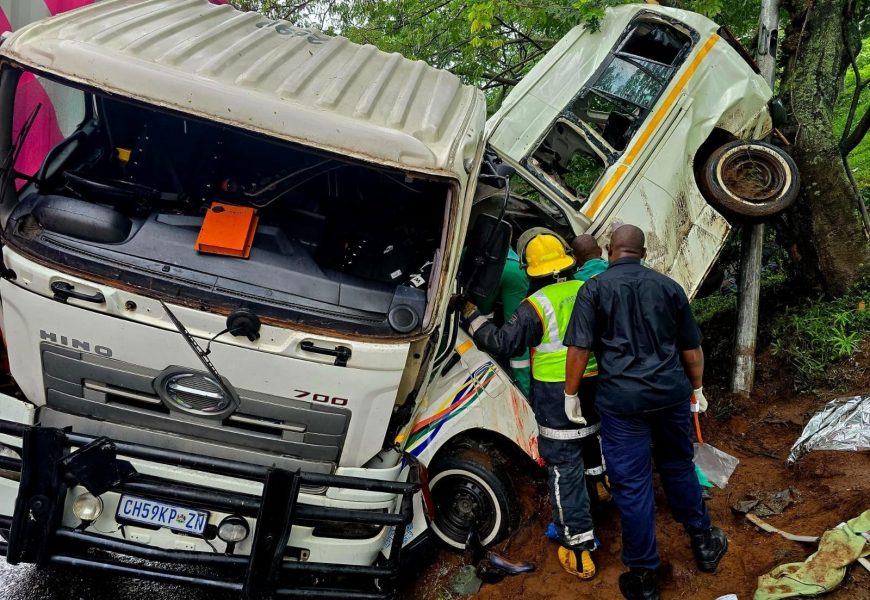
JOHANNESBURG (AP) – A deadly car crash in Nigeria involving former heavyweight boxing champion Anthony Joshua and two minibus accidents in South Africa days apart that killed at least 25 people have underlined Africa’s poor road safety record.
Africa has the worst road safety record in the world. Here’s what to know

JOHANNESBURG (AP) - A deadly car crash in Nigeria involving former heavyweight boxing champion Anthony Joshua and two minibus accidents in South Africa days apart that killed at least 25 people have underlined Africa's poor road safety record.
The continent has the highest road fatality rate in the world despite having only about 3% of the world's vehicles. Here's what to know:
Road crashes and fatality rates are disproportionately high in Africa, with 26 road deaths per 100,000 people on the continent compared with a global average of around 18, according to the United Nations Economic Commission for Africa. The rate in Europe is less than 10.
More than 300,000 people a year are killed in road crashes in Africa.
A 2024 World Health Organization report said road deaths had decreased globally but increased in Africa, which is home to some 1.5 billion people. The U.N. health agency called road accidents "a serious public health concern for African countries, with hundreds of thousands of lives being lost unnecessarily."
Africa has low car numbers comparatively because of the need for cheaper options, but that sometimes creates a packed and chaotic picture on African roads, with pedestrians, bicycles and motorbikes vying for space with cars, buses and trucks. Many countries don't have separate spaces for pedestrians or bikes.
Around 40% of road deaths in Africa are pedestrians - twice as many as the global average - and the figure is almost 50% in some African countries.
The 2024 WHO report said few countries in Africa have made progress to establish transport systems that cater to those alternative modes of transport.
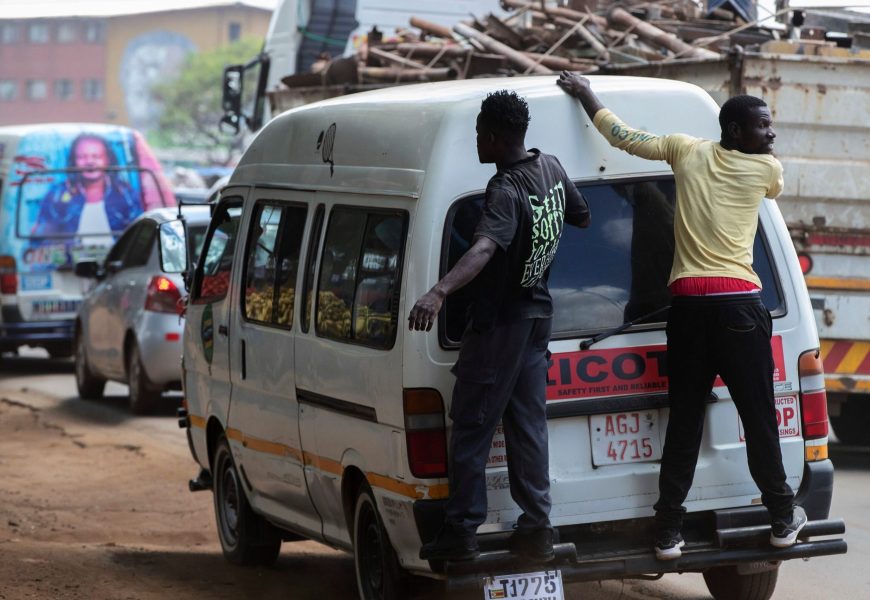
Limited public transport systems give millions of Africans no choice but to travel in overloaded buses that may not be roadworthy or on other dangerous forms of transport like motorcycle taxis.
In South Africa, around 70% of commuters travel to and from work in minibus taxis, translating to more than 10 million people a day out of a population of 62 million using the minibuses. Authorities often struggle to properly regulate the minibuses and ensure the drivers are licensed and obey road laws, and to establish that their vehicles are roadworthy.
Enforcement of road laws is generally weak, while WHO said road infrastructure safety ratings are also notably low in Africa, with only a small percentage of the continent's road network meeting acceptable standards.
The December to January holiday period is a notoriously dangerous time when large numbers of people travel on strained road systems.
Authorities in South Africa, which has one of the continent's better road systems, reported this month that they had seen a welcome but small decrease in their holiday season road deaths.
But for the period Dec. 1, 2025, to Jan. 11, 2026, Africa's most advanced economy still recorded 1,427 road deaths at an average of more than 30 a day.
More Top Stories